8 Powerful Lessons from The Let Them Theory by Mel Robbins
Two words have been following people around all year — on podcasts, on book covers, even tattooed on wrists: Let Them. Behind them is a simple, stubborn idea: most of our stress comes from trying to control people we cannot control.
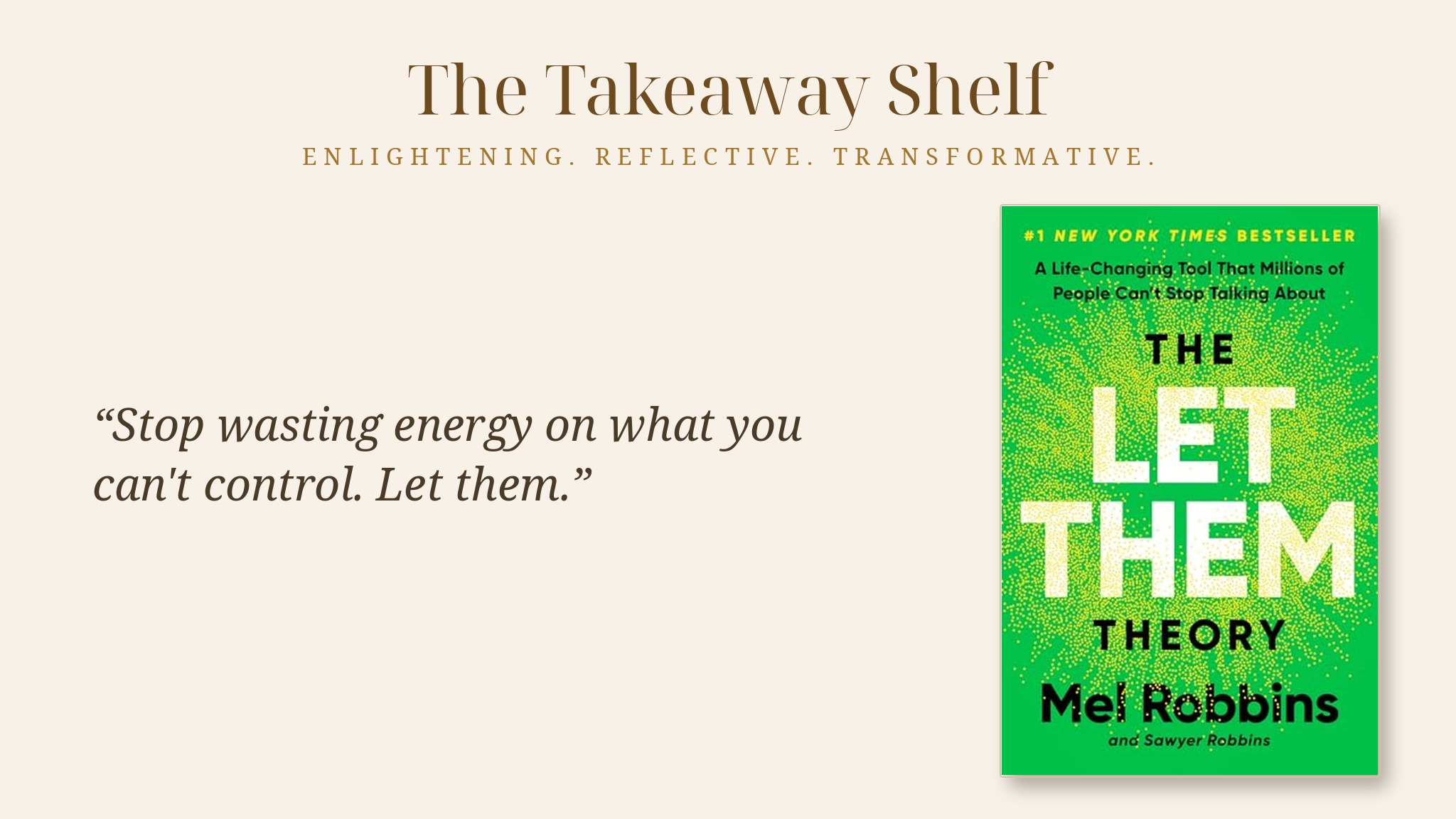
Mel Robbins wrote The Let Them Theory with her daughter Sawyer Robbins, and it became a #1 New York Times bestseller by saying out loud what many of us quietly needed to hear: stop managing other adults.
This post may contain affiliate links. We only recommend products we personally use and love (please see our full affiliate disclosure). If you click through and make a purchase, we may earn a small commission at no extra cost to you. Your support helps keep this blog running. Thank you so much! 💕
Table of Contents
What the Book Is About
The Let Them Theory is built on a moment of frustration. Robbins, the bestselling author of The 5 Second Rule, has said the idea crystallized after she came across a short viral poem by Cassie Phillips built on the same two words — and recognized her own life in it: the friend who did not invite her, the family member who would not change, the coworker whose opinion ran her whole day.
The book’s method has two halves. “Let Them” is the release: let people think, say, choose, and even misunderstand — their behavior is information about them, not a task for you. “Let Me” is the redirect: turn to the one set of choices that is actually yours, and act there. Across chapters on stress, opinions, comparison, adult friendship, and difficult people, Robbins applies the same pair of phrases like a key that fits many locks.
8 Lessons from The Let Them Theory
1. Let Them — Release What Was Never Yours to Carry
When people disappoint, exclude, judge, or simply choose differently, the instinct is to fix it. The theory asks you to pause instead. Let them — and let their choices show you exactly who they are.
2. Let Me — The Half That Hands You Back Your Power
Release alone would be resignation. Let Me is the active half: let me decide, let me set the boundary, let me spend my time on what I can actually change. Every Let Them in the book is followed by a Let Me.
3. Believe What People Show You the First Time
Hoping someone will become who you need them to be is exhausting and unfair to both of you. The book treats behavior as the truest introduction — believe it early, and plan your life around what is real.
4. Other People’s Opinions Are Not Your Assignment
Someone will misunderstand you, dislike your choices, or retell your story wrong. Let them. Correcting every opinion is a full-time job that pays nothing.
5. Comparison Is an Energy Leak
Other people’s timelines — the promotion, the wedding, the house — are not instructions for your life. Let them have their pace. Yours is not late; it is yours.
6. Boundaries Can Be Quiet
You do not owe anyone a speech or a courtroom defense of your limits. Change your behavior — what you attend, answer, and allow — and the boundary holds itself.
7. Stress Is Information
In the book’s framing, most daily stress is a flare sent up by a control attempt: managing a mood, an outcome, an adult. When you feel it rise, ask who you are trying to steer. The answer usually points at the release you need.
8. Spend Your Energy Like It Is Finite — Because It Is
Every hour resenting someone is an hour not spent building the life you actually want. The theory is, at bottom, an energy budget: stop paying for other people’s choices, and invest in your own.
Why It’s a Must-Read
The Let Them Theory is short on theory and long on use — each idea can be tried the same day it is read. It will not convince everyone; readers who want research citations may find it light. But for anyone whose peace depends on other people’s behavior, its two-word practice is a genuinely workable tool, and the Let Me chapters keep it from becoming mere detachment. It is a book about attention: giving less of it away, on purpose.
Who This Book Is For
People-pleasers in recovery; anyone stressed by family group chats, office politics, or a friendship that only flows one way; readers who like their self-help direct, warm, and immediately testable.
It sits well beside our takeaways from Letters from a Stoic by Seneca — the ancient version of the same lesson: guard your hours and your mind, and let the rest pass.
Let Them — Then Begin
The quiet promise of The Let Them Theory is not that other people will change. It is that you can stop organizing your days around the hope that they will. Say the two words, then the other two — let them, let me — and notice how much of your life was waiting on the far side of that sentence.