13 Proven Principles from Think and Grow Rich by Napoleon Hill
Most success books promise secrets. Think and Grow Rich makes a bolder claim: that achievement follows principles, and that anyone willing to study and apply them can use the same principles that built the fortunes of the last century.
Napoleon Hill spent more than twenty years, by his own account, interviewing over 500 of the most successful people of his time. The result, published in 1937, in the middle of the Great Depression, became one of the best-selling self-help books of all time — and the quiet source that almost every motivation book since has borrowed from.
This post may contain affiliate links. We only recommend products we personally use and love (please see our full affiliate disclosure). If you click through and make a purchase, we may earn a small commission at no extra cost to you. Your support helps keep this blog running. Thank you so much! 💕
Table of Contents
What the Book Is About
Hill said the work began with a suggestion he received as a young reporter from steel magnate Andrew Carnegie — that he study successful people and find the pattern in what they did.
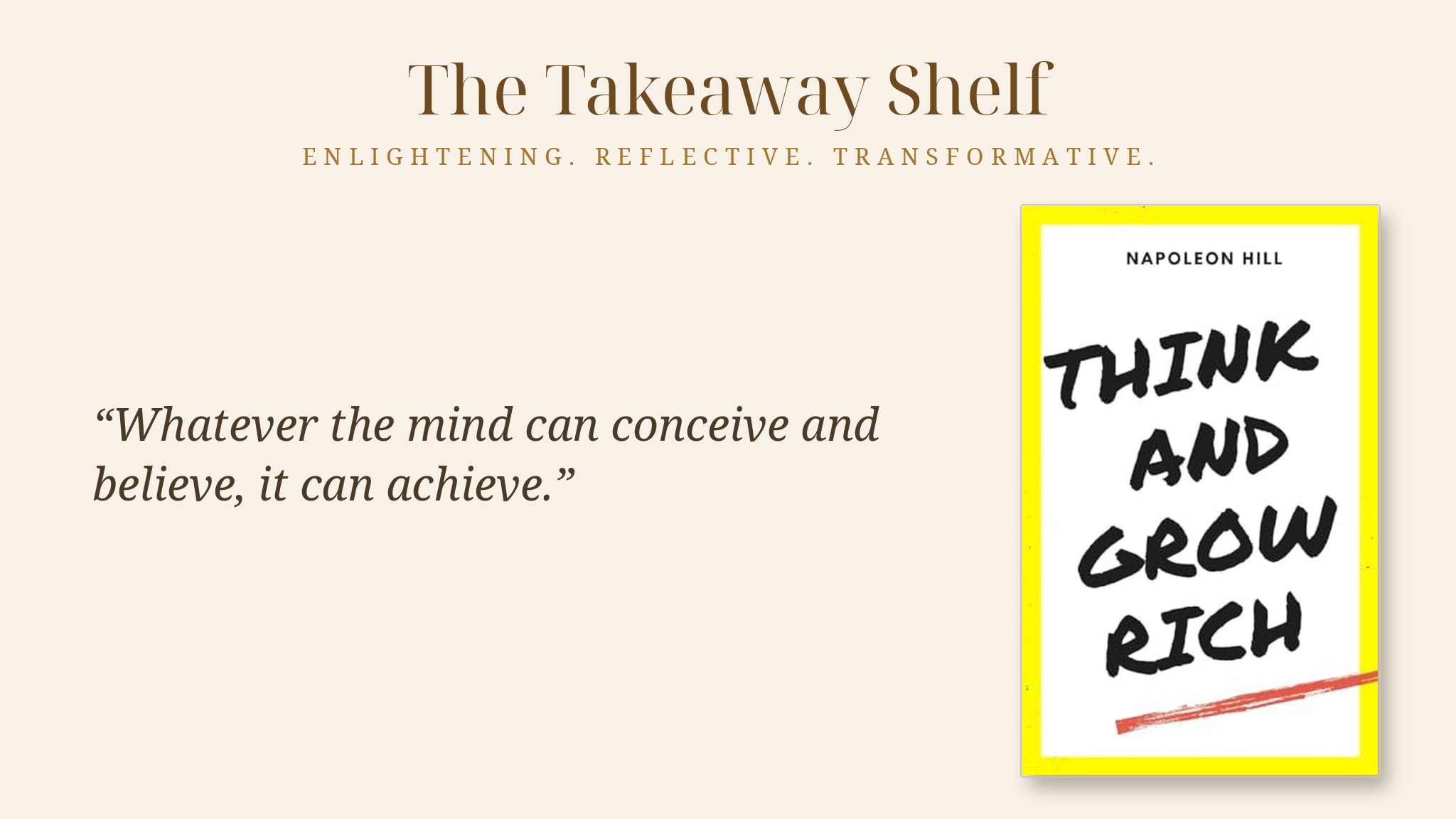
Over the following decades he interviewed inventors, industrialists, and presidents, and organized everything he learned into thirteen principles. Together they form a single argument: riches — money, yes, but also every other kind — begin as thoughts, and thoughts become real through desire, belief, planning, and persistence. The book’s famous line sums it up: “Whatever the mind of man can conceive and believe, it can achieve.”
This is not a book about getting rich quickly. It is a book about how thinking works — and it asks to be read slowly, pencil in hand.
The 13 Principles of Think and Grow Rich
1. Desire: The Starting Point of All Achievement
Not a hope, not a wish — a burning, definite desire, with a clear goal, a plan, and a deadline. Hill insists that a weak desire brings weak results.
2. Faith: Visualizing and Believing in the Attainment of Desire
Faith, for Hill, is a state of mind you build deliberately. What the mind repeatedly pictures and believes, it begins to organize your actions around.
3. Autosuggestion: The Medium for Influencing the Subconscious Mind
The practice behind faith: repeating your goal to yourself, with emotion, morning and night, until the subconscious accepts it as an instruction.
4. Specialized Knowledge: Personal Experiences or Observations
General knowledge impresses nobody, Hill argues. Specialized knowledge, organized and intelligently directed toward a definite purpose, is what the world pays for.
5. Imagination: The Workshop of the Mind
Every plan is built here first. Hill names two kinds: synthetic imagination, which rearranges old ideas, and creative imagination, which receives genuinely new ones.
6. Organized Planning: The Crystallization of Desire into Action
Desire becomes real when it is written into a concrete plan. Hill pairs this with the mastermind alliance — no plan survives alone.
7. Decision: The Mastery of Procrastination
The successful people Hill studied reached decisions promptly and changed them slowly. Procrastination, he warns, is the quiet thief that kills more dreams than failure does.
8. Persistence: The Sustained Effort Necessary
Most people quit at the first real obstacle. Persistence is a habit, not a mood — and Hill treats temporary defeat as information, never as a verdict.
9. Power of the Master Mind: The Driving Force
Two or more minds working in harmony multiply each other. Hill observed that no one in his study reached great success entirely alone.
10. The Mystery of Sex Transmutation
Hill’s most debated chapter: the idea that intense personal energy and passion, redirected, becomes creative fuel for work and achievement.
11. The Subconscious Mind: The Connecting Link
The subconscious plants whatever thoughts reach it — fear or faith alike — and grows them. Guarding what you feed it is the real work of the other principles.
12. The Brain: A Broadcasting and Receiving Station for Thought
Hill pictured the brain as both transmitter and receiver: it broadcasts your dominant thoughts and picks up the thoughts and moods of the people around you. Choose your company accordingly.
13. The Sixth Sense: The Door to the Temple of Wisdom
The final principle — intuition, hunches, the quiet knowing that comes only after the other twelve are practiced. Hill presents it not as a gift but as a result.
Why It’s a Must-Read
Think and Grow Rich has stayed in print for nearly ninety years because it is not really about money. It is about the moment a person stops drifting and decides. Its language is dated in places, and some of its stories belong to another century — but the core of it, that your dominant thoughts shape your results, remains the foundation under modern mindset teaching. Read it as a workbook, not a relic: one principle a week, with notes, will change how you set goals.
Who This Book Is For
Entrepreneurs and creators starting something new; anyone rebuilding after a setback; readers who like their motivation structured and demanding rather than soft. If you have ever underlined a line in a modern success book, there is a fair chance the idea started here.
It pairs well on the shelf with our takeaways from Letters from a Stoic by Seneca — another classic about mastering the mind before it masters you.
A Notebook, a Deadline, a Decision
Hill never promised that thinking alone makes anyone rich. He promised that thinking clearly, wanting specifically, and persisting stubbornly puts a person in the small group that results follow. Pick one desire, write it down the way he instructs, and give it a deadline. That is where the book stops being history and starts being yours.