8 Timeless Lessons from Letters from a Stoic by Seneca
Time is the one thing you cannot buy back — and Seneca noticed it almost two thousand years before our calendars filled up.
Letters from a Stoic by Seneca is a collection of personal letters from the Roman Stoic philosopher to his friend Lucilius, written late in Seneca’s life, after his years as tutor and adviser to the emperor Nero. They read less like a textbook and more like advice from a friend: short, direct, and surprisingly modern on time, anger, friendship, wealth, and hardship.
This post may contain affiliate links. We only recommend products we personally use and love (please see our full affiliate disclosure). If you click through and make a purchase, we may earn a small commission at no extra cost to you. Your support helps keep this blog running. Thank you so much! 💕
Warm, practical wisdom from one of the great Stoic philosophers — that is the simplest way to describe Letters from a Stoic by Seneca. Seneca’s letters cover time, anger, friendship, wealth, and facing hardship, and they still feel modern because the problems have not changed: too little time, too much noise, friendships that lift or drain us, and fortunes that rise and fall.
Lucius Annaeus Seneca (about 4 BCE to 65 CE) was a Roman Stoic philosopher, statesman, and dramatist who was exiled under Claudius, recalled to tutor the young Nero, and later served as Nero’s adviser before being ordered to take his own life in 65 CE. His full collection, the Moral Letters to Lucilius, runs to 124 letters; the Penguin Classics Letters from a Stoic by Seneca, translated by Robin Campbell, is a selection of forty of them, which makes it an ideal short read rather than a daunting one. You can read more about the author on Seneca the Younger’s Wikipedia page.
Table of Contents
Why These Letters Still Speak
Most ancient philosophy feels distant. Letters from a Stoic by Seneca does not, because Seneca writes about ordinary days: how you spend an afternoon, who you spend it with, what you do when you are angry, and what you tell yourself when things go wrong. These eight lessons are the ones readers keep coming back to.
1. Time Is the Only Thing You Truly Own
The opening letter of Letters from a Stoic by Seneca makes the book’s sharpest point first: everything else can be given, lost, or taken away, but time is the one possession that is truly yours, and it slips away daily whether you notice or not. Seneca’s remedy is practical, not poetic: guard your hours the way you would guard money, say no to the demands that do not matter, and reckon the worth of each day before it is gone.
2. Master Anger Before It Masters You
Anger feels powerful in the moment and foolish immediately after, and Letters from a Stoic by Seneca treats it as a habit to be trained rather than a feeling to be obeyed. Pause before you answer, delay the sharp reply, and ask whether the offence is worth the peace it will cost you. A calm response is not weakness; it is the proof that you, not the provocation, are in charge.
3. Choose Your Friends — and Your Company — Wisely
You become, slowly and without noticing, like the people you spend time with, so Letters from a Stoic by Seneca urges Lucilius to seek company that makes him better and to be wary of crowds that reward the loudest opinion. Friendship, for Seneca, is not networking or flattery; it is choosing people whose character you would be glad to resemble, and then being that kind of friend in return.
4. Wealth Is a Tool, Not a Measure
Seneca himself was wealthy, and he knew the charge that followed him, so Letters from a Stoic by Seneca is honest about money instead of pretending it does not matter. Wealth is neither good nor evil in itself; what matters is whether you use it calmly or depend on it anxiously. The person who can lose a fortune without losing themselves is richer than the person who cannot enjoy one without fear.
5. Most Suffering Lives in Imagination, Not Reality
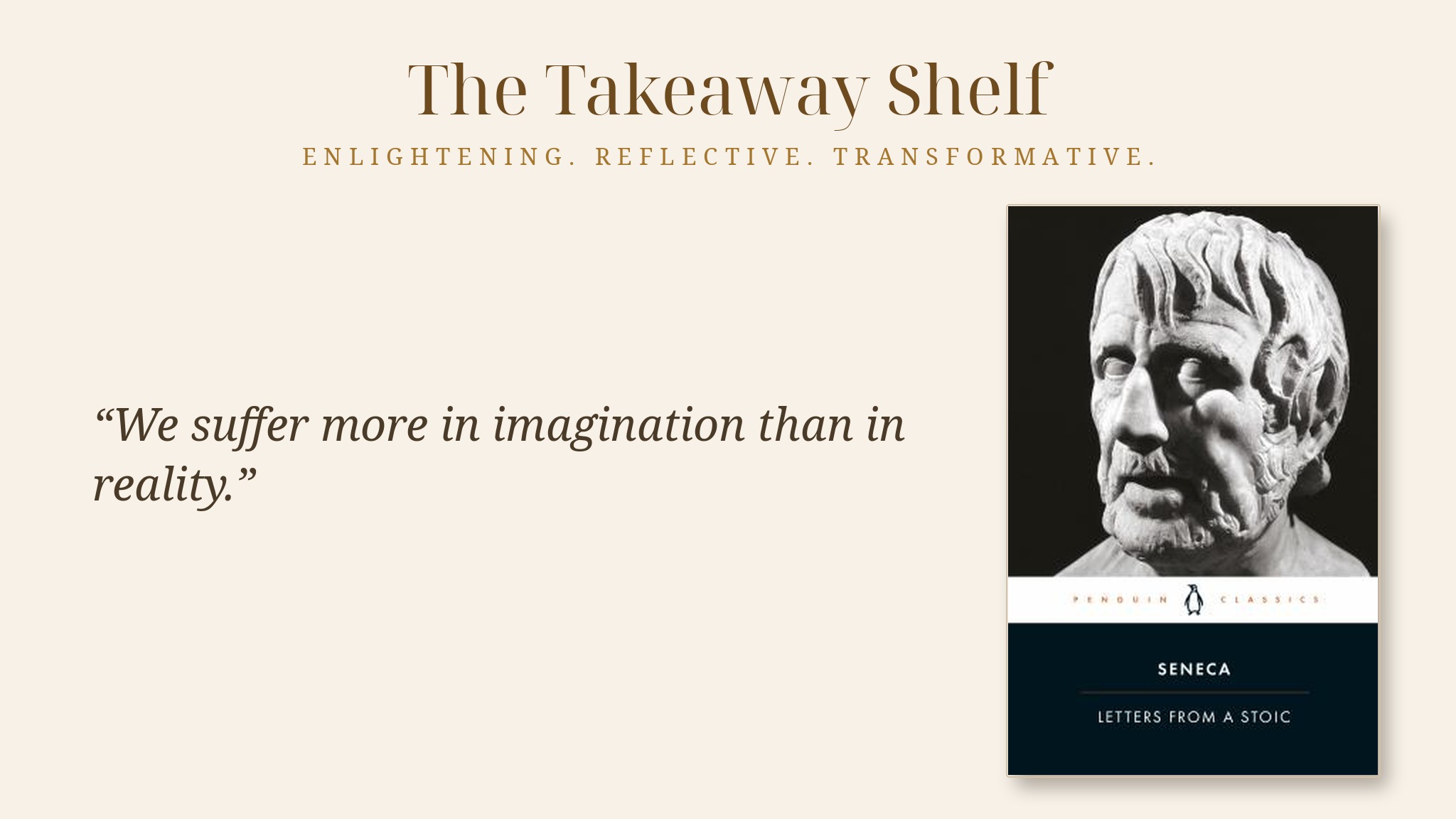
One of the most quoted ideas in Letters from a Stoic by Seneca is also one of the most useful: we suffer more in imagination than in reality, rehearsing disasters that never arrive while the present moment passes unnoticed. Seneca’s fix is to separate what has actually happened from what you fear might happen, deal with the first, and stop paying interest on the second.
6. Face Death Calmly and Life Gets Clearer
Seneca returns again and again to mortality, not to frighten Lucilius but to focus him, and Letters from a Stoic by Seneca treats remembering death as a daily practice. When you accept that your time is limited, the trivial falls away on its own: the grudges, the performances, the approval you were chasing. What remains is what you would actually choose, which is a far better way to plan a day.
7. Philosophy Must Be Lived, Not Just Read
Reading wise words changes nothing on its own, and Letters from a Stoic by Seneca has little patience for philosophy as clever talk. Seneca urges Lucilius to examine each day, admit where he fell short, and put one idea into practice before reaching for the next book. The letters themselves model this: short, plain, and meant to be tried, not just admired.
8. Hardship Is Training, Not Punishment
Fortune will turn — that is the one promise Seneca is sure of — so Letters from a Stoic by Seneca treats hardship as training for the life you actually have, not as proof that life is unfair. Difficult days reveal what you are made of, teach you what you can do without, and leave you steadier for the next turn. Endure well, and the hard season becomes part of your strength rather than just part of your story.
Get the Book
Short, warm, and endlessly quotable, Letters from a Stoic by Seneca is the rare ancient book that reads like advice for this week. It is available on Kindle and in print, and one letter a day is a gentle way to start.
Use Your Time Like It Matters
That is the whole book in a single habit, really. Letters from a Stoic by Seneca will not ask you to become someone else — it will ask you to spend your hours, choose your company, and meet hardship on purpose. Start with one letter, try one lesson, and watch how much calmer a well-used day feels. 📚