
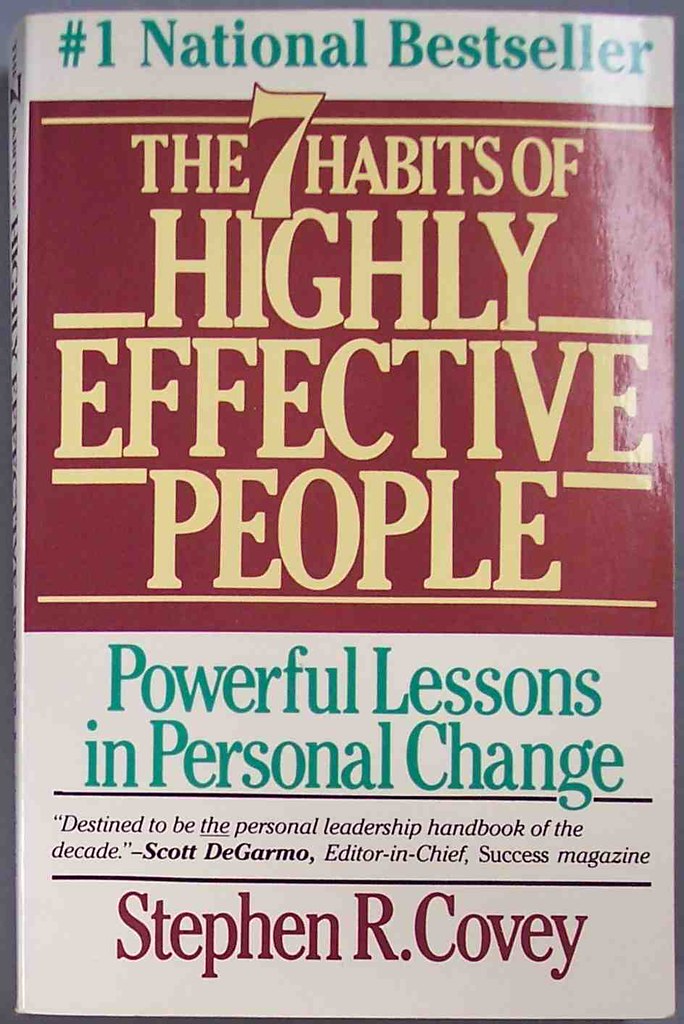
Why The 7 Habits of Highly Effective People by Stephen Covey Should Be on Your Shelf
Discover why The 7 Habits of Highly Effective People by Stephen Covey is a life-changing guide to personal and professional growth. Learn how its principles can transform your habits and mindset for success.
This post may contain affiliate links. For more information, please see my affiliate disclosure.
When I first picked up The 7 Habits of Highly Effective People by Stephen Covey, I wasn’t expecting the profound impact it would have on my outlook. There are many self-help books out there, but this one felt different. Covey’s approach isn’t about quick fixes or superficial strategies. It’s an exploration of lasting principles that guide your life in every way—from work to relationships to personal goals. Stephen R. Covey first published this book in 1989, and it has sold more than 20 million copies since—yet it still feels like it was written for right now.
If you’ve ever felt like you’re spinning your wheels, working harder without seeing meaningful results, The 7 Habits of Highly Effective People is a game-changer. Here’s why I believe it deserves a permanent spot on your shelf.
Table of Contents
1. It’s a Timeless Framework for Success
What makes The 7 Habits stand out is its focus on timeless principles. Covey doesn’t just hand out tips for managing your time or being more productive; he teaches you how to rethink your entire approach to effectiveness.
The habits he outlines—like being proactive, beginning with the end in mind, and seeking first to understand before being understood—are rooted in universal values. They don’t go out of style because they’re based on human nature and timeless truths. Unlike trendy self-help books that promise quick fixes, Covey’s writing is grounded in real-world wisdom—practical, and rooted in character.
Take Habit 7, “Sharpen the Saw.” It’s all about self-renewal—taking time to invest in your physical, emotional, and mental well-being. It’s a gentle reminder that burnout never leads to success, and it applies no matter where you are in life. Whether you’re a student, a CEO, or a parent, you’ll find lessons here that resonate deeply.
Reading The 7 Habits of Highly Effective People felt like gaining a roadmap for life. It’s not about doing more but doing the right things in the right way.
2. It Bridges Personal and Professional Growth
One thing I love about The 7 Habits of Highly Effective People is how seamlessly it connects personal growth with professional success. It shows how becoming a better version of yourself at home can directly enhance your effectiveness at work—and vice versa.
For example, when you clarify your personal mission statement (a concept Covey emphasizes), it influences everything—how you manage your time, how you interact with colleagues, and even how you approach challenges.
This integrated approach ensures that you’re not just succeeding in one area of life while neglecting others. It’s a holistic way to live with purpose.
3. It Challenges You to Look Inward
Covey emphasizes character over personality. He encourages readers to develop integrity, honesty, and fairness instead of relying on surface-level tricks to get ahead.
This is one of the most challenging aspects of The 7 Habits of Highly Effective People. It asks you to take responsibility for your choices and behaviors, rather than blaming external circumstances.
I remember pausing frequently while reading, reflecting on how my habits aligned—or didn’t align—with the principles Covey described. This level of introspection is rare in most books, but it’s what makes The 7 Habits so impactful.
4. It Encourages You to Build Better Relationships
One of my favorite parts of The 7 Habits of Highly Effective People focuses on interdependence—the idea that working well with others is key to success.
Covey doesn’t just tell you to be a “team player.” He offers concrete strategies for building trust, resolving conflicts, and creating win-win situations.
For example, Habit 5, “Seek First to Understand, Then to Be Understood,” teaches the importance of empathetic listening. I’ve seen this one habit soften hard conversations at home and untangle tense moments at work. Listening to understand first changes everything.
5. It’s Easy to Understand but Deep in Meaning
The 7 Habits of Highly Effective People is incredibly accessible. Covey uses clear language and relatable examples to explain his ideas in the first part of the book. Whether you’re new to self-help or a seasoned reader, you’ll find the language easy to follow.
Each chapter is packed with insights that make you think differently about your habits, priorities, and long-term goals. It’s the kind of book you’ll want to revisit multiple times because you’ll discover new layers of meaning with each read.
6. It’s Not Just Theory—It’s Actionable
What I appreciate most about The 7 Habits of Highly Effective People is how actionable it is. Each habit comes with practical exercises and real-world applications.
For example, when learning about Habit 2, “Begin with the End in Mind,” Covey encourages you to write a personal mission statement. This simple but powerful exercise helped me clarify my values and focus on what truly matters.
The book doesn’t just tell you what to do; it shows you how to do it.
7. It Leaves a Lasting Impact
Years after reading The 7 Habits of Highly Effective People, I still find myself referencing its principles. Whether I’m setting goals, managing my time, or working through challenges, the lessons in this book continue to guide me.
It’s not just a book you read and forget—it’s a book that shapes how you live.
Here are some memorable and impactful quotes from The 7 Habits of Highly Effective People by Stephen Covey:
- “Sow a thought, reap an action; sow an action, reap a habit; sow a habit, reap a character; sow a character, reap a destiny.”
- Our thoughts become our actions, our actions become our habits—and our habits shape our destiny.
- “The key is in not spending time, but in investing it.”
- Covey reminds us to invest our time on purpose, not just spend it.
- “Seek first to understand, then to be understood.”
- A foundational principle for effective communication and building strong relationships.
- “I am not a product of my circumstances. I am a product of my decisions.”
- This one puts responsibility—and hope—right back in our own hands.
- “Begin with the end in mind.”
- A reminder to start with your purpose and let it guide your steps.
- “Most people do not listen with the intent to understand; they listen with the intent to reply.”
- Covey challenges us to practice empathetic listening rather than reactive communication.
- “You have to decide what your highest priorities are and have the courage—pleasantly, smilingly, unapologetically—to say no to other things. And the way you do that is by having a bigger yes burning inside.”
- Saying no gets so much easier when a bigger yes is burning inside.
- “Sharpen the saw means preserving and enhancing the greatest asset you have—you.”
- A metaphor for self-renewal and maintaining balance in life.
- “We see the world, not as it is, but as we are—or, as we are conditioned to see it.”
- Covey points to the influence of our paradigms on how we interpret reality.
- “Happiness, like unhappiness, is a proactive choice.”
- Happiness is something we can choose—one proactive decision at a time.
Who Should Read This Book?
The 7 Habits of Highly Effective People is for anyone who wants to improve their effectiveness in life, whether personally or professionally. It’s particularly helpful for leaders, entrepreneurs, parents, and anyone seeking meaningful growth.
That said, it’s not a quick read. The concepts require time and effort to fully absorb and apply. But trust me, the investment is worth it.
Rating
Based on Goodreads, The 7 Habits of Highly Effective People holds an impressive 4.2 out of 5 stars, and I wholeheartedly agree with this rating. It’s a life-changing book that has earned its place as a classic in the self-help genre.
Cultivating Success: How The 7 Habits of Highly Effective People Plants Seeds of Growth
Reading The 7 Habits of Highly Effective People is like planting a seed in our minds—a small but intentional act that holds incredible potential. At first, the growth may not be immediately obvious. The ideas take time to take root as we reflect, adjust our habits, and begin applying the principles Covey teaches.
As with any well-tended seed, the process is worth the patience. Over time, these principles begin to strengthen like roots, anchoring us to values that truly matter. They give us stability during challenging times and clarity when faced with tough decisions. From there, the growth expands outward. The “branches” of these habits stretch into every part of our lives—how we work, how we communicate, and how we approach our goals. Each principle builds on the others, creating a framework for personal and professional success that feels natural, not forced.
Ultimately, this book isn’t just about adding skills or knowledge to our lives—it’s about nurturing the best version of ourselves. It helps us grow in alignment with our values, purpose, and vision, leading to lives that are both fulfilling and impactful. Like a tree that begins with a single seed, the potential for growth is endless.
If this book earns a spot on your shelf, I think you’ll also love three other favorites from The Takeaway Shelf: Atomic Habits by James Clear, which shows how small habits lead to big change; Deep Work by Cal Newport, for learning to focus in a distracted world; and Essentialism by Greg McKeown, for clearing away the nonessentials so the right things can grow.
Author’s Note:
Writing this review has reminded me of the profound lessons I gained from this book. If you haven’t read it yet, I highly recommend picking up a copy. And if you have, I’d love to hear how it’s impacted your life. Let’s keep growing and learning together!