
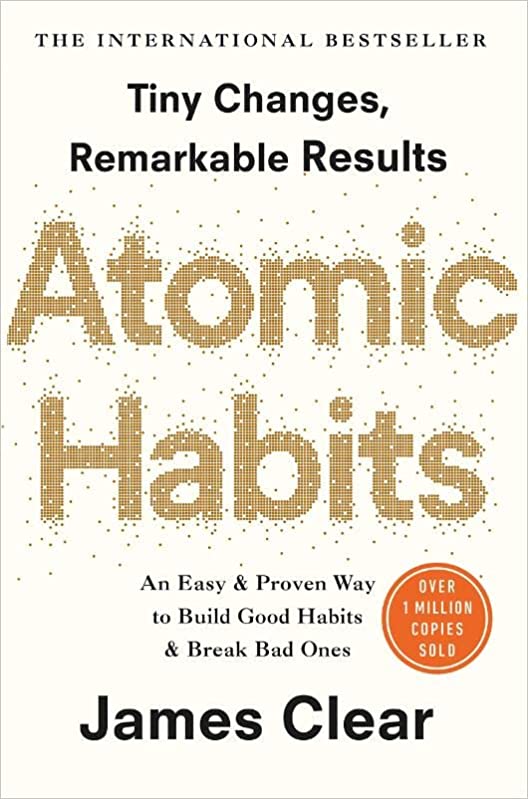
The Life-Changing Lessons from Atomic Habits by James Clear
Discover the life-changing lessons from Atomic Habits by James Clear. Learn how small habits can lead to big transformations and how to design a life of consistent progress and success.
This post may contain affiliate links. For more information, please see my affiliate disclosure.
If you’ve ever wanted to change your life but felt stuck, Atomic Habits by James Clear might be the guide you’ve been searching for. The book isn’t just about habits—it’s about how the tiniest actions, done consistently, can completely transform your personal and professional life. What struck me most was how simple, yet incredibly effective, the ideas are. Clear breaks down complex behavior patterns into manageable steps that anyone can follow.
In this post, I’ll share the key lessons I learned from Atomic Habits by James Clear and how they’ve shifted my perspective on growth and progress.
In this article:
- 1. Tiny Changes Create Big Results
- 2. The Four Laws of Behavior Change
- 3. Identity-Based Habits
- 4. The Power of Habit Stacking
- 5. Focus on Systems, Not Goals
- 6. Break the Habit Loop
- 7. Environment Shapes Behavior
- 8. Be Kind to Yourself
- My Personal Takeaway
- Shaping the Flow of Life Through Habits
- Rating
- Author’s Note
1. Tiny Changes Create Big Results
The main idea of Atomic Habits by James Clear is simple: small habits, when done consistently, compound over time. Imagine improving just 1% each day. It may seem like nothing in the moment, but over a year, we’d be 37 times better. That’s the magic of compounding!
Before reading Atomic Habits by James Clear, most of us already knew that change needs to be gradual. The book helps us view transformation from a new perspective—it’s not about occasional big efforts but about stacking small, consistent actions. It’s like planting seeds: while the growth isn’t immediate, with patience and care, those small actions eventually flourish into something extraordinary.
2. The Four Laws of Behavior Change
Atomic Habits by James Clear outlines a practical framework for building good habits and breaking bad ones—the Four Laws of Behavior Change:
- Make it obvious – If we want to start a habit, we should make the cue impossible to miss. For example, if we want to drink more water, we can keep a water bottle on our desk.
- Make it attractive – Pairing a new habit with something we enjoy makes it easier to adopt—for example, listening to a favorite podcast while working out.
- Make it easy – Lowering the barrier to starting is crucial. If we want to write daily, we could aim for just two sentences instead of a full essay.
- Make it satisfying – Reinforcing the habit with a reward helps build momentum. Celebrating small wins keeps us motivated to continue.
These laws work because they emphasize designing our environment to support our goals rather than relying on willpower.
3. Identity-Based Habits
Identity-based habits are about aligning your actions with the type of person you want to become, rather than focusing only on outcomes. Instead of asking, “What do I want to achieve?” (outcome-based habits), ask, “Who do I want to become?” When your habits reflect your desired self-image, they become more sustainable—deeply rooted in who you are, not just what you do.
4. The Power of Habit Stacking
Habit stacking is one of the most practical strategies James Clear offers in Atomic Habits by James Clear. It involves linking a new habit to an existing one, creating a seamless flow that makes it easier for us to remember and follow through. Instead of trying to carve out entirely new routines, we build on habits we already perform every day.
Take brushing our teeth, for example. It’s a habit so ingrained that we do it without thinking. Adding a new habit, such as writing down three things we’re grateful for right after brushing, builds on that established routine. It acts as a trigger, making the new habit almost automatic over time.
This method can transform our routines. By stacking habits—like making our beds, then journaling, followed by a quick stretch routine—we create sequences that feel natural, and because each action flows into the next, it becomes a consistent, enjoyable ritual.
5. Focus on Systems, Not Goals
While goals are great for setting a direction, they’re not what drive success. Clear emphasizes that it’s the systems—our daily habits and processes—that make the real difference. Goals provide the what, but systems provide the how.
Say you want to read 50 books in a year. That goal might sound motivating at first, but without a system to support it, it’s easy to lose momentum. Instead of focusing on the number, we could create a system of reading for 20 minutes every day. By sticking to this manageable habit, we’ll likely find that we naturally hit our reading targets.
One point in Atomic Habits by James Clear resonates deeply: winners and losers have the same goals. Both aim for success, but it’s the systems they follow that determine the outcome. A strong system ensures we’re making consistent progress, regardless of external circumstances.
6. Break the Habit Loop
Atomic Habits by James Clear explains that every habit operates within a loop: cue, craving, response, and reward. This structure explains why habits can feel automatic and hard to break. If we want to change a habit, we need to address this loop.
Take late-night snacking, for example. The cue might be boredom or stress, which leads to a craving for comfort, resulting in the response (grabbing a snack) and the reward (a momentary feeling of satisfaction). To disrupt this loop, we could remove the cue by keeping unhealthy snacks out of reach or replace the response with a healthier alternative, like drinking tea or taking a short walk.
Understanding this framework puts us back in control of habits we once thought were out of our hands. By tweaking just one part of the loop, we can change the entire behavior.
7. Environment Shapes Behavior
James Clear makes a compelling case that our environment is often a stronger influence on our habits than willpower. We naturally gravitate toward what’s convenient, so creating an environment that supports good habits is crucial. This is why Atomic Habits by James Clear devotes so much attention to environment
For example, if we want to work out more, keeping our workout clothes visible and ready to go lowers the barrier to getting started. Conversely, making bad habits harder to engage with—like placing our phones in another room during work hours—helps minimize distractions.
This insight can transform how we approach our work and personal lives. By organizing our environment to make our desired habits the easiest option, we become far more consistent. Simple changes, like setting up our workspace the night before or placing books we want to read in plain sight, can have a surprisingly big impact.
8. Be Kind to Yourself
Atomic Habits by James Clear reminds us that perfection isn’t the goal. Building habits is about showing up consistently, not flawlessly. Missing once is an accident; missing twice is the start of a new habit. The key is not letting one missed day snowball into a pattern that derails our progress.
This lesson was incredibly freeing for us. It’s easy to be hard on ourselves when we miss a day, whether it’s skipping a workout or falling behind on a schedule. That guilt can lead to procrastination or even giving up entirely. Treating setbacks as a natural part of the journey helps us get back on track faster.
Instead of obsessing over perfection, we can focus on progress. If we miss a day, we can remind ourselves that one off day doesn’t undo all the effort we’ve already put in. The next day, we can pick up right where we left off—no guilt, no hesitation. This shift makes habit-building a sustainable and rewarding process, free from unnecessary pressure.
My Personal Takeaway from Atomic Habits by James Clear
This book has shaped my blogging journey more than I expected. Plenty of things compete for my attention, even when I have a clear plan for the day. Since I have a variety of interests, it’s sometimes hard to stay focused. Before I know it, I’ve strayed from my plan—and in blogging, especially with a posting schedule to keep, that drift is costly.
I run two blogs, and during the first few months, I struggled to maintain a consistent posting schedule. I knew I had to change—every missed post left me feeling dissatisfied. Applying the lessons from Atomic Habits by James Clear, I began building systems to manage my time better, such as batching tasks and attaching new habits to existing routines.
Now, I’m happy to say I’ve turned things around. Both blogs are updated regularly, and I feel a deep sense of fulfillment knowing I’m sharing what I’ve learned from books like Atomic Habits by James Clear. Instead of feeling overwhelmed, I feel more in control—and excited to keep growing as a blogger.
Shaping the Flow of Life Through Habits
Life is like a river, constantly flowing—sometimes smooth and calm, other times wild and unpredictable. The choices we make and the habits we build are like pebbles we drop into the water: each one might seem small, almost insignificant at first, but as they accumulate, they shift the current. With persistence, those tiny ripples grow, carving new channels and leading the river in unexpected directions. Similarly, our habits—though seemingly minor—have the power to change the course of our lives, a truth Atomic Habits by James Clear illustrates beautifully.
Like the river that gradually carves its way through mountains, our habits can guide us to places of beauty, growth, and transformation we never imagined possible.
Rating
On Goodreads, Atomic Habits by James Clear has an impressive rating of 4.39 out of 5 stars (based on over 1.5 million reviews)—a testament to how impactful and well-loved this book is worldwide.
Author’s Note
Hey there! I hope this review inspired you to pick up Atomic Habits by James Clear or revisit its lessons. Changing habits isn’t always easy, but trust me—it’s worth it. If you’ve already read the book, I’d love to hear how it has impacted your life. Let’s keep growing, one habit at a time!
If you enjoyed these takeaways, you might also like Ikigai: 7 Takeaways on Living a Long, Happy Life and The Midnight Library: 6 Takeaways on Regret and Second Chances.






One Comment