
Empress Ki K-Drama Review: A Powerful Tale of Love, War, and Female Empowerment
Fall in love with the Empress Ki K-drama — a gripping historical saga blending romance, revenge, and royalty. Here’s why it’s a must-watch for drama lovers.
Some shows entertain you. Others teach you something. Every once in a while, a series does both — and then stays with you for years, like an old friend. For me, that show is Empress Ki. It’s not just a drama. It’s a chapter of my life.
When I first watched Empress Ki, it had just finished airing in South Korea. I was working full-time, juggling deadlines and real-life stress, and this series became my little pocket of escape. More than that, it became a source of strength, inspiration, and emotional release. I laughed, I cried, I rooted for the characters like they were real people, and I fell hopelessly in love with their journeys.
Years later, when I started dating my husband, I rewatched the whole thing with him. I wanted to share my world. He loved it so much that he still hums the soundtrack from time to time — even three years later. That’s the power of this show. It lingers.
So if you’re wondering whether the Empress Ki K-drama is worth the 51-episode ride, here’s my full, spoiler-light — but heartfelt — review.
Empress Ki K-drama: The Story in a (Very Dramatic) Nutshell
The Empress Ki K-drama is a 51-episode historical series that aired on MBC in South Korea from October 28, 2013, to April 29, 2014. Written by Jang Young-chul and Jung Kyung-soon, it blends fact and fiction to tell the story of a real, Goryeo-born woman who rose to become Empress of the Yuan Dynasty. Its early working title was Hwatu (화투, literally “Battle of Flowers”), but that was changed so viewers would not confuse it with the playing cards of the same name. For the full production and broadcast history, see the Empress Ki page on Wikipedia.
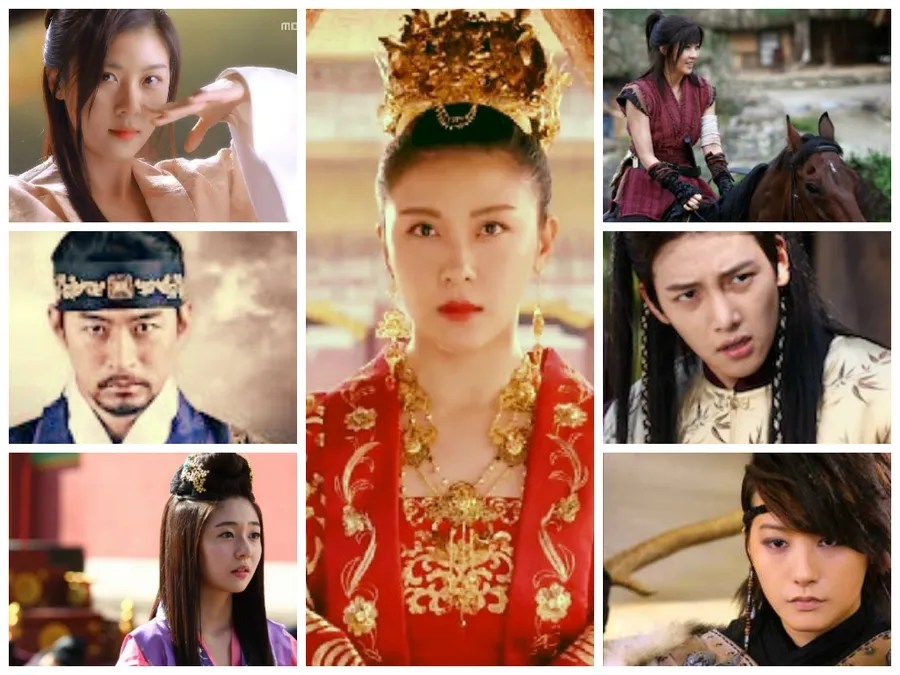
The story follows Ki Seung-nyang, a girl from Goryeo who is sent toward Yuan as a tribute woman and loses her mother during an escape attempt. She survives by disguising herself as a boy, becomes a skilled fighter, and eventually enters the Yuan palace — where, step by hard-earned step, she rises from servant to empress.
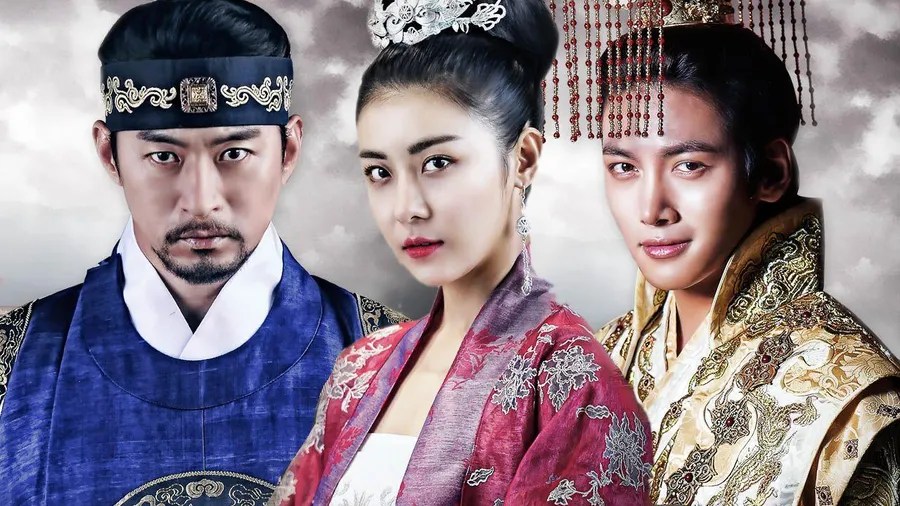
Caught between her first love, Wang Yoo, King Chunghye of Goryeo, and her fate alongside the Yuan emperor Toghon Temür — Ta Hwan — Seung-nyang navigates treacherous waters. Every step forward is earned, and every victory costs her something personal.
The Characters: A Masterclass in Complex Humanity
The characters are where the Empress Ki K-drama truly shines. Nobody here stays simply good or evil for long.
Seung-nyang (Ha Ji-won)
If you’re looking for a strong female lead, Seung-nyang is the blueprint. She is fierce, strategic, and driven by justice — but also heartbreakingly human. She grows from a fighter with nothing to lose into an empress with everything to protect. Her choices aren’t always easy to accept, but they are always understandable, and we never stop rooting for her.
Wang Yoo (Joo Jin-mo)
Ah, King Wang Yoo. My heart breaks a little just typing his name. He is the quiet strength in Seung-nyang’s life — a love that is patient, selfless, and never loud about its sacrifices. He doesn’t get the fairy-tale ending, and it hurts. But his love was never about possession; it was about support, no matter the cost. That is what makes him unforgettable.
Emperor Ta Hwan (Ji Chang-wook)
Ta Hwan — the historical Toghon Temür, the last Yuan emperor — is chaotic, lovable, infuriating, and deeply vulnerable. He starts as an immature puppet emperor, scared of his own shadow, and grows into a man learning to fight for love and for his throne. His devotion to Seung-nyang is both touching and tragic. You will want to shake him and hug him at the same time.
Tal Tal (Jin Yi-han)
You didn’t think I’d forget him, right? Tal Tal — based on the historical statesman Toqto’a — is a fan favorite for a reason: smart, composed, morally grounded, and always ten steps ahead. He commands respect without raising his voice. And yes, many of us quietly wished the writers had given him and Seung-nyang a love story. Not everything has to be one, though. It still hurts a little.
What Makes It So Addictive?
Let’s break down why Empress Ki grabs you and never lets go.
1. The Plot Moves Like a Chess Game
Nothing in this Empress Ki K-drama is random. Every episode builds on the last: alliances shift, characters betray each other, and people die, rise, disappear, and return with a vengeance. It is dramatic without tipping into soap opera, and it keeps you guessing.
2. The Romance Feels Real
Unlike dramas that force in a love story just to tick a box, Empress Ki builds its romances slowly, with real emotional depth. The love triangle is not about shallow jealousy — it is about timing, loyalty, and the different kinds of love one person can feel. Seung-nyang’s bond with Wang Yoo is quiet devotion; her connection with Ta Hwan is loud, complicated, and fiery. Both feel real in the Empress Ki K-drama, which is why both hurt in different ways.
3. It’s Historically Rich but Not Overwhelming
You don’t need to be a history buff. The Empress Ki K-drama gives you enough background to understand the stakes without a degree in East Asian history. It does take creative liberties — the real Empress Gi’s life was dramatic, but the love triangle and many court schemes are fictionalized — so enjoy it as history-inspired, not as a documentary.
4. A Soundtrack That Hits You in the Feels
The Empress Ki K-drama soundtrack is beautiful, haunting, and ridiculously catchy. A soft ballad under a tragic scene, an epic instrumental over a battle — the music always fits. No wonder my husband still sings it. I catch myself humming it in traffic, mid dramatic moment.
5. Jaw-Dropping Cinematography and Locations
The grandeur of the Yuan palace, the misty mountains of Goryeo, and the sweeping battle scenes feel epic because of where and how they were shot. Much of that palace world was created at MBC Dramia — now Yongin Daejanggeum Park, the huge outdoor set built for MBC historical dramas. The locations didn’t just serve as backdrops; they raised the emotional weight of every scene in the Empress Ki K-drama.
Themes That Hit Home
Power and Identity
At its heart, the Empress Ki K-drama is about a woman caught between who she is and what she must become. It asks how power changes people, how far you would go to protect your own, and what parts of yourself you lose along the way. Seung-nyang starts in disguise, becomes a fighter and a palace servant, and ends up an empress. But at what cost?
Love vs. Duty
Can you love someone and still choose your mission over them? That question sits at the core of the Empress Ki K-drama. Sometimes love takes a back seat to survival — and that doesn’t make it any less real. Wang Yoo’s quiet heartbreak reminds us that true love sometimes means letting go.
Revenge and the Price of It
Seung-nyang is driven by revenge, and yes, she achieves it. But the cost is her happiness, her love, and her peace. The Empress Ki K-drama doesn’t glamorize revenge; it shows the toll it takes on the person seeking it — and on everyone who loves them.
A Personal Note (Because This Series Deserves It)
Rewatching the Empress Ki K-drama with my husband wasn’t just nostalgia. It was letting him into a world that mattered deeply to me. Seeing him get into it — asking questions, picking favorite characters, even singing the songs — felt like passing on something precious.
To this day, I remember the lines that broke me, the scenes that made me pause and just breathe, and the moments I whispered, “Nooo” at my screen. It’s more than a show. It’s a reminder that fictional stories can feel completely real when they find you at the right time in your life.
✅ Similar Series Suggestions (for Readers Who Loved Empress Ki)
- Queen Seondeok – Another powerful female lead rising through political ranks in ancient Korea.
- Dong Yi – Palace intrigue, love, and moral strength in Joseon-era Korea.
- The King’s Woman – A Chinese drama of love, sacrifice, and imperial power.
- The Empress (Netflix) – A German period drama about a strong-willed young empress, Elisabeth of Austria, navigating palace politics.
- Mr. Sunshine – A beautifully shot K-drama blending history, romance, and national identity.
- The Rise of Phoenixes – A visually stunning Chinese drama of high-stakes political mind games and slow-burn romance.
Here is my favorite song from the Empress Ki K-drama OST:
More K-Drama Reviews to Explore
If this Empress Ki K-drama review has put you in a K-drama mood, keep going with my Death’s Game K-drama review — a gripping ride through lives, death, and redemption. For something lighter, try my rom-com recaps of The Divorce Insurance Episodes 1 & 2 recap and review, The Divorce Insurance Episodes 3 & 4 recap, and The Divorce Insurance Episodes 5 & 6 recap.
Final Verdict
The Empress Ki K-drama is one of those rare dramas that gets almost everything right: a powerful lead, multi-dimensional characters, stunning costumes, smart storytelling, and emotional payoffs that land like a punch to the gut. It isn’t perfect — nothing is — but it is unforgettable.
Inspired by the legendary life of the real Empress Gi, the drama paints a gripping picture of ambition, heartbreak, and resilience. If you’re new to historical K-dramas, this is a bold place to start. And if you’ve seen it before, maybe it’s time for a rewatch. Just bring tissues.
For me, it will always be top-ten material — not just for its quality, but for what it meant to me. And maybe, just maybe, it will mean something to you too.
Rating: 9.5/10
A sweeping, emotional, powerful ride through love, loss, and legacy — and my final takeaway from this Empress Ki K-drama is simple: watch it.