Echoes of the Past: Admiring the Beauty of Intramuros
A place frozen in time, right in the middle of bustling Manila. That’s Intramuros! This walled city, built by the Spanish in the late 1500s, is overflowing with history and a unique charm.
For Valentine’s Day, my husband and I decided to do something special, so we planned a trip to Intramuros. I had been there several times before, but it was his first visit, and I was excited to show him the beauty of Manila’s historic walled city. We spent a lovely time together strolling the cobblestone streets, admiring the old Spanish colonial buildings, churches, and museums, and learning about the city’s rich past. It was a romantic and unforgettable way to celebrate the day.
Intramuros is famous for its rich past, especially the centuries when the Philippines was under Spanish rule. Its name says it all: Intramuros means “within the walls” in Spanish. The district was the seat of government and the center of religious and cultural life during the Spanish colonial era, and it was also a major trading port that drew merchants from all over the world.
Over the centuries, Intramuros witnessed many important events, from the arrival of the Spanish in the 1500s to the devastation of World War II. Today, it is one of the most popular tourist destinations in Manila, drawing visitors who want to learn about Philippine history and culture.
This post will be your guide to exploring Intramuros, just as we did. Follow along on our route — a hearty breakfast, two grand churches, a recreated colonial home, a quiet bastion garden, and the famous Fort Santiago — and pick up practical tips on tickets, entrance fees, and getting there along the way.
Fueling Up for Adventure: Our Breakfast at Figaro
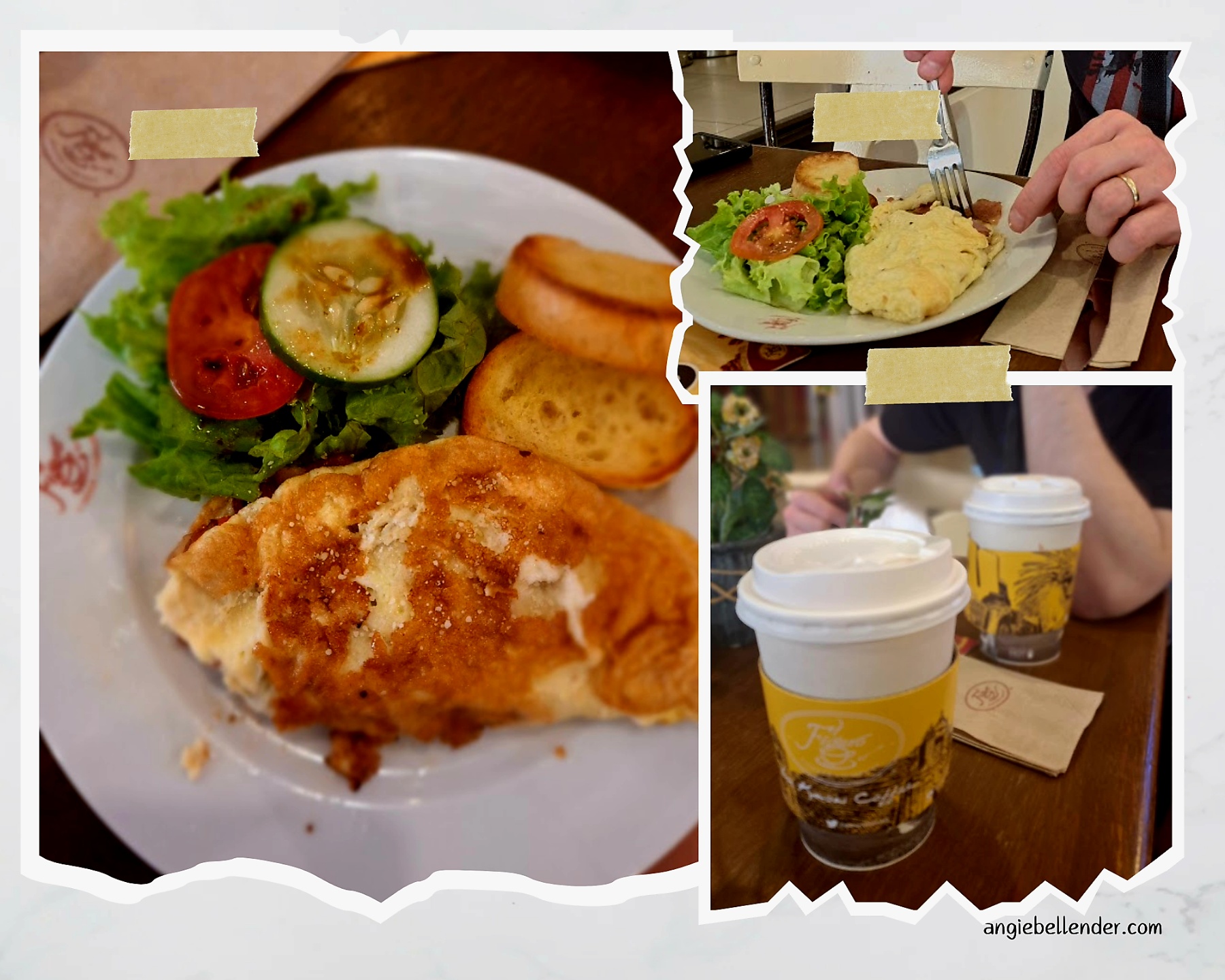
No adventure is complete without a delicious breakfast, and for our Intramuros adventure, we chose Figaro. Figaro is a well-loved Filipino coffee chain, known for its good coffee and all-day breakfast plates.
Stepping inside Figaro, the air buzzed with conversation and the aroma of freshly brewed coffee — warm and inviting. We found a cozy corner and ordered a hearty omelette, which arrived fluffy and flavorful, with a fresh salad and toast on the side, plus a rich, creamy latte with beautiful latte art. As we savored our breakfast, we chatted about the places we planned to visit, and the anticipation grew with every sip. We left Figaro feeling fueled up and ready to explore.
Planning Your Intramuros Visit: Booking and Logistics

To make sure our day went smoothly, I booked our tickets in advance through the Klook website. The Intramuros Pass covered admission to Fort Santiago, Casa Manila Museum, and Museo de Intramuros, all for a lower combined price than buying each ticket separately. Booking online also meant skipping the ticket lines when we arrived.
Intramuros can be explored in different ways, depending on your travel style, time, and budget:
- Self-guided tour: A great option for independent travelers who want to explore at their own pace. You can buy a map or download one online and wander on foot or by bicycle.
- Guided tour: For a deeper experience, book a guided tour with a local expert or agency. We kept overhearing guides during our walk, and their stories really bring the walls to life.
- Bambike tour: Join a guided tour on a handcrafted bamboo bicycle — a fun, eco-friendly way to cover more ground.
- Kalesa ride: Ride a traditional horse-drawn carriage through the streets for a slower, more romantic look at the walled city.
Getting There:
Intramuros sits in the heart of Manila and is easy to reach by different modes of transport:
- By car: Drive into Intramuros and use Google Maps or Waze to navigate. Parking inside the walls is limited, though, so arrive early if you can.
- Commuting: Several jeepney routes and buses stop near Intramuros. You can also take the LRT-1 train to Central Terminal station, the closest station to the walled city, and walk a few minutes from there.
- Taxi or ride-hailing apps: A convenient option, especially if you are traveling with luggage or in a group.
Tip: Wear comfortable shoes, because you will be doing a fair amount of walking. Bring water and an umbrella, too, because the weather in Manila can be unpredictable.
Entrance Fees: As of March 2024, there is no general entrance fee for Intramuros itself. Entering the district, walking its streets and walls, and visiting its churches are free. What you pay for are the ticketed attractions:
Free Entry:
- The streets and walls of Intramuros: Explore the historic walls surrounding the district and soak in views of the city and the golf course below.
- Manila Cathedral and San Agustin Church: Step inside these two grand churches for free, and please be respectful when services are going on.
- Baluarte de San Diego Gardens: Wander the peaceful garden around the old circular bastion at the southern end of the walls.
- Museo de Intramuros: Admission to this Intramuros Administration museum was free when we visited.
Paid Entry:
- Fort Santiago (₱75 for adults, ₱50 for students, seniors, and PWDs): The grounds are not free, despite what some guides say. Your ticket covers the citadel, Plaza Moriones, the dungeons, and the Rizal Shrine museum.
- Casa Manila Museum (₱75 for adults, ₱50 for students, seniors, and PWDs): Step into a recreated 19th-century Filipino home and see how a wealthy family lived during the Spanish colonial era.
Remember: Prices and availability can change, so check the official Intramuros Administration website before your visit, and consider booking tickets online to save time in line.
A Walk Through History: Exploring Intramuros Landmarks
Within the walls of Intramuros stand many historic buildings, each with a story to tell. These landmarks are living testaments to the Philippines’ Spanish colonial era, and they witnessed pivotal moments in our history, from Spanish colonization to the destruction of the Battle of Manila in World War II. The best part? Most of them are within an easy walk of one another.
Manila Cathedral
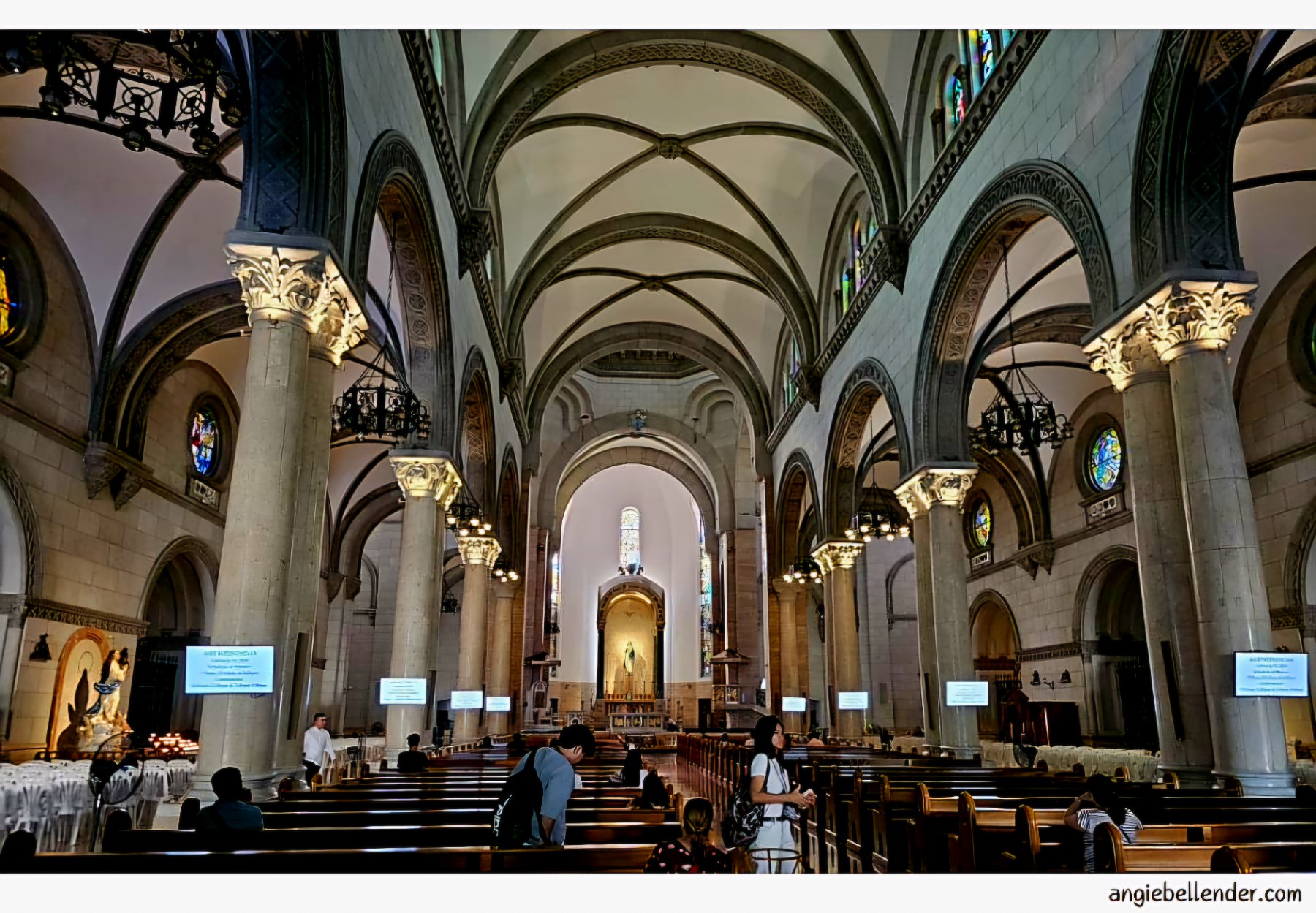
Manila Cathedral: Towering over Plaza de Roma in the heart of Intramuros, with a grand Neo-Romanesque facade and a peaceful, solemn interior, the Minor Basilica and Metropolitan Cathedral of the Immaculate Conception is a must-see. The first cathedral on this site was built in 1581, but earthquakes, fires, a typhoon, and finally World War II destroyed it again and again. The cathedral you see today is the eighth on the site, completed in 1958 — a symbol of faith and resilience.
It has been the site of many important religious events and remains the mother church of the Archdiocese of Manila. Stepping inside, away from the heat and noise, was one of the calmest moments of our day.
San Agustin Church
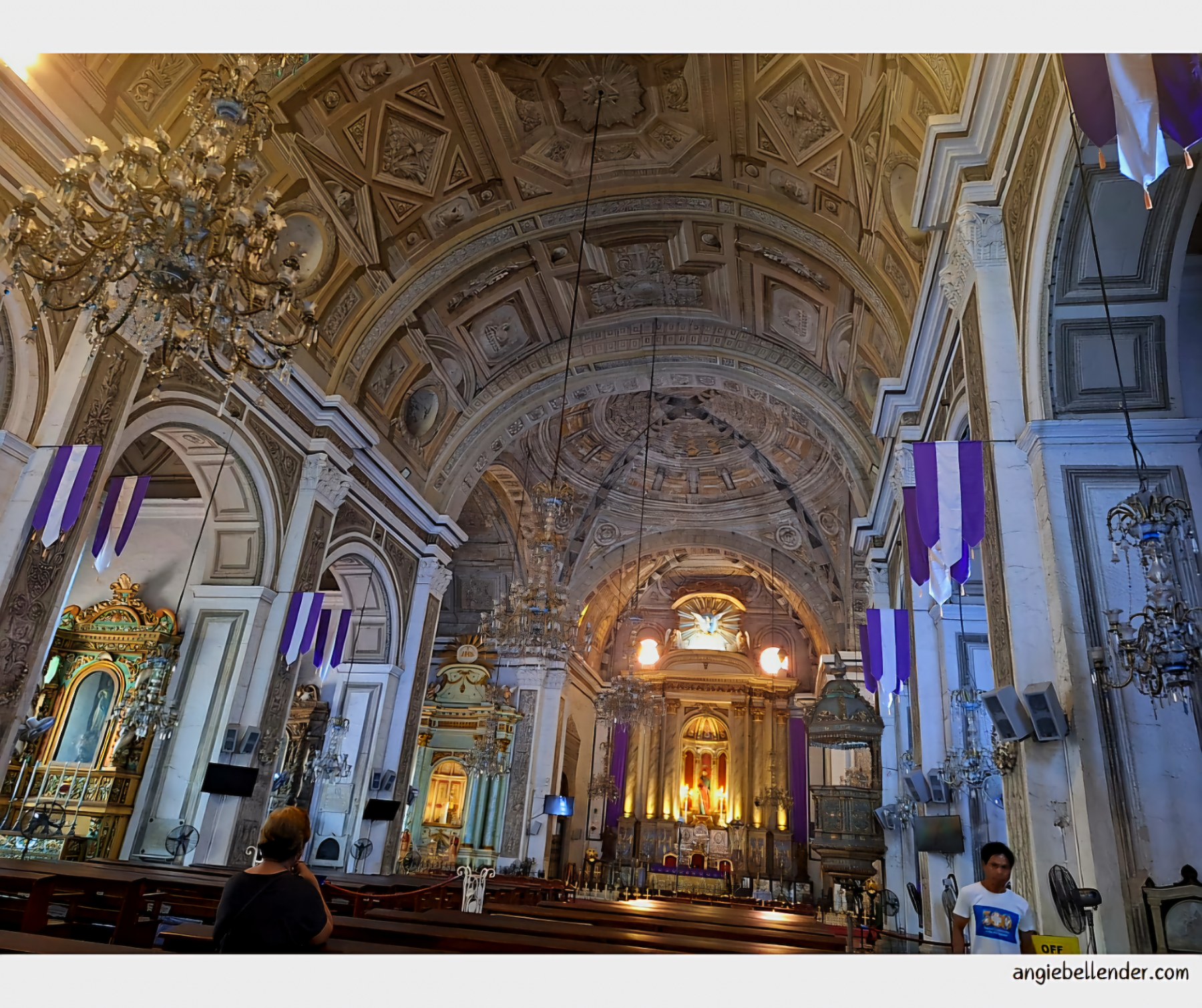
San Agustin Church: A UNESCO World Heritage Site, listed among the Baroque Churches of the Philippines, San Agustin Church is breathtaking inside and out. Completed in 1607, it is the oldest stone church still standing in the Philippines, and it is remarkable for another reason: it was one of the very few structures in Intramuros left standing after World War II. Look up when you enter — the magnificent ceiling is a trompe-l’oeil painting, designed to look like carved stone. This church is a popular venue for weddings and other special occasions, and it is easy to see why.
Casa Manila Museum
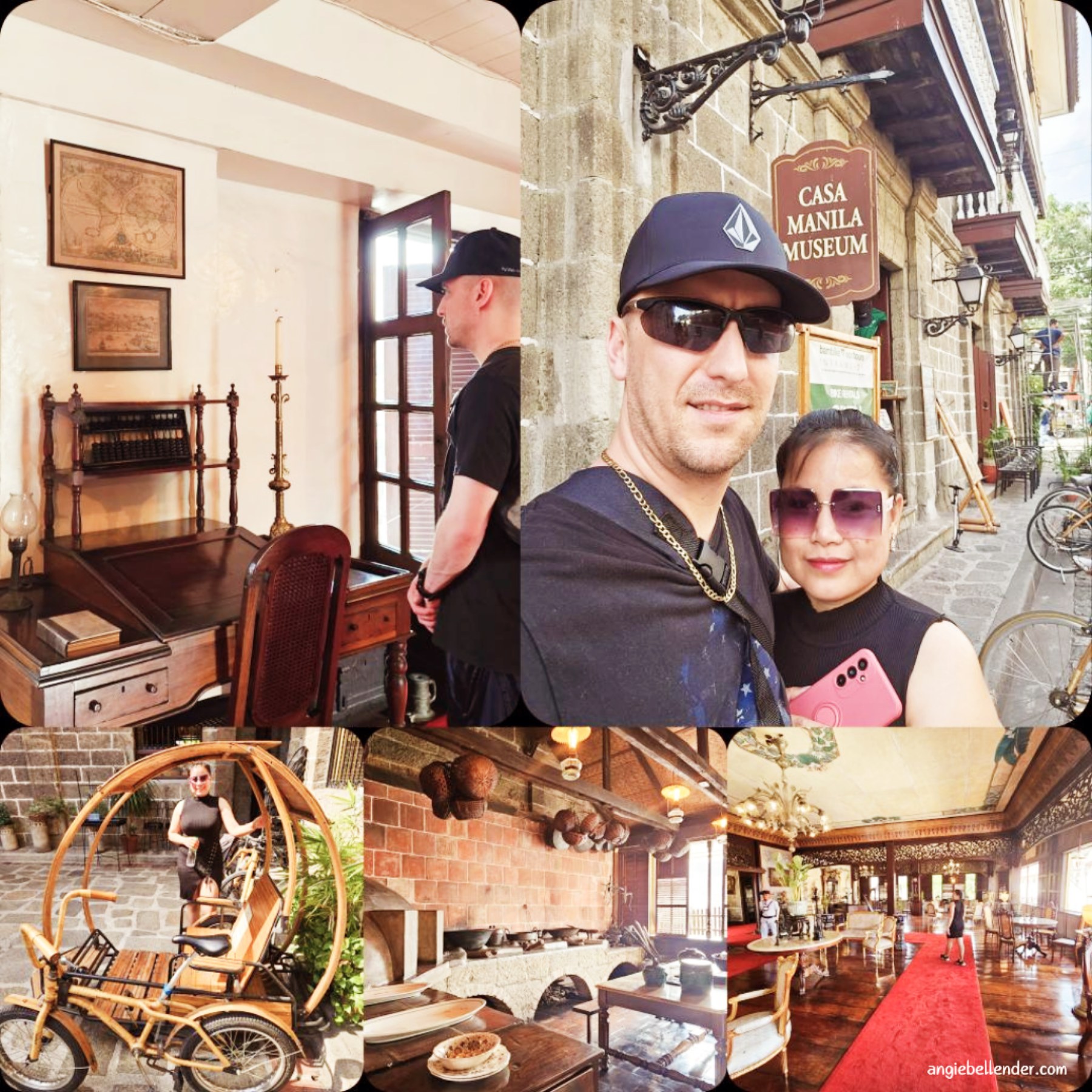
Casa Manila Museum: For a glimpse into Filipino life during the Spanish colonial era, we stopped at Casa Manila across from the church. It is not an original house that was restored — it is a faithful recreation, built in the 1980s, of a wealthy family’s home from the 1850s, furnished with period antiques, furniture, and artwork. Walking through its rooms, we admired the beautiful courtyard, the intricate woodwork, and the elegant details of colonial domestic life.
We also overheard a tour guide sharing stories about the house’s fictional residents and the neighbors who watched their comings and goings — it made the whole place feel alive. Because our sister post covers the museums of Intramuros in depth, we kept this stop short here; you can read the full museum stories in Time Traveling in Intramuros.
Baluarte de San Diego
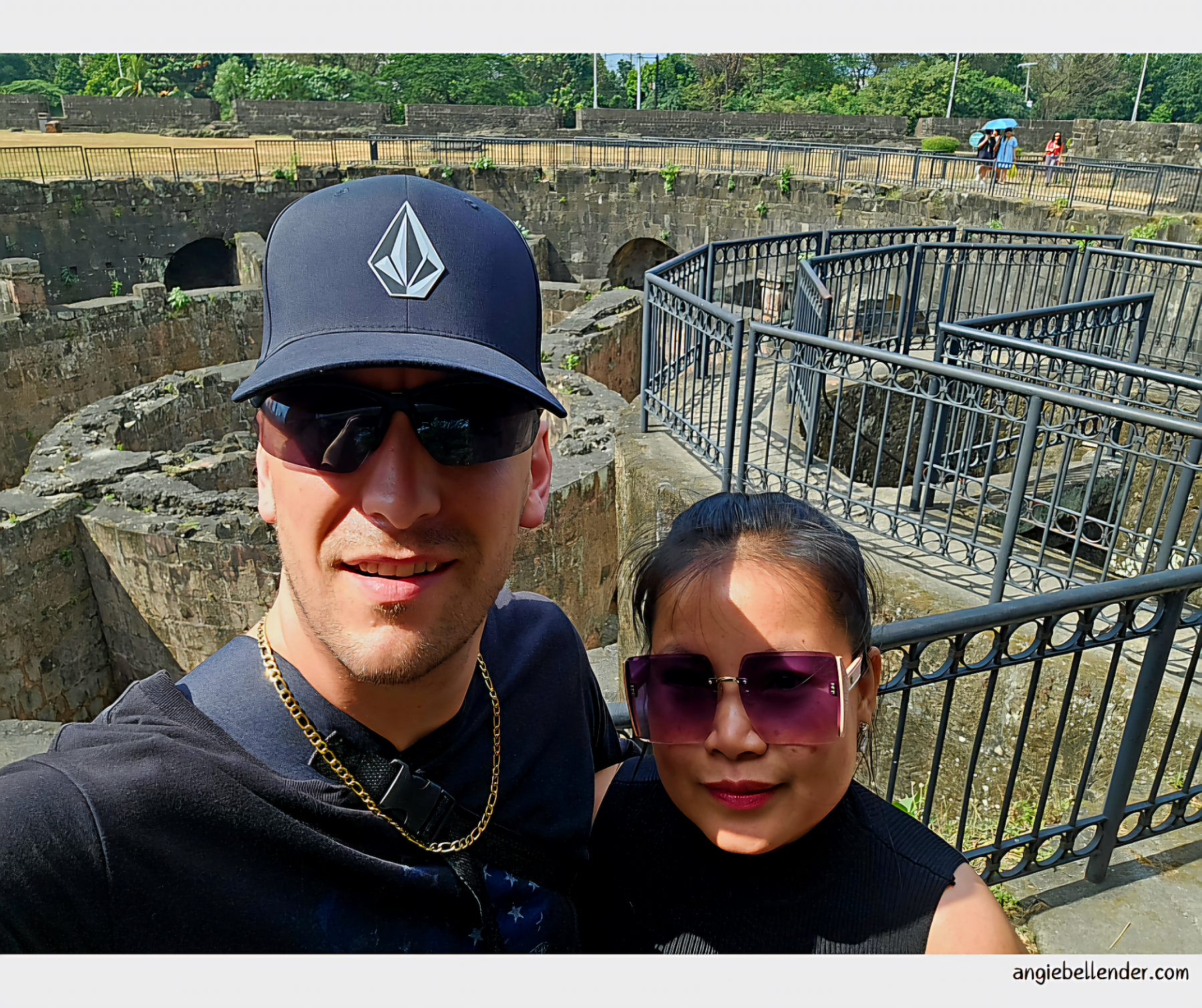
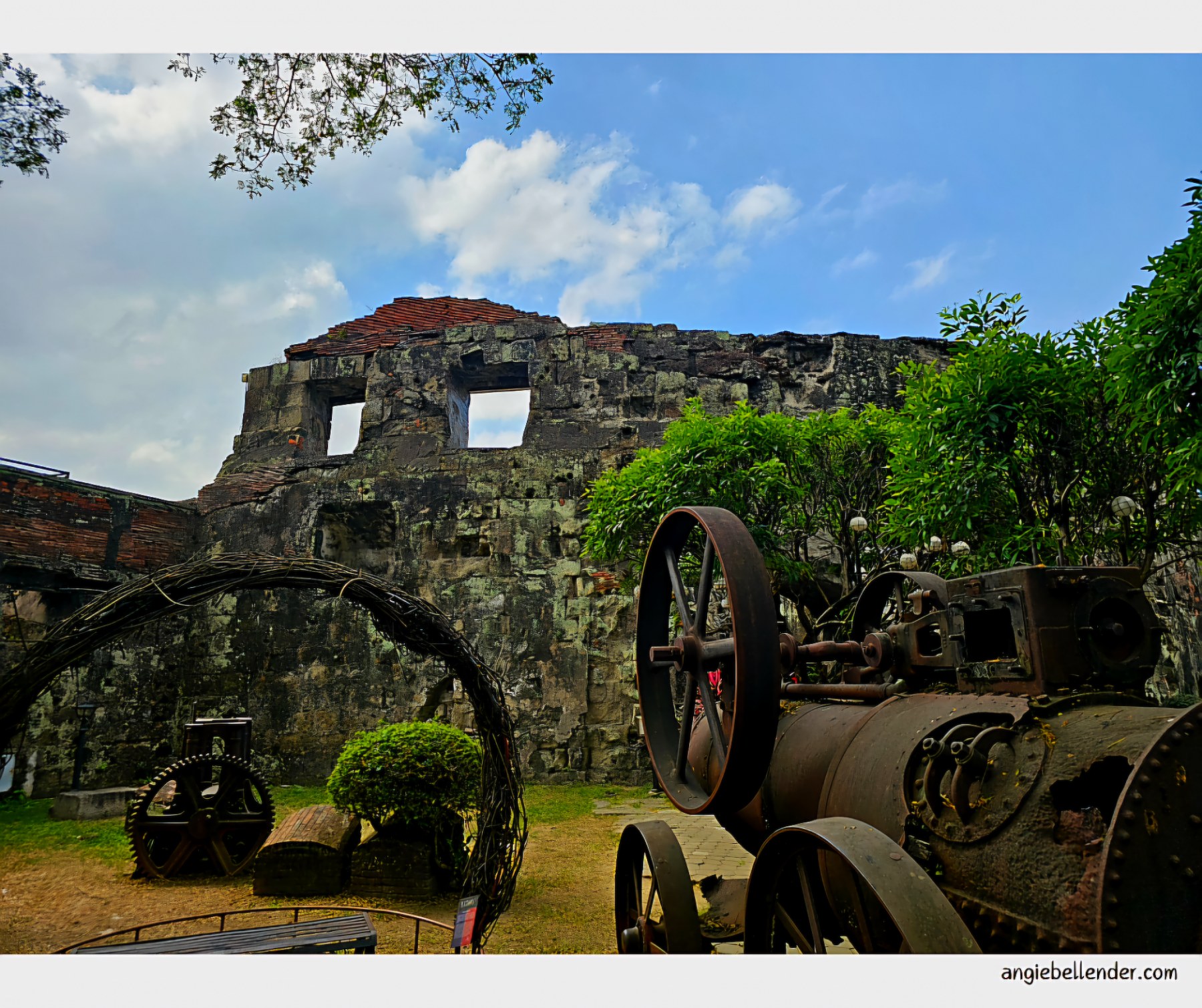
When my husband asked what “baluarte” means, I told him it means a bastion, or bulwark — a defensive structure built to protect a city from attack. The heat outside was no match for our excitement, and we made our way to Baluarte de San Diego, at the southern end of the walls.
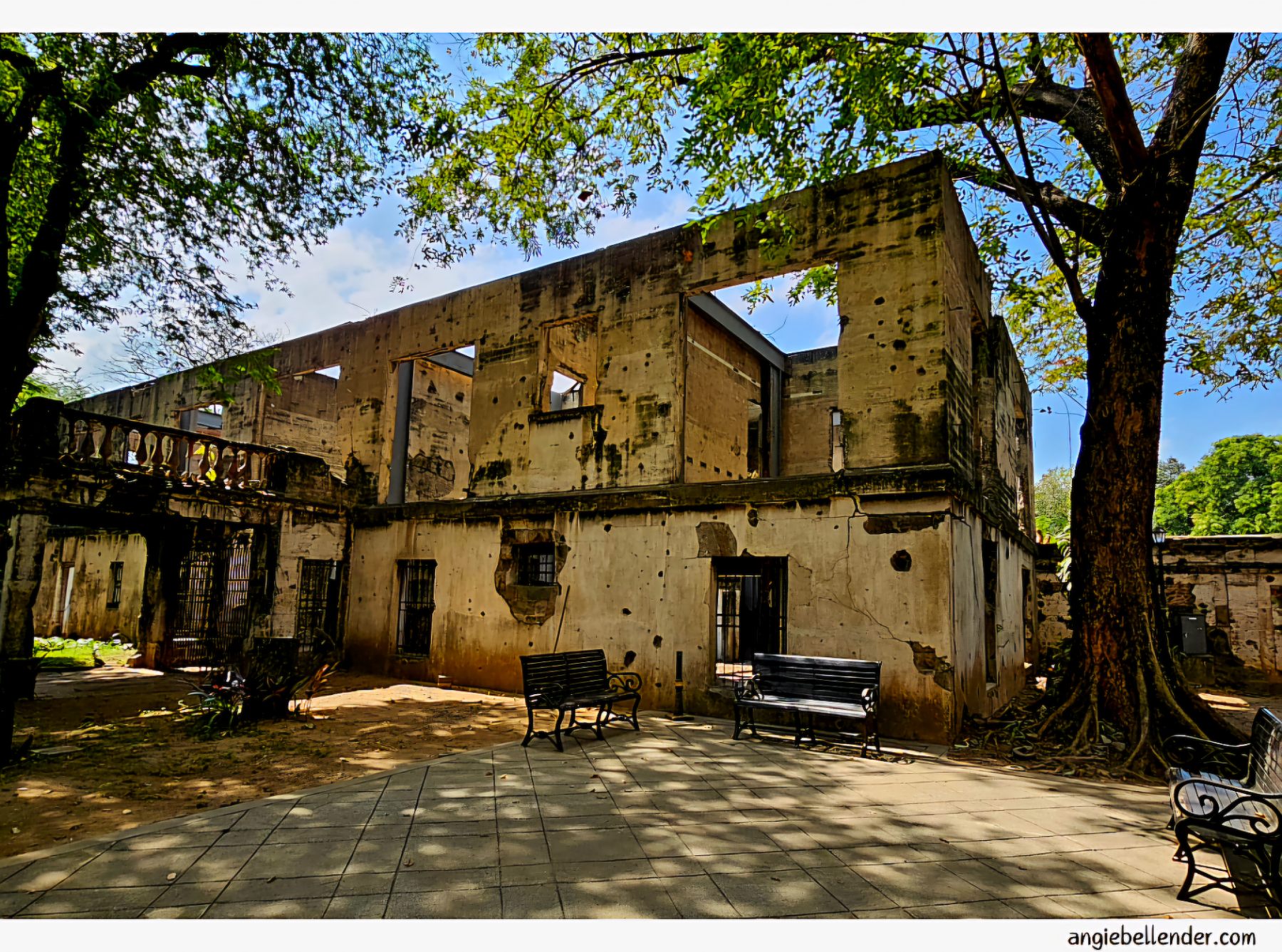
Baluarte de San Diego began in 1586 as a circular stone fort, the Fuerza de Nuestra Señora de Guia, making it one of the oldest stone fortifications in Manila. It was later incorporated into the city walls as a bastion, standing guard against seaborne attacks. Badly damaged during World War II, it has since been restored, and today its ruins sit in a shady, peaceful garden — the one in our first photo above. Of all our stops, this was the quietest: just old stone, green lawns, and the feeling of standing somewhere that has watched over the city for more than four centuries.
Fort Santiago
After all that walking, our feet were definitely feeling it, so we treated ourselves to a pedicab ride to our last stop. The ride from Baluarte de San Diego to Fort Santiago is short — a few minutes — but it gave us time to rest and to enjoy the charming streets and Spanish colonial buildings along the way.
Fort Santiago is the citadel the Spanish built in the 1590s at the mouth of the Pasig River, on the site of Rajah Matanda’s earlier palisaded fort. It served as the military headquarters of the Spanish, British, American, and Japanese forces in turn, and it is most famous as the prison of Dr. Jose Rizal, the Philippine national hero, who was held here before his execution at Bagumbayan in 1896.
Bronze footprints set into the ground trace the route of his final walk from his cell. Inside the gates you will find Plaza Moriones and the ornate Fort Santiago Gate, the Bateria de Santa Barbara overlooking the river, the old dungeons, and wide, tree-shaded grounds that are beautiful and peaceful — a striking contrast to the fort’s dark chapters.
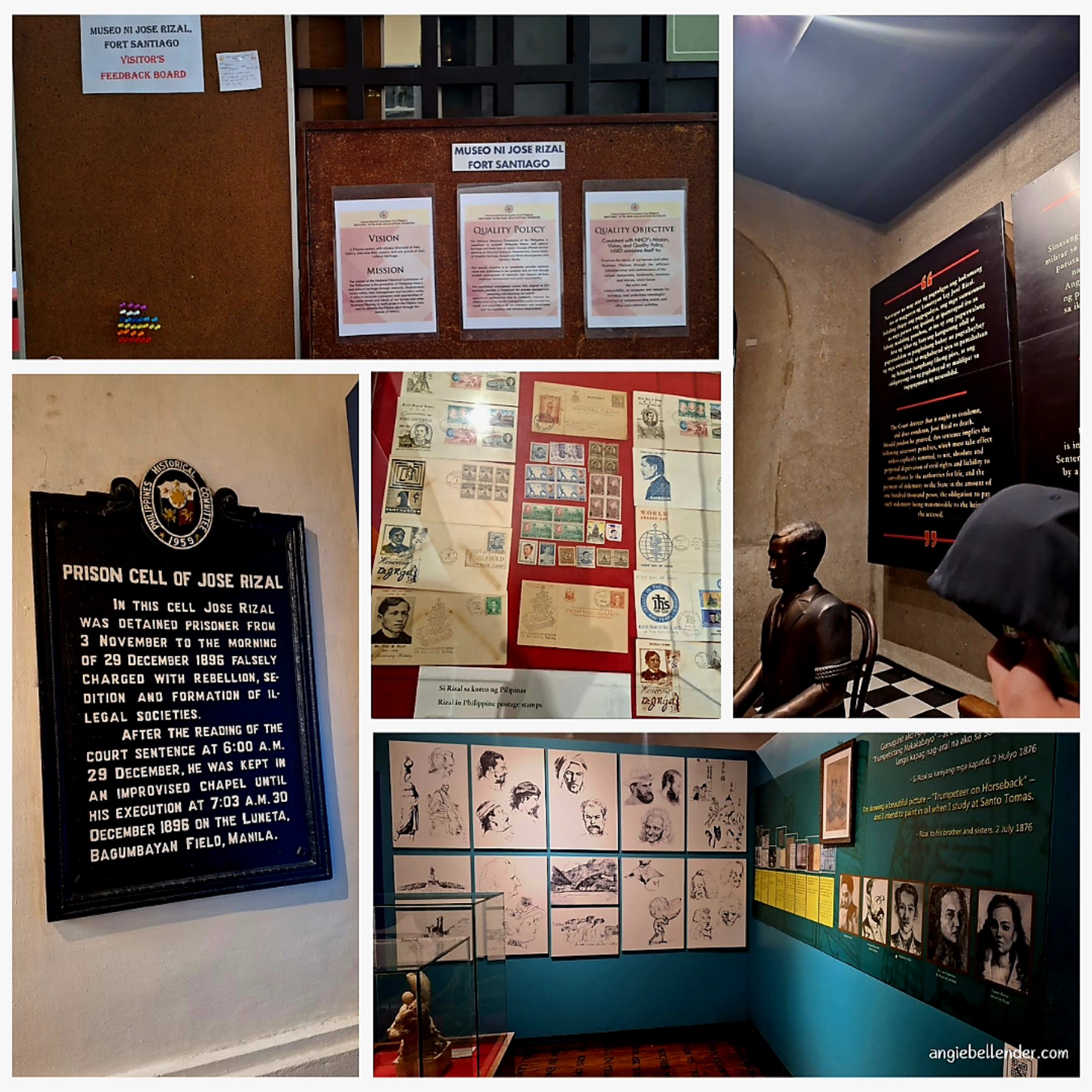
Museo ni Jose Rizal: Inside Fort Santiago stands the Rizal Shrine museum, in the building where Rizal was imprisoned. We kept our visit brief — the exhibits trace his life, his writings and artwork, and his final days, and visiting for the first time hit me hard. It is one thing to read about Rizal in books; it is another to stand in the rooms where he spent his last nights, knowing the crucial role he played in shaping our nation.
If museum visits are your favorite part of a Manila trip, pair this stop with Museum-Hopping in Manila, our guide to the three National Museums just outside the walls. Afterwards, hungry from all the exploring, we treated ourselves to a home-style Filipino lunch at a small carinderia near Casa Manila — the perfect, simple end to the route.
Beyond the Landmarks: Immersing Yourself in the Charm of Intramuros
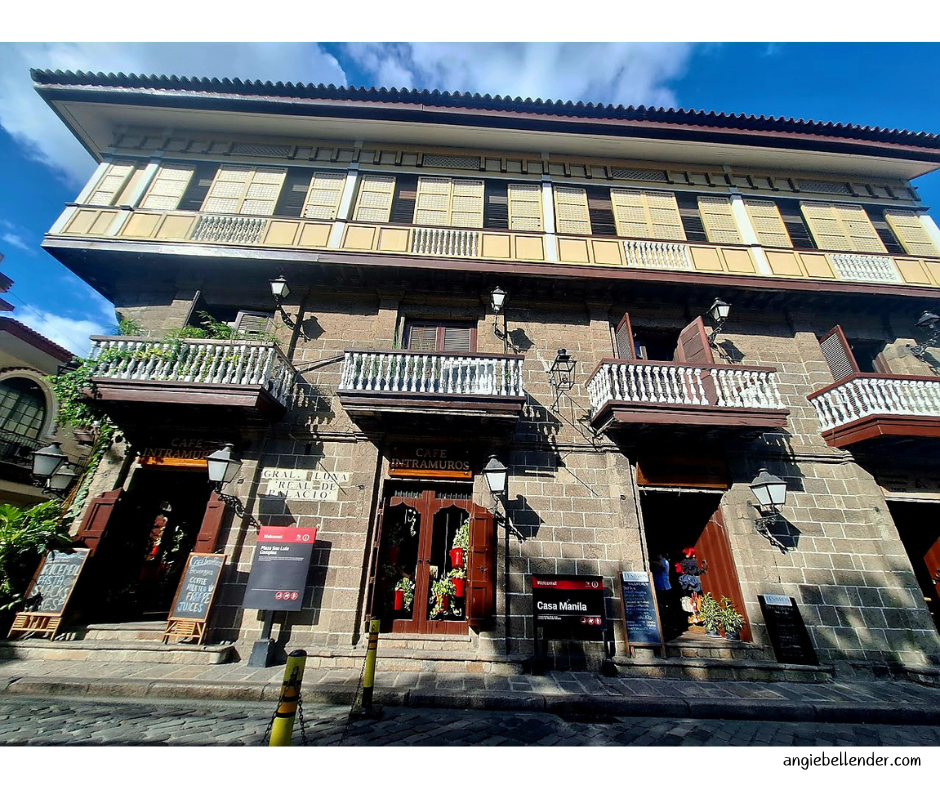
While the historical sites are the main draw, Intramuros offers a unique charm that goes beyond its landmarks:
- Cobblestone streets and horse-drawn carriages: Stepping inside Intramuros feels like going back in time. Cobblestone streets, Spanish colonial architecture, and horse-drawn carriages, called kalesa, create an atmosphere you will not find anywhere else in the city.
- Peaceful courtyards and hidden gems: Wander the narrow streets and you will discover hidden courtyards, charming cafes, and quaint shops tucked inside old buildings. Some restaurants occupy courtyards shaded by trees — perfect for a romantic dinner for two.
- A taste of Filipino culture: Intramuros is not just about the past; it is also a living showcase of Filipino culture. Browse souvenir shops selling local crafts, sample Filipino street food, and catch one of the cultural performances or festivals held here through the year.
A Timeless Beauty: The Enduring Magic of Intramuros
Intramuros stands as a testament to a rich and vibrant past. More than just bricks and mortar, it is a window into the Philippine story — centuries of Spanish colonial rule, the struggle for independence, the rebuilding after war, and a culture that carries all of that history with pride. What makes it special is that it is not a museum behind glass. It is a bridge between past and present: a living district of churches, schools, cafes, and homes that continues to evolve while holding on to its heritage.
As we wandered through Intramuros, we were constantly amazed by the layers of history in every corner, and despite the scorching weather and all the walking, the joy of discovering this historic gem together made it all worthwhile. Since my husband’s time in the Philippines is limited, we cherish every chance to make memories together. Bittersweet as it is to think about, we were simply grateful for the present moment — enjoying our shared interest in history, one walled street at a time.
Impressively, my husband seems to have a better memory for Philippine history than I do; he remembers details from his social studies classes in the United States. He really enjoyed our trip, and I loved seeing Intramuros through his eyes.
If this walk inspires your own date inside the walls, you might also enjoy our Intramuros Valentine’s Day itinerary for couples, which turns these same streets into a full romantic day plan. And on a final note, thanks to the Klook Intramuros Pass, we saved time and money on entrance fees and could simply enjoy the day. Thank you for reading! We hope this inspires you to explore the magic of Intramuros for yourself. Until next time, may your future adventures be filled with joy and excitement. Happy travels!