
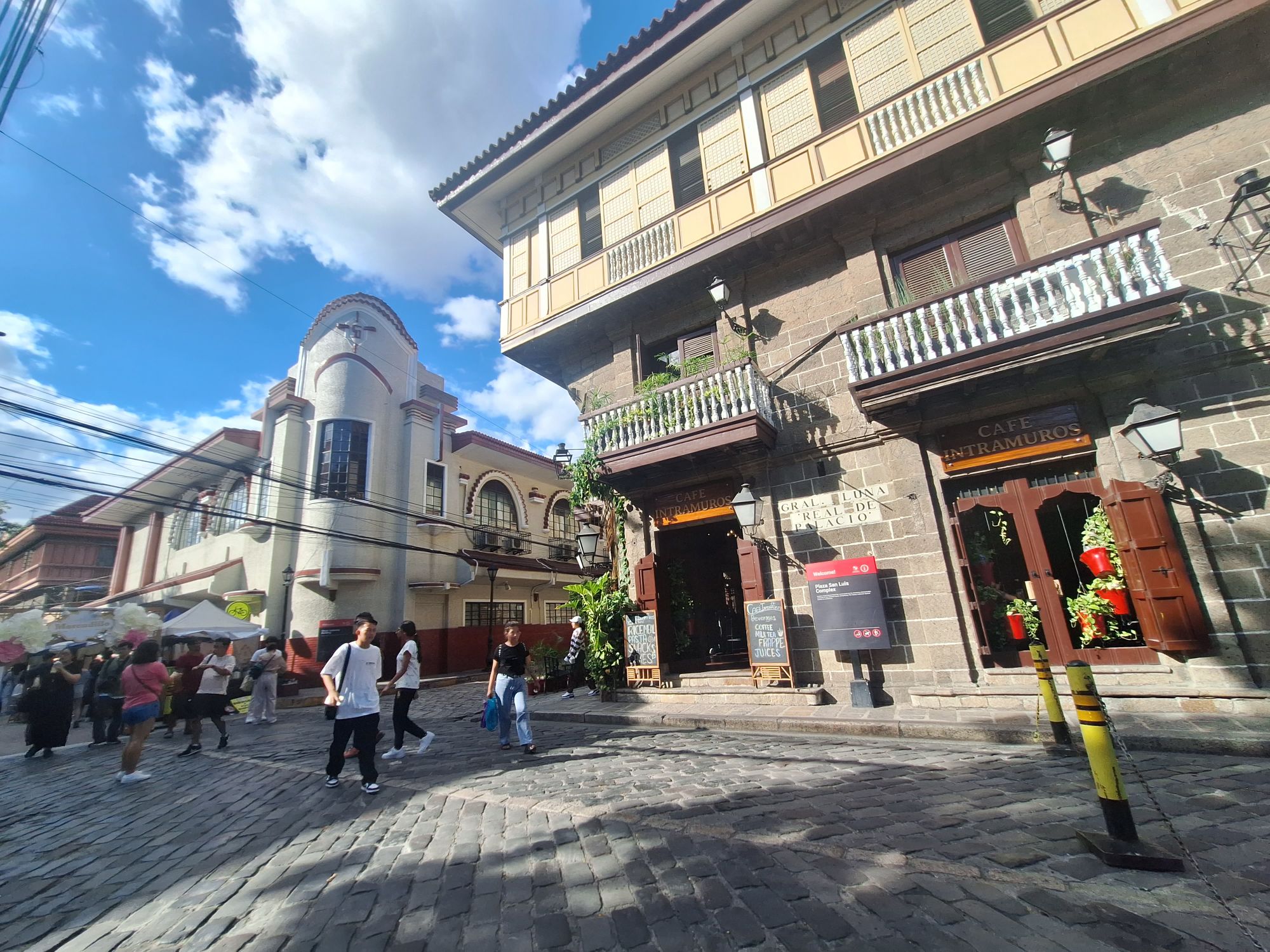
Time Traveling in Intramuros: Exploring Art, History, and Heritage
I’m so excited to share our amazing day of time traveling in Intramuros and the National Museum complex in Manila. My friend Jezelle and I visited three museums in one day — the National Museum of Natural History, the National Museum of Anthropology, and the National Museum of Fine Arts — then crossed into Intramuros itself for lunch. It felt like walking through centuries of Philippine art, history, and heritage in a single, happy blur.
Jezelle loves museums as much as I do, and we were both itching for a change of pace from working at home all week. The best part? All three museums stand close together, just outside the walls of Intramuros, so we could simply walk from one to the next and save our energy for exploring.
Planning your own old-Manila day? Pair this post with our museum-hopping in Manila guide to three must-see National Museums and our romantic Intramuros itinerary for couples in Manila — together, they make a full weekend of heritage walks, great art, and good food.
Getting to Intramuros and the Museums
We took a Grab car to the museums. One tip: say or type “National Museum” clearly, and ask the driver to drop you at the National Museum of Fine Arts or the National Museum of Natural History. The Grab app sometimes pins the wrong spot, so naming the museum helps. From the drop-off point, the other museum buildings are an easy walk, and Intramuros is just across the way when lunchtime calls.
Museum Visitor Guidelines: Planning Your Intramuros Day
Good news for spontaneous travelers: walk-in visitors are welcome at all three museums, and admission is free.
Visiting Hours
- The National Museum of Fine Arts, the National Museum of Anthropology, and the National Museum of Natural History are open Tuesday to Sunday, 9:00 a.m. to 6:00 p.m., and are closed on Mondays. Last admission is 30 minutes before closing.
- No entrance fee is required; the museums are open to the public for free.
- Individual walk-ins are welcome. Groups of 20 or more should schedule their visit in advance through the National Museum website.
- Bring at least one valid ID for registration when you visit.
- Baggage counters are available inside. Food and drinks, flash photography, and tripods or monopods are not allowed in the galleries.
Fueling Up: Our Breakfast at Pancake House
Since the National Museum of Natural History opens at 9:00 a.m., we started with breakfast at Pancake House. I ordered the classic Ham & Cheese Omelet — warm, cheesy, and exactly what I needed before a full day of walking. It was Jezelle’s treat this time, because she says I always treat her. (Kidding aside — thank you, Jezelle!)

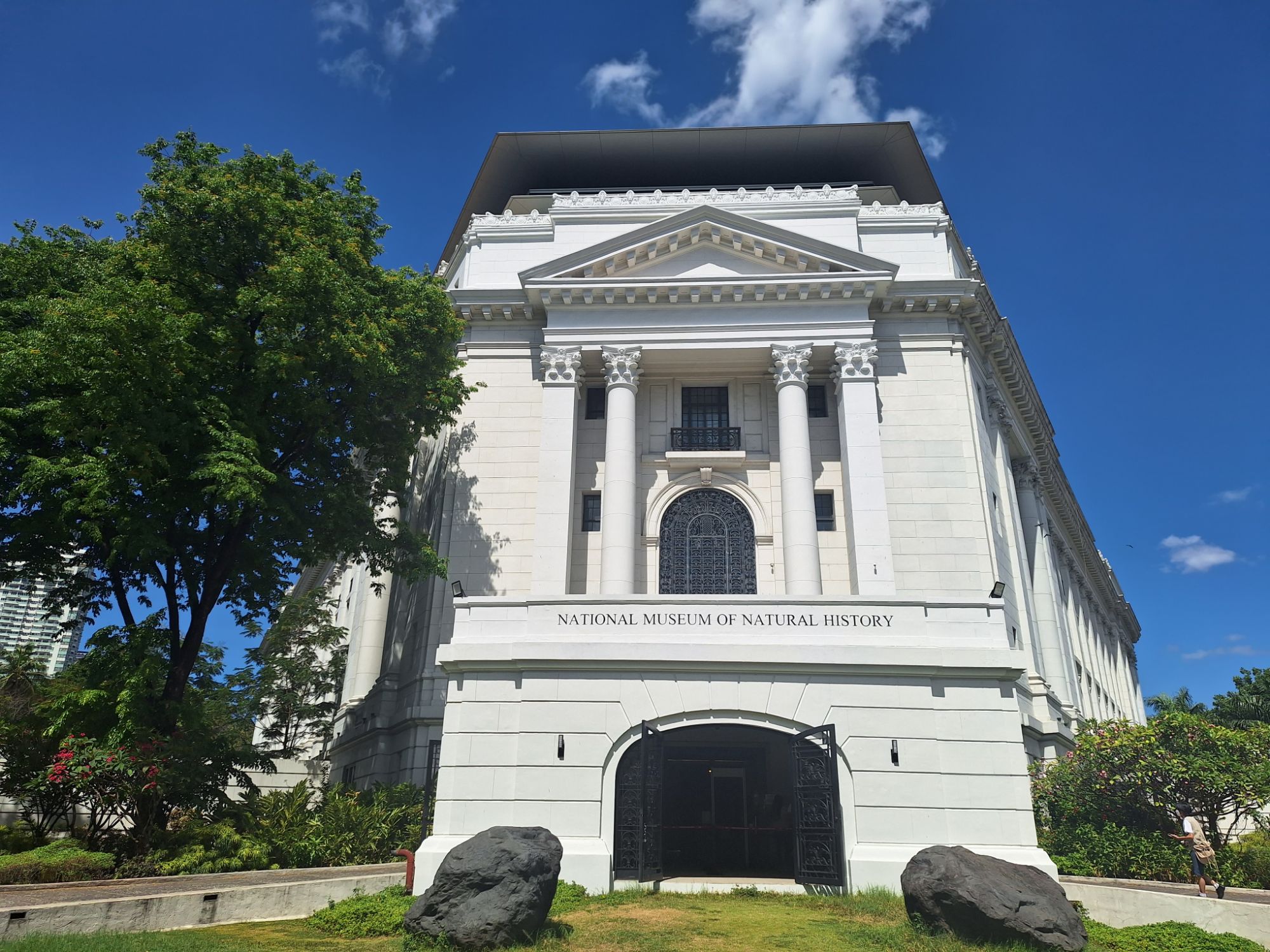
First Stop on Our Intramuros Day: The National Museum of Natural History
The National Museum of Natural History showcases the rich biodiversity and geological heritage of the Philippines. When we visited, it had 12 permanent galleries covering everything from biodiversity and geology to minerals, energy resources, and the story of life on Earth.
- 12 Permanent Galleries: Exhibits on the unique natural history of the Philippines, from ancient fossils to diverse ecosystems.
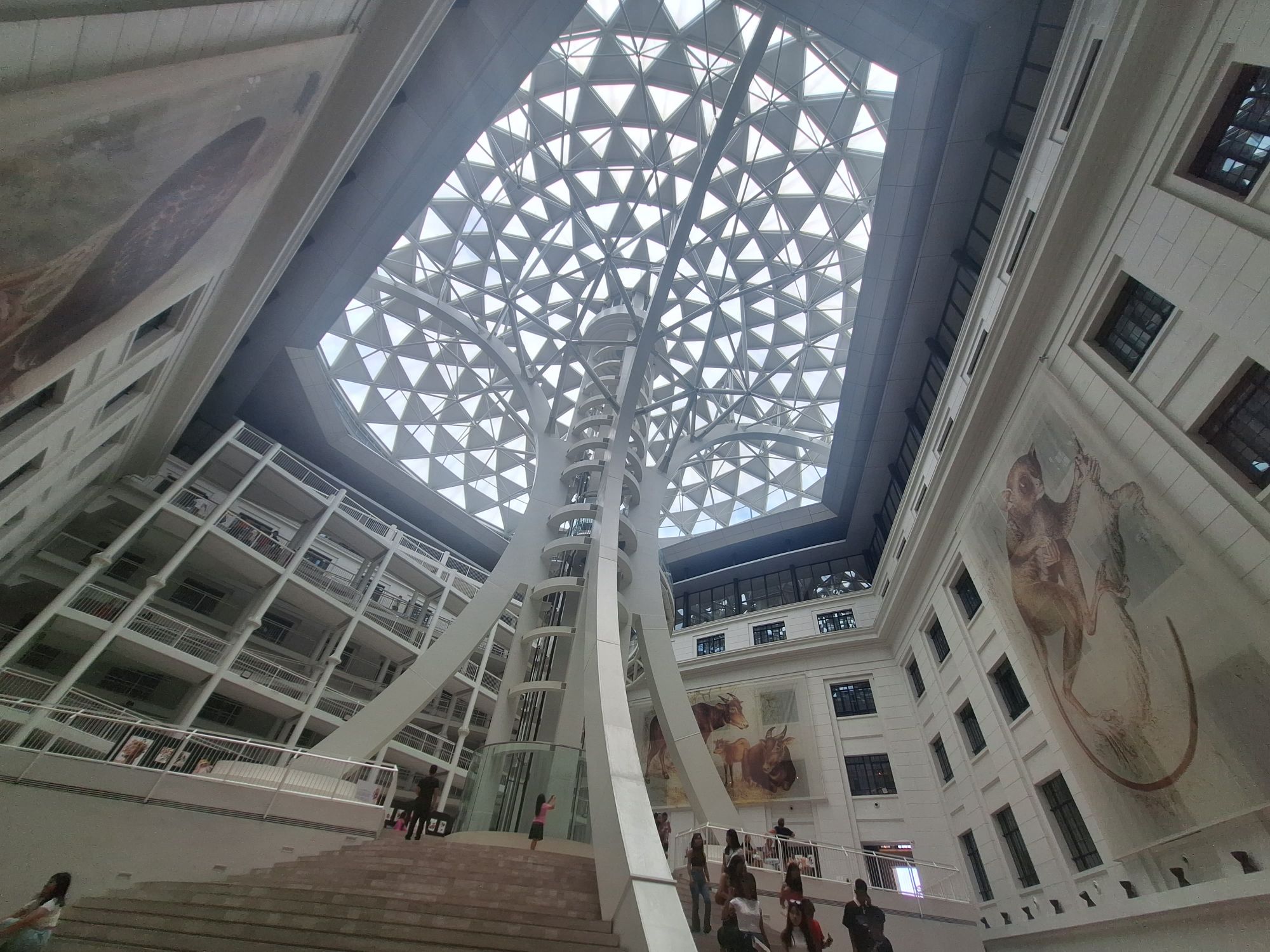
- Tree of Life: The museum’s towering centerpiece, symbolically connecting all the galleries — and all Philippine life.
- Lolong Replica: A replica of Lolong, the largest saltwater crocodile ever held in captivity, who measured 6.17 meters (20 feet 3 inches).
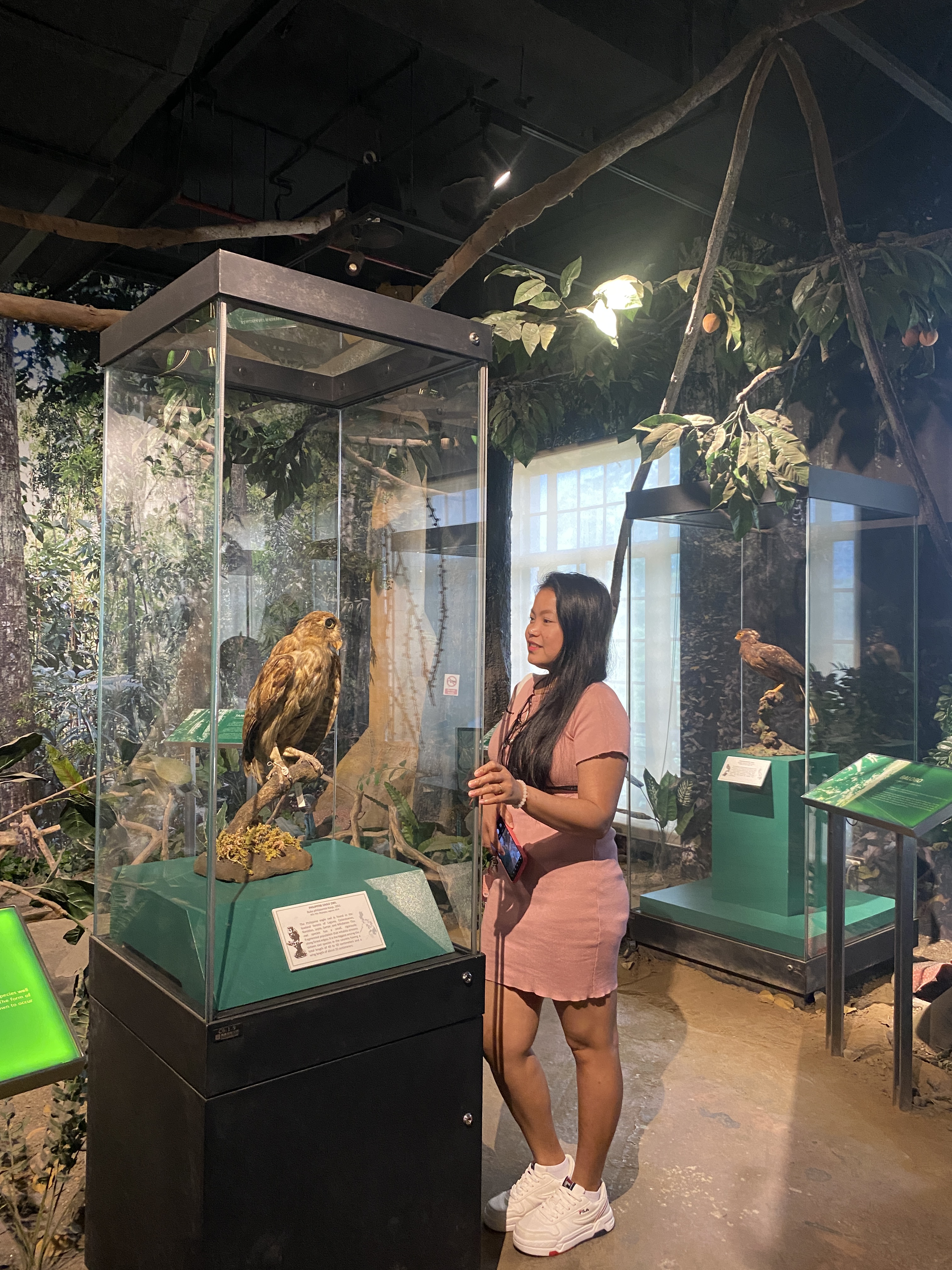
- Philippine Eagles: Two beautifully preserved Philippine eagle specimens, a reminder of why conservation matters.
The museum is part of the National Museum complex beside Intramuros, together with the Fine Arts and Anthropology museums, so a single trip covers nature, culture, and art. Here’s a glimpse of what you can explore:
- Philippine Biodiversity (Gallery I): Displays of the incredible variety of life in the Philippines.
- The Geology of the Philippines (Gallery II): The rocks and forces that shaped our islands.
- Minerals and Energy Resources (Gallery III): The valuable resources found across the archipelago.
- Life Through Time (Gallery IV): The evolution of life, from ancient organisms to today’s species.
- Carabao Family: The role of the carabao (water buffalo) in Philippine agriculture and culture.
- The Mossy, Montane, and Pine Forests (Gallery V): The cool, green forests of our mountains.
- Tropical Lowland Evergreen Rainforest (Gallery VI): The lush rainforests of the lowlands.
- Ultramafic and Limestone Karst Forests (Gallery VII): Unique ecosystems on unusual soils and rock.
- Freshwater Wetlands (Gallery VIII): Why wetlands matter to wildlife and people.
- Mangroves, Beaches, and Intertidal Zones (Gallery IX): The rich habitats along our coasts.
- The Marine Realm (Gallery X): Coral reefs and the underwater world.
- Our Natural Inheritance (Gallery XI): A call to protect the natural heritage we pass on.
When we arrived, the staff suggested starting the tour on the sixth floor and working our way down, taking the elevator up first. It was great advice: the visit felt like a journey from the top of the Tree of Life down to its roots, and we took plenty of pictures along the way.

Right in the middle of the museum, you can’t miss the Tree of Life. The idea behind it appears in myths, philosophies, and religions around the world — a symbol of how everything in nature is connected. We ended our visit with souvenir photos under its canopy before heading to our next stop.
Second Stop: The National Museum of Anthropology

The National Museum of Anthropology preserves the cultural heritage of the Philippines. Inside, you’ll find archaeological artifacts, ethnographic displays, life-sized dioramas of traditional ways of life, exhibits on Filipino prehistory and history, and rotating special exhibitions.
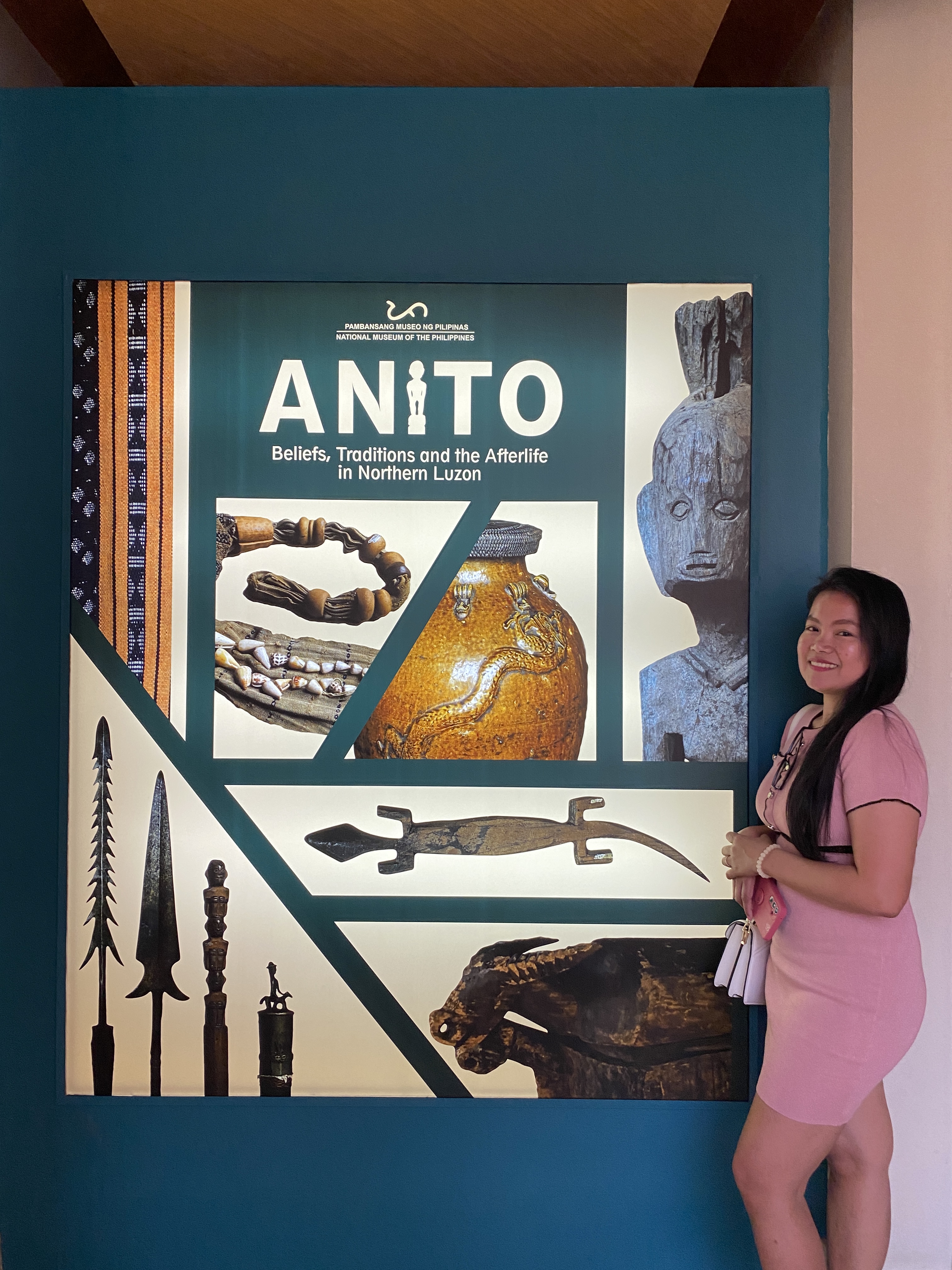
My favorite exhibit was “ANITO: Beliefs, Traditions and the Afterlife in Northern Luzon.” What really caught my eye were the carved wooden coffins — handmade, beautifully detailed, and clearly made with so much care. Some had animals or symbols carved on them that were important to the person’s family or tribe. Seeing them up close felt like stepping back in time and learning how ancient Filipinos honored their dead.
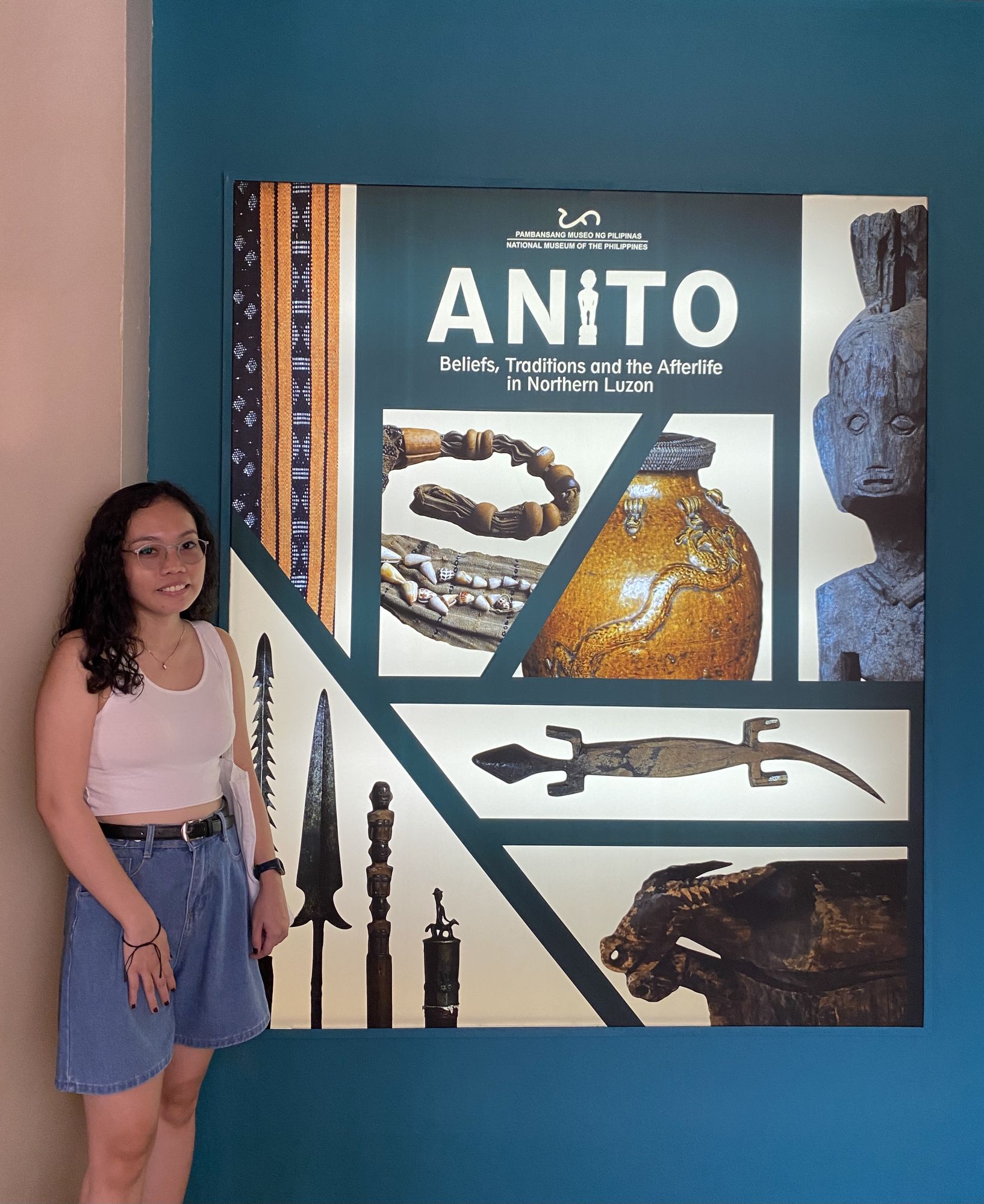
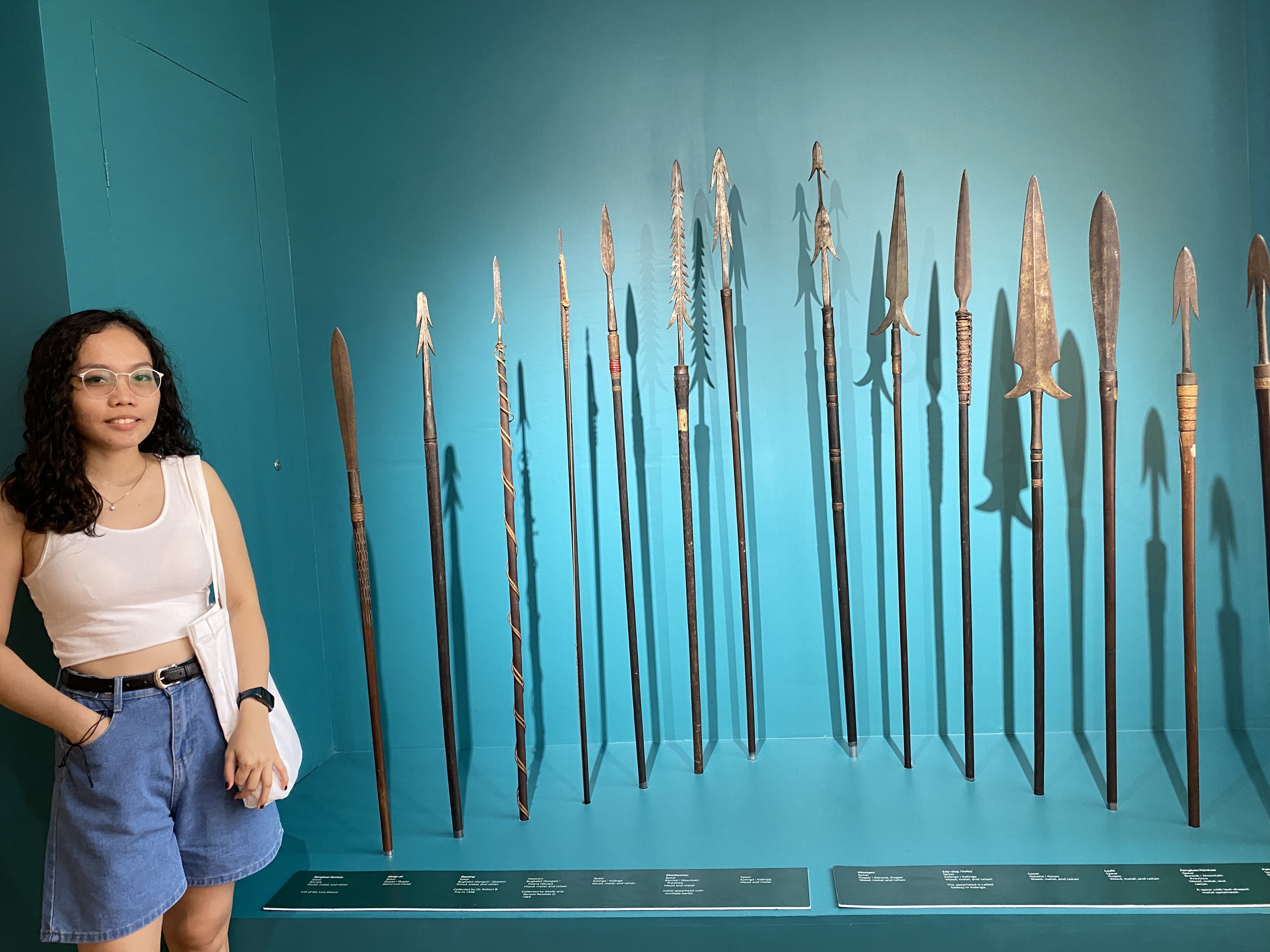
In short, ANITO gathers pieces tied to ancient Filipino beliefs about the afterlife, and it was a quiet, moving stop on our Intramuros museum day. The museum also holds a rich ethnological collection — traditional clothing, tools, weapons, and household items. One display of traditional spears especially stood out:
- Fangkao Spear from Bontoc: A traditional weapon of the Bontoc people of the Cordilleras, used for hunting and warfare.
- Hirap-at Spear from Ifugao: From the Ifugao, an indigenous group of the Cordillera mountains known for their woodcarving.
- Gayang Spear: Known for its distinctive design, with ornate carvings and multiple barbs.
- Bugkalot Harpoon from Nueva Ecija: The Bugkalot, also known as Ilongot or Ibilao, are known for their hunting skills.
- Spear from Kalinga: From Kalinga province in the Cordillera Administrative Region, known for its rugged terrain.
Savoring History: Our Lunch Inside Intramuros at Barbara’s
Time flew by, and before we knew it, it was lunchtime. We booked a Grab (our phone batteries were nearly dead!) and headed into the Walled City. Luckily, I remembered Barbara’s from when I visited Intramuros with my husband, Mike. Filipino food, an old-house setting, and a place to charge our phones — it seemed perfect, and it was.
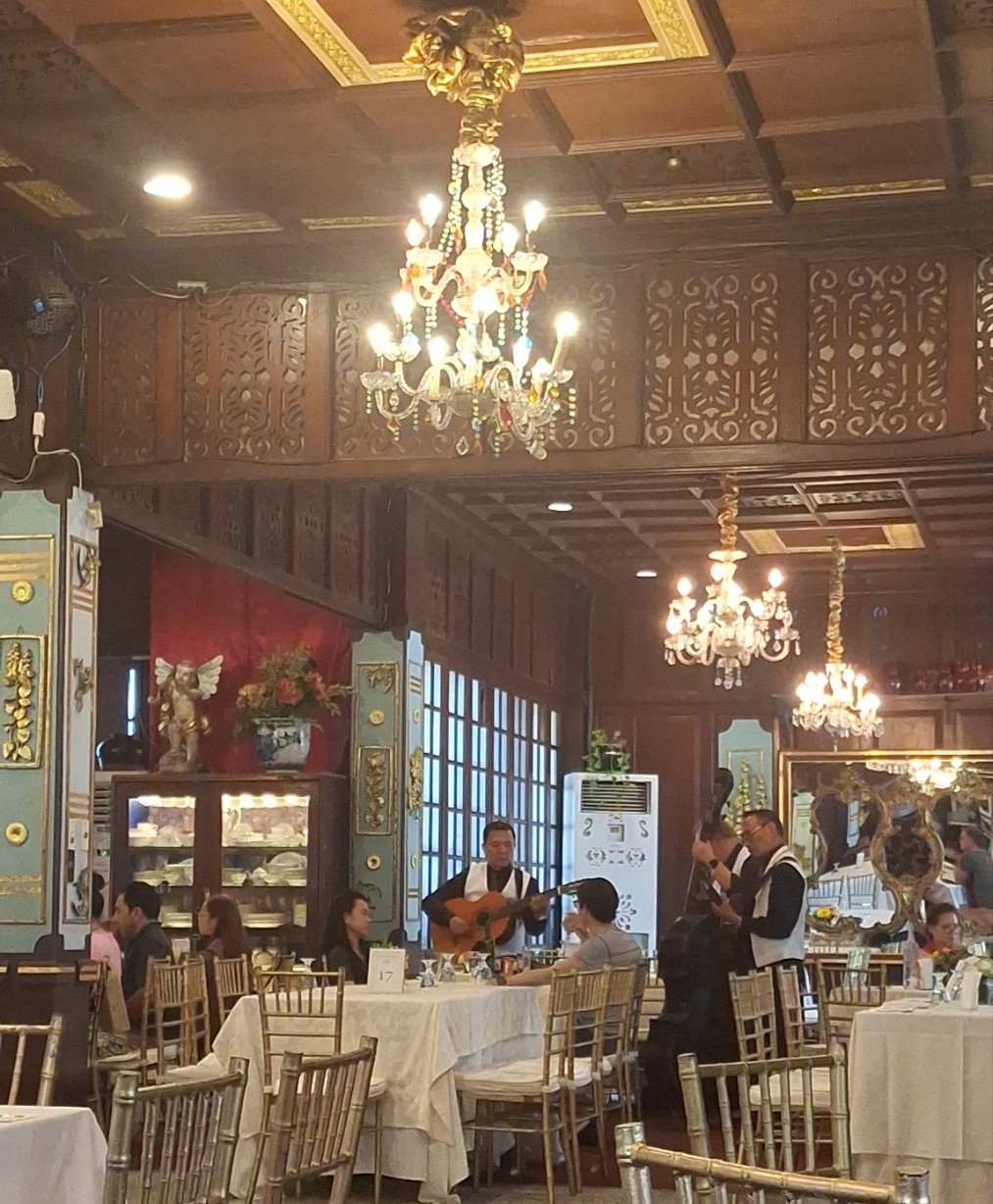
Barbara’s is a beloved Intramuros restaurant serving Filipino and Spanish-inspired dishes in a heritage setting. As a bonus, a three-person band serenaded us while we ate. They played one of my favorite old songs, made famous by Engelbert Humperdinck; a Japanese favorite, “I Love You” by Yutaka Ozaki; and the Spanish classic “Sabor a Mí.” As a K-Pop and K-drama fan, my favorite version of “Sabor a Mí” will always be the one from the My Lovely Girl soundtrack:
The live music turned a simple lunch inside Intramuros into one of the sweetest memories of the day — familiar songs in three languages, all while our phones charged.
Diving into the World of Art: Our Final Stop, the National Museum of Fine Arts
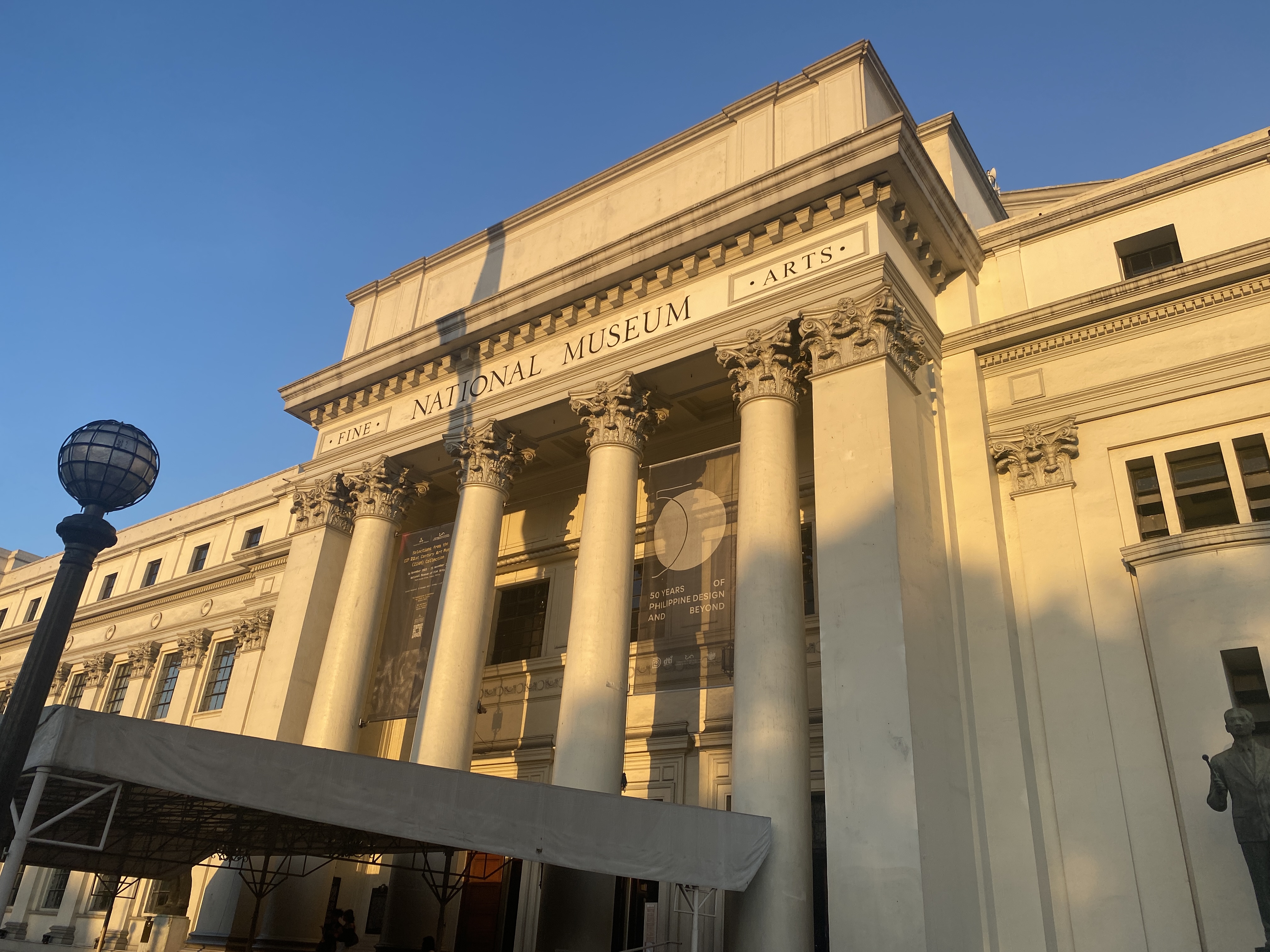
Finally, we reached our last stop — the National Museum of Fine Arts, home to significant works by Filipino masters across its 29 galleries and hallway exhibitions. The museum also displays art loans from other institutions and private collectors, and the neoclassical building itself is a work of art. Among the highlights are Juan Luna’s Spoliarium, works by Félix Resurrección Hidalgo, and sculptures by Guillermo Tolentino.
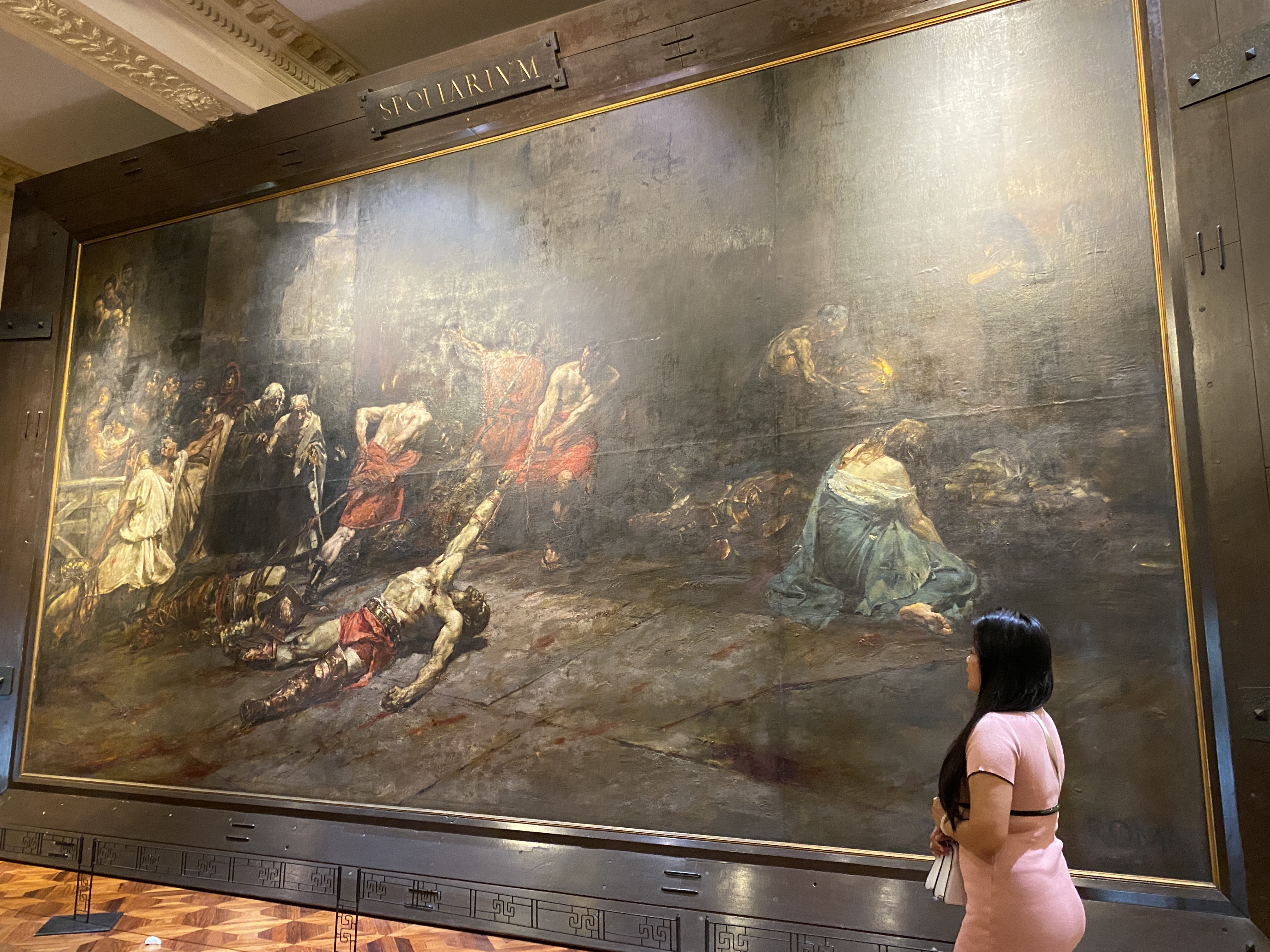
Right at the entrance, we spotted the famous SPOLIARIUM. The Spoliarium, painted by Juan Luna in Rome, won a gold medal at Madrid’s Exposición Nacional de Bellas Artes in 1884 — one of the three first-class gold medals awarded that year, while Hidalgo took silver at the same exposition. At about 4.22 by 7.68 meters, it is one of the largest paintings in the Philippines, and it depicts fallen gladiators being dragged away in a Roman arena — a scene many read as an allegory of the Filipino struggle under Spanish rule. The painting spent decades in Spain and was returned to the Philippines in 1958.
We took our time with Luna’s other paintings, too. One well-known canvas is his “Portrait of a Lady.” Interestingly, some believe it is a portrait of his wife, Paz Pardo de Tavera — a belief that gives the painting a sad weight, given how tragically their marriage ended.
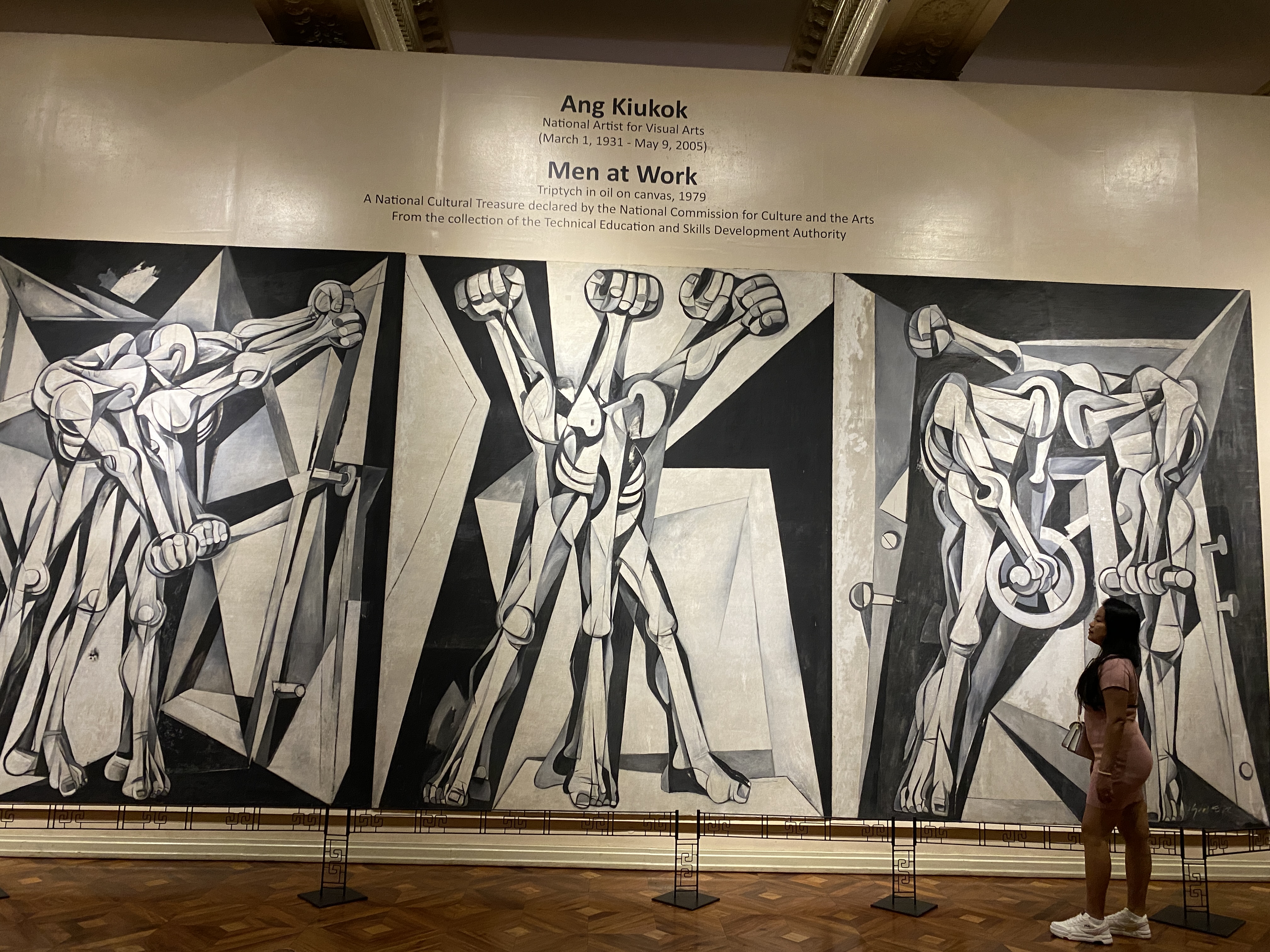
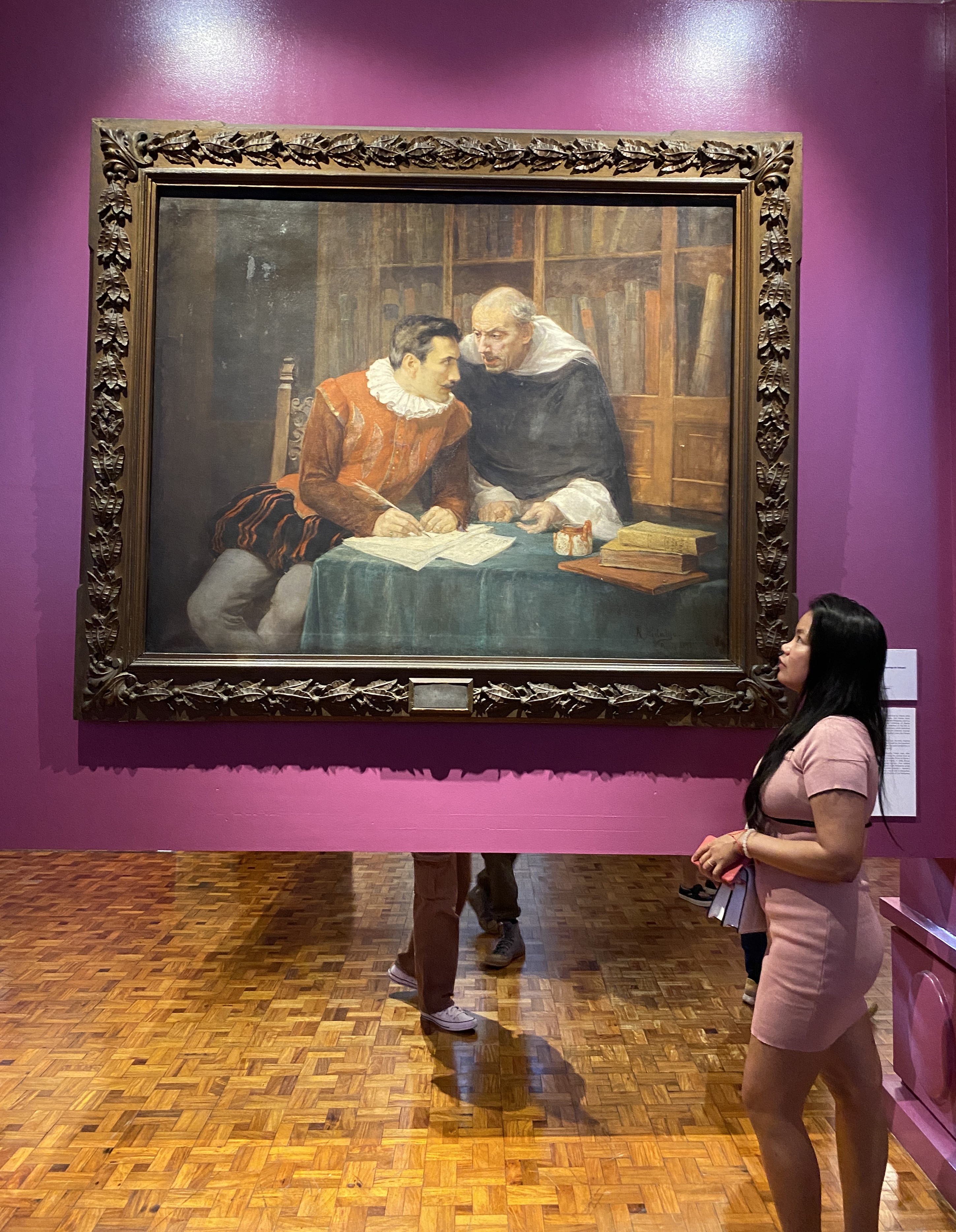
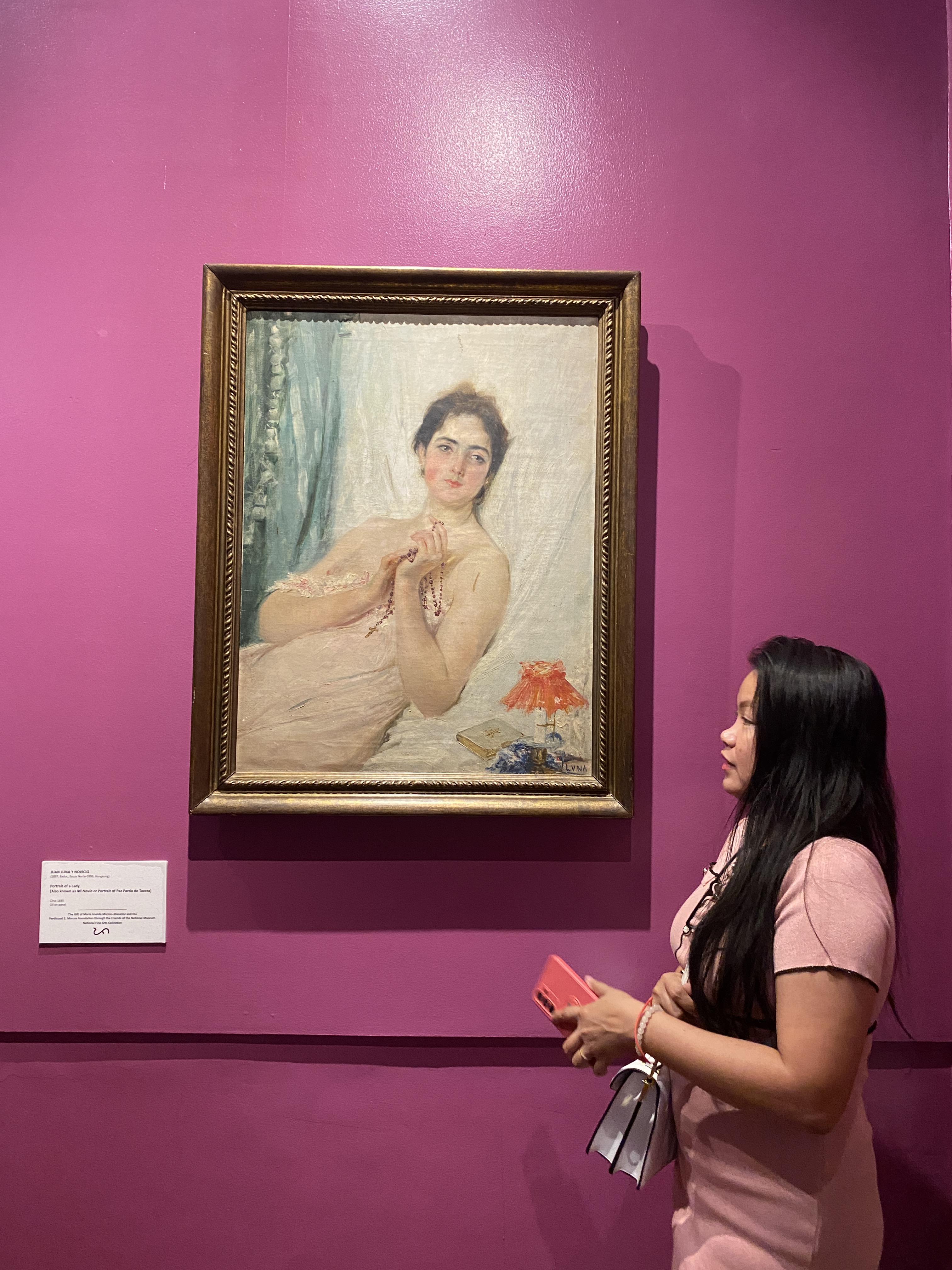
Jezelle admiring Juan Luna’s paintings
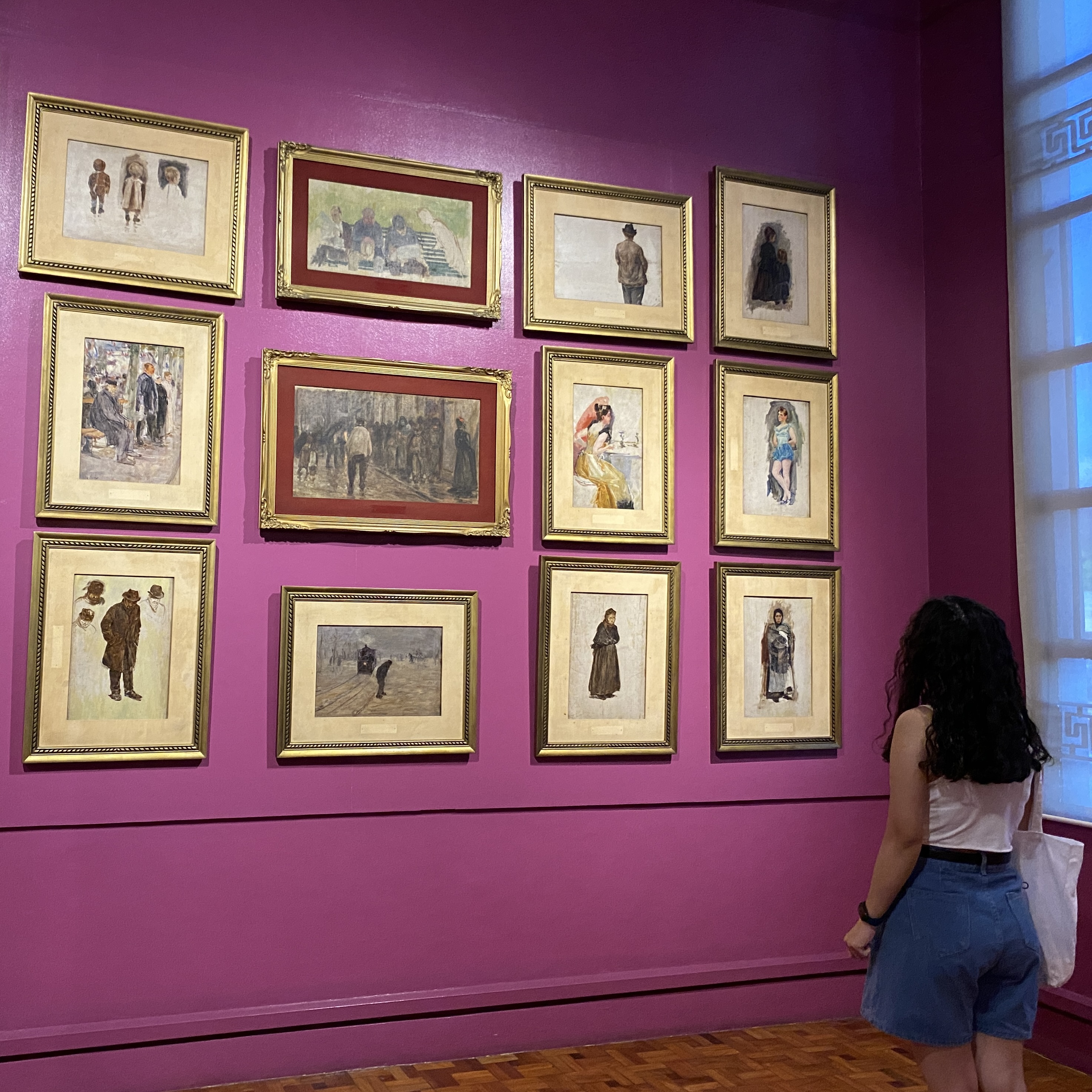
We lingered a little longer over Luna’s works — Jezelle even loved one of the photos I took of her, which does not happen often! The museum was closing soon, so we couldn’t see everything, but we left with full hearts and tired feet.
Next Time: Deeper Into Intramuros
We’re already excited to go back and explore Intramuros itself properly. The Walled City traces its beginnings to 1571, when Miguel López de Legazpi founded Spanish Manila, and it packs centuries of history into a few walkable streets. Still on our list: Fort Santiago, the citadel Legazpi built; Casa Manila, a recreated 19th-century illustrado home; the San Agustin Church and Museum — the church is a UNESCO World Heritage Site; Bahay Tsinoy; and the circular Baluarte de San Diego, one of the oldest stone fortifications in Intramuros. For opening hours and events inside the walls, the official Intramuros Administration website is the best place to check before you go.
And if a heritage day leaves you hungry for more Philippine adventures, see our Baguio City day tour itinerary and our ultimate 6-day Cebu itinerary next.
Concluding Thoughts on Our Intramuros Museum Day
Our museum day around Intramuros showed us how Filipinos lived, believed, created, and endured — from prehistoric burial traditions to Luna’s and Hidalgo’s masterpieces. I had always wanted to explore educational places like these; now, with a flexible schedule and a museum-loving friend who needs no convincing, I finally can.
We didn’t see everything in Intramuros or the museums, but honestly, that’s the best reason to return. If you’re thinking of visiting, I hope this post nudges you to go. Thanks for reading — happy travels, and have amazing adventures! 🫰

One Comment