7 Secrets to Delicious Filipino Spring Rolls Dipping Sauce
7 Secrets to Delicious Filipino Spring Rolls Dipping Sauce
This post may contain affiliate links. We only recommend products we personally use and love (please see our full affiliate disclosure). If you click through and make a purchase, we may earn a small commission at no extra cost to you. Your support helps keep this blog running. Thank you so much! 💕
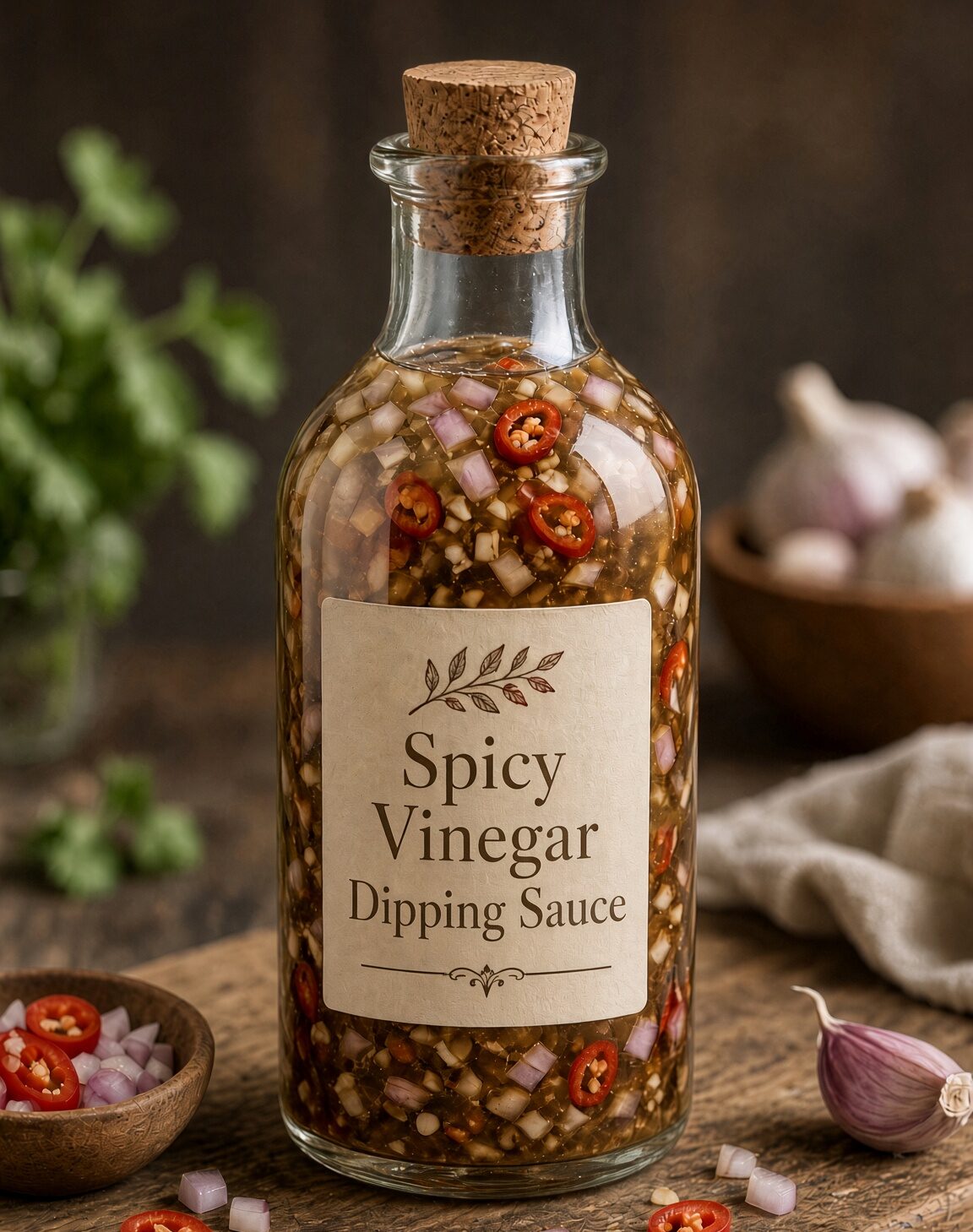
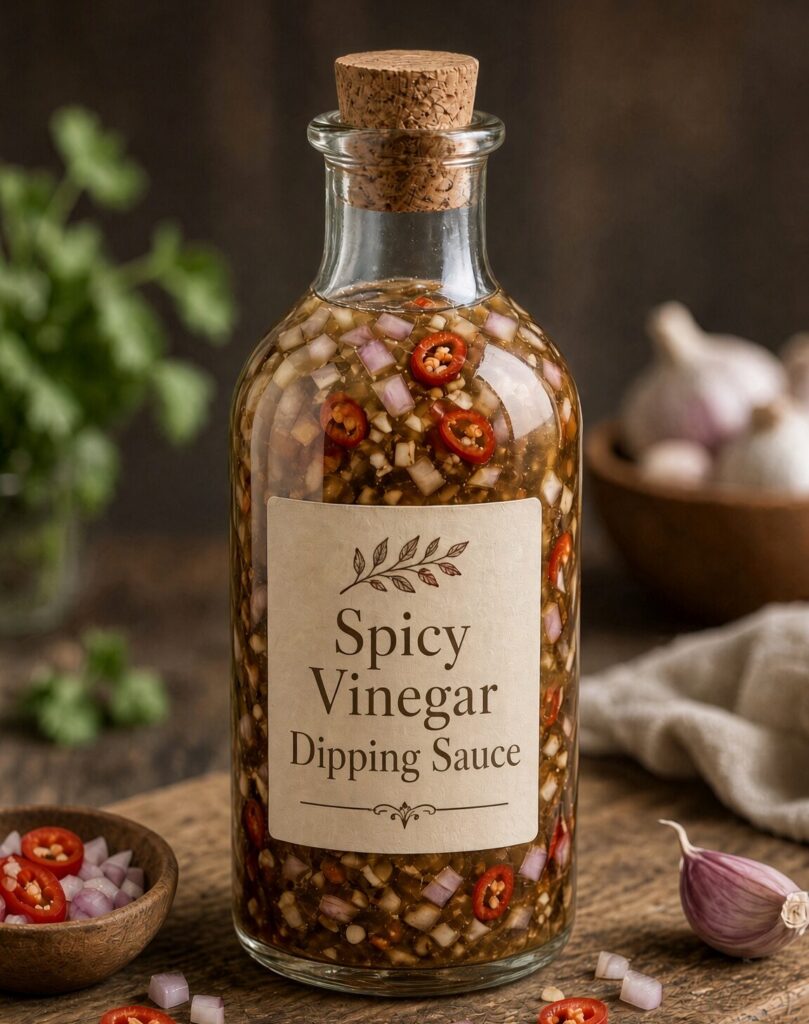
If there is one bottle our kitchen never runs out of, it is this spring rolls dipping sauce. I used to make it all the time back in the Philippines, and here it has become the jar we reach for with almost everything — steamed shrimp, grilled fish, fried anything. Sawsawan is the Filipino word for dipping sauce, and this version is our sweet-tangy, gently spicy house blend: seasoned rice vinegar with Thai chilies, red onion, and garlic stirred in while it is still hot. Ten minutes, one pan, and it keeps for a week or two in the fridge.
What Is Sawsawan?
In Filipino homes, a meal is not quite complete without a small bowl of dipping sauce on the table. The word covers the whole family of dipping sauces Filipinos set out with almost every meal: calamansi-soy for fried fish, spiced vinegar for lumpia, banana ketchup for fried chicken, and liver sauce for lechon.
Vinegar is at the heart of all of this. Long before refrigeration, Filipinos used vinegar to preserve food — its acidity slows the bacteria that cause spoilage, which mattered in a country where it is hot all the time. It is why adobo keeps so well without a fridge, and it is one reason this spring rolls dipping sauce lasts. A great spring rolls dipping sauce does three things at once: it cuts through oil, wakes up the palate with tang, and adds sweetness and heat to keep you dipping.
How This Dipping Sauce Came to Be
This is not a new recipe for me — I used to make this dipping sauce a lot back in the Philippines. But this was the first time I made this much of it for a group of people here in the US: a family event, with 60 pieces of lumpia to go with it.
For the sweet and spicy dipping sauce, I just got one from Amazon — but for the sweet, spicy, and tangy kind I am used to in the Philippines, I decided to make it myself.
Here is the thing: I had finished my rice vinegar and was still waiting on my delivery. So I looked in the pantry and saw the Marukan seasoned vinegar — and my red wine vinegar that I normally use for salads. I thought, why not?
I had been using the seasoned vinegar for a while, but I knew it was not quite the flavor I wanted for lumpia, so I added a tablespoon of red wine vinegar. If you do not like it that tangy, taste the seasoned vinegar before adding the red wine vinegar, since it has a stronger flavor. I added a little water too.
Back in the Philippines, I made it with cane vinegar, water, sugar, salt, ground black pepper, and the rest — but this version starts with seasoned vinegar, so the recipe is adjusted: no extra sugar or salt, just a splash of red wine vinegar for tang. Think of this as a guide suited to my taste — feel free to adjust it based on your preference and what is in your kitchen. You can use cane vinegar, rice vinegar, whatever you have, but you will need to adjust the sugar, water, and salt. Once my pantry is restocked with other vinegar varieties, I will be making more versions.
I love this spring rolls dipping sauce — it has become our all-around sauce for steamed shrimp, grilled fish or meat. And here is a tip: it lasts a long time as long as it is just vinegar and chilies — add the onions and garlic fresh when you are ready to use it. This batch is sized for a big round of lumpia, which is why I made it this way.
I hope you try it — enjoy your lumpia or spring rolls with it!
Lumpia vs. Spring Rolls: What’s the Difference?
If you are new to Filipino food: every lumpia is a kind of spring roll, but not every spring roll is lumpia. Lumpia is the Filipino version — the name comes from the Hokkien words lun (moist) and pia (pastry), a nod to the dish’s Chinese roots. The kind most people know is lumpiang Shanghai: small, deep-fried rolls usually filled with ground pork. There is also lumpiang sariwa, the fresh, unfried kind. This dipping sauce was made for the fried kind, but honestly it works with all of them.
The Story Behind This Spring Rolls Dipping Sauce
Our version is inspired by sinamak, the spiced vinegar of the Visayas, where cane or coconut vinegar is steeped with chilies, garlic, and onion. Filipinos have strong opinions about vinegar — cane (sukang Iloko), coconut (sukang tuba), and plain white vinegar each give the final sauce a slightly different personality.
In our pantry, we use whatever we have — and that is the beauty of this sauce: it is not a rigid formula, it is a pantry habit. You adjust it until it tastes like home.
7 Secrets to a Delicious Spring Rolls Dipping Sauce
Small choices make a big difference in a spring rolls dipping sauce — here are the seven that matter most:
1. Start with seasoned vinegar. Marukan seasoned rice vinegar already has sugar and salt, so this recipe needs no extra seasoning. If you only have plain rice vinegar or cane vinegar, stir in sugar and a pinch of salt to taste until sweet-tangy (back in the Philippines, I also added ground black pepper).
2. Add red wine vinegar for tang. When your base vinegar is seasoned and sweet, a tablespoon of red wine vinegar brings the sharp edge back.
3. Slice the chilies thinly. Thin slices let the heat bloom into the vinegar faster. Use 4 chilies for mild, 6 to 8 for medium, and 12 or more for fiery.
4. Smash or mince the garlic. Smashed garlic releases its flavor quickly into the hot vinegar.
5. Add the aromatics after turning off the heat. This is the most important secret. The chilies, onion, and garlic go in once the heat is off, while the vinegar is still hot — the residual heat softens them, melds the flavors, and can help the sauce keep a little longer.
6. Keep it at a bare simmer. Simmer 1 to 2 minutes and do not boil hard. A rolling boil can make the sauce taste harsh.
7. Shake before every use. The aromatics settle to the bottom. A good shake wakes everything back up.
How to Make Sweet-Tangy Spring Rolls Dipping Sauce
Everything goes into one small pan: pour in the seasoned rice vinegar, red wine vinegar, and water, and bring to a bare simmer for 1 to 2 minutes — do not boil hard. Turn off the heat, then add the sliced chilies, chopped red onion, and smashed garlic while the vinegar is still hot. Cool and refrigerate. Ten minutes, one pan, two cups of sauce.
Tips for Storing and Serving Your Spring Rolls Dipping Sauce
Store the cooled sauce in a clean glass jar in the refrigerator and use it within 1 to 2 weeks, shaking before each use. We made this for lumpia, but it is wonderful with steamed shrimp, grilled fish, fried fish, dumplings, and spring rolls too.
Sweet-Tangy Spring Rolls Dipping Sauce Recipe Card
Recipe Name: Sweet-Tangy Filipino Spring Rolls Dipping Sauce (Sawsawan)
Summary: A sweet-tangy spring rolls dipping sauce made with Marukan seasoned rice vinegar. The chilies, onion, and garlic go in after the heat is off, while the vinegar is still hot — the residual heat softens them and helps the sauce keep a little longer. Great with lumpia, steamed shrimp, grilled fish, and more.
Meal Course: Condiment
Prep Time: 5 minutes Cook Time: 3 minutes Total Time: 10 minutes (plus cooling) Yield: About 2 cups (16 servings of 2 tablespoons)
Equipment: Small saucepan, knife, cutting board, glass jar or bottle with lid for storage
Ingredients:
- 2 cups Marukan seasoned rice vinegar
- 1 tablespoon red wine vinegar
- 1 tablespoon water
- 6 to 8 Thai chilies, sliced (4 for mild, 12 or more for fiery)
- 1/2 cup red onion, finely chopped
- 4 to 6 garlic cloves, smashed or minced
- No extra sugar or salt — Marukan is already seasoned
Instructions:
- Pour the Marukan seasoned rice vinegar into a small pan.
- Add the red wine vinegar and water.
- Bring to a bare simmer for 1 to 2 minutes. Do not boil hard.
- Turn off the heat, then add the sliced chilies, chopped red onion, and smashed garlic while the vinegar is still hot.
- Cool, then refrigerate. Shake before using.
Notes:
- We also use it with steamed shrimp, grilled fish, fried fish, and dumplings.
- No Marukan in the pantry? Use cane vinegar or plain rice vinegar with sugar, a pinch of salt, and ground black pepper to taste — that is how I made it back in the Philippines — and keep the red wine vinegar splash for tang.
- Refrigerate and use within about 1 to 2 weeks.
Estimated Cost: ~$2.50 kcal: ~40 per 2-tablespoon serving Keywords: spring rolls dipping sauce, sawsawan, lumpia sauce, spiced vinegar, Filipino dipping sauce
Cookbook Inspiration
If this spring rolls dipping sauce makes you curious about Filipino cooking, I love I Am a Filipino: And This Is How We Cook by Filipino chef Nicole Ponseca — a beautiful tour of Filipino food traditions that shows why a small bowl of dipping sauce belongs on every table. [I will add my affiliate link here.]
Shop This Spring Rolls Dipping Sauce Recipe
I put together everything you need to make this spring rolls dipping sauce in one spot — check out my “Sweet-Tangy Spring Rolls Dipping Sauce — Everything You Need” Idea list on my Amazon storefront, where I create Idea lists for every recipe I make!
More Filipino Recipes to Try
If you loved this sweet-tangy spring rolls dipping sauce, check out more Filipino recipes to try here on the blog.
From My Kitchen to Yours
Some recipes take hours, and some take ten minutes and a single pan — and this spring rolls dipping sauce might just become the hardest-working bottle in your fridge. Make it this week, adjust the chilies until it tastes like yours, and tell me in the comments what you dipped in it first. Happy cooking, friends!