
Historical Kdramas: A Glimpse into the Baekje Kingdom
If you love historical K-dramas, the Baekje Kingdom is a wonderful place to start. The Baekje Kingdom (18 BCE–660 CE) was one of Korea’s Three Kingdoms, alongside Goguryeo and Silla, and its kings, queens, and generals make perfect drama material: love across enemy lines, court intrigue, and battles that decided the fate of a nation.
My own love for K-dramas began when I was twenty, with Hwang Jini — a series I first caught on Philippine TV. It stars Ha Ji-won as the famed Joseon-era gisaeng Hwang Jini and Jang Keun-suk as her first love, Kim Eun-ho, and it won Ha Ji-won the Grand Prize (Daesang) at the 2006 KBS Drama Awards. I had been into anime and American series before that, but historical K-dramas have held a special place in my heart ever since. They transport us to another era and introduce us to people who feel strikingly real.
A Brief History of the Baekje Kingdom
According to tradition, Onjo — the third son of Jumong (King Dongmyeong), founder of Goguryeo, and Lady Soseono — founded the kingdom in 18 BCE at Wiryeseong, in what is now southern Seoul. You can read more on Wikipedia’s Baekje page.
Baekje grew into a maritime power in southwestern Korea, trading with China and Japan and carrying Buddhism and Korean culture across the sea. Its capital later moved from Wiryeseong to Ungjin (in 475) and then to Sabi (in 538). At its peak, its population reached about 3.8 million — the largest of the Three Kingdoms at the time.
That long story ended in 660 CE, when allied Silla and Tang dynasty forces defeated Baekje. Its last king, Uija, surrendered, and its great general, Gyebaek, died making a final stand at the Battle of Hwangsanbeol. It is a rise-and-fall story made for television.
Historical K-Dramas Set in the Baekje Kingdom
Three series bring the Baekje Kingdom to life especially well. Each covers a different chapter, so together they almost tell the kingdom’s whole story — romance and founding legend, golden age, and tragic fall.
One word of caution before you press play: these are dramas, not documentaries. The writers compress timelines, polish legends, and fill the gaps in the chronicles with romance and rivalry. Enjoy them as a doorway into history — just double-check the details before quoting them at dinner. That mix of fact and storytelling is exactly what makes this era so fun to explore on screen.
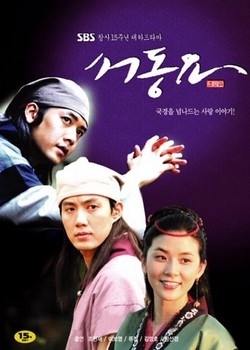
1. Ballad of Seodong (SBS, 2005–2006)
Ballad of Seodong aired on SBS from September 5, 2005 to March 21, 2006, for 55 episodes. It stars Jo Hyun-jae as Seodong and Lee Bo-young as Princess Seonhwa of Silla, daughter of King Jinpyeong.
The drama is based on Seodong-yo, said to be one of Korea’s oldest folk songs. Seodong, a talented Baekje commoner, spreads a song claiming that Princess Seonhwa visits him at night — and, to protect her honor, the princess is sent to Baekje, where the two fall in love. Seodong later becomes King Mu of Baekje. It is a sweet, old-fashioned romance, and it gives the Baekje Kingdom a human face.
2. Gyebaek (MBC, 2011)

Gyebaek aired on MBC from July 25 to November 22, 2011, for 36 episodes. Set in the mid-7th century, it follows General Gyebaek through the final decades of the Baekje Kingdom, up to his last stand at Hwangsanbeol.
Lee Seo-jin is superb as Gyebaek, with Cho Jae-hyun as King Uija, Song Ji-hyo as Queen Eun’go — Gyebaek’s first love, who becomes Uija’s wife — and Hyomin as Cho-young, Gyebaek’s wife and a skilled martial artist. The child actors are also excellent, and the battle scenes carry real weight. Of the three series here, this is the most gripping — and the most heartbreaking.
3. The King of Legend (KBS, 2010–2011)

The King of Legend, also known as King Geunchogo, aired on KBS1 from November 6, 2010 to May 29, 2011, for 60 episodes. Kam Woo-sung stars as Buyeo Gu, who becomes King Geunchogo, the king who brought Baekje to its greatest glory in the 4th century.
The series draws on the Samguk sagi and Samguk yusa chronicles, and was also inspired by a novel by Yi Mun-yeol. Expect detailed court politics, impressive sets and costumes, and Baekje at its most powerful — a nice contrast with the kingdom’s fall in Gyebaek.
A Quick Note on Hwang Jini
Because Hwang Jini started my K-drama journey, readers sometimes ask whether it belongs on this list. It does not: Hwang Jini is set in 16th-century Joseon, centuries after Baekje fell. It is a wonderful historical drama — just not a Baekje Kingdom drama.
More K-Dramas to Watch Next
If these leave you wanting more Korean drama, try our reviews of Blood Free, The Frog, and Marry My Husband. They are modern stories, but they have the same strong characters and emotional pull.
Not sure where to begin? My Baekje Kingdom watch order is simple: start with Ballad of Seodong for the romance, then The King of Legend for the golden age, and finish with Gyebaek for the unforgettable ending.
My Takeaways
As a Filipina who fell for these stories from afar, what stays with me is how universal they are. Power, loyalty, family, and love tested by duty — the Baekje Kingdom may have vanished more than 1,300 years ago, but its people, at least on screen, feel like us.
Ballad of Seodong touched me most. Beneath the palace intrigue is a simple lesson: our choices, more than our birth, shape our destiny. That is why I keep coming back to these dramas. They are entertainment, yes, but they are also a gentle way to learn history — and to appreciate a culture different from my own.