The Swordsman (2020): A Gritty, Blood-Soaked Ode to Fatherhood and Sacrifice (Spoilers Ahead)
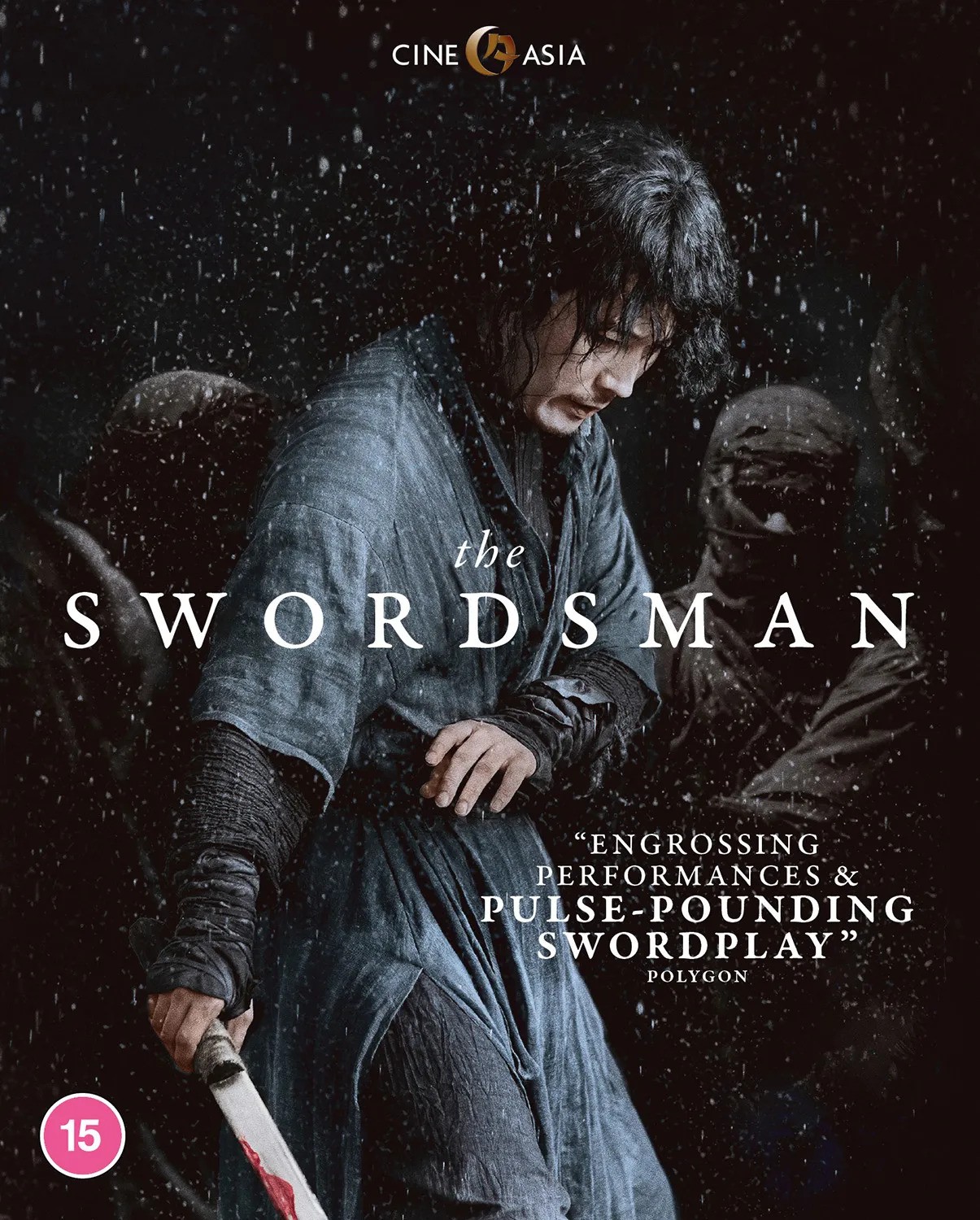
The Swordsman (2020) delivers a gritty, action-packed story of fatherhood and sacrifice, blending intense sword fights with deep emotional stakes. (Spoilers Ahead)
This post may contain affiliate links. For more information, please see my affiliate disclosure.
Let me start with this: I didn’t expect the Swordsman Korean movie to hit me this hard. I’ve seen plenty of Korean action films—flashy duels, tragic heroes, revenge plots that spiral into chaos—but this one felt different.
Maybe it’s Jang Hyuk. As Tae-yul, a swordsman whose sight is failing, he left me gutted. Or maybe it’s the story underneath the blades: a broken man trying to protect the one person who still makes him human. Either way, the Swordsman Korean movie isn’t really about who wins the fight. It’s about what—and who—we’re willing to bleed for.
New to the film? The Swordsman on Wikipedia has the full cast and production background.
In this article:
- “Blind Swordsman” Tropes Done Right (With a Korean Twist)
- The Action: Brutal, Unflinching, and Full of Consequences
- The Quiet Moments That Broke Me
- The Villains: More Than Just Evil Foreigners
- The Ending: Sacrifice Without Glory
- What Other Viewers Say
- Movies Similar to The Swordsman (2020) You Should Watch
- Final Verdict: Why The Swordsman Korean Movie Stays With You
“Blind Swordsman” Tropes Done Right (With a Korean Twist)
The Swordsman Korean movie borrows from the classic “blind warrior” archetype we’ve seen in films like Zatoichi and Rurouni Kenshin. But director Choi Jae-hoon doesn’t just copy the formula.
Tae-yul was once Joseon’s finest swordsman and bodyguard to King Gwanghaegun. In a duel with Min Seung-ho, his sword shattered, and shards of metal pierced his eyes. Years later, his sight is failing, and all he wants is a quiet life in the mountains with Tae-ok (Kim Hyun-soo), the daughter he has raised as his own.
That quiet life ends when Tae-ok—hoping to earn the costly herbs that might save his eyes—takes work at the estate of Lee Mok-yo and is taken hostage there by Gurutai’s men. Tae-yul picks up his sword again, and the Swordsman Korean movie becomes a rescue story with real fear behind every swing.
The Action: Brutal, Unflinching, and Full of Consequences
Let’s talk about the fight scenes. Korean cinema is known for its balletic violence, but the Swordsman Korean movie trades elegance for desperation. Tae-yul isn’t a flawless fighter—he’s an older man whose body, and eyes, betray him.
His failing sight forces him to fight by sound, and the film uses this creatively. In one early scene, he tilts his head toward the clink of a sword being drawn, his fingers subtly adjusting his grip. When he strikes, it’s messy. Blood sprays, limbs are severed, and every kill feels heavy.
In the Swordsman Korean movie, the final duel with Gurutai (Joe Taslim) at his compound is a masterclass in tension. Gurutai’s calm brutality mirrors Tae-yul’s own past. Their fight isn’t a dance; it’s two wounded animals tearing into each other.
Some viewers debated whether the CGI blood was overdone, but honestly? I didn’t care. The rawness of Tae-yul’s rage—the way he stumbles, coughs blood, and keeps swinging—made me forget the flaws.
The Quiet Moments That Broke Me
For all its violence, the Swordsman Korean movie is strongest in its quieter scenes. Tae-yul’s relationship with Tae-ok is the heart of the story. She’s not just a damsel waiting to be saved; she’s his moral anchor, and his reason to live.
In flashbacks, we see him teaching her to read, laughing as she teases him about his grumpiness. Their bond feels lived-in, which makes her kidnapping devastating.
One moment that wrecked me: after Tae-yul rescues Tae-ok, she sees him covered in blood and asks, “Did you kill people again?” He doesn’t answer. He doesn’t need to. The guilt on his face says everything. Jang Hyuk’s performance here is subtle but crushing—no grand speeches, just a man realizing he may have failed the one person he wanted to protect.
The Villains: More Than Just Evil Foreigners
Some critics called the Qing antagonists in the Swordsman Korean movie one-dimensional, but I disagree—at least about Gurutai. A relative of the Qing emperor and master of the Hwangdang slave traders, he has grown rich enslaving and selling captives taken during the Qing invasion of Joseon. He isn’t a cartoon villain: he respects Tae-yul’s skill and even hesitates before their final fight. That respect makes him more frightening, not less.
The betrayal that stings most, though, comes from Min Seung-ho, Joseon’s great military official, who ends up serving Gurutai. When Tae-yul defeats Min and forces him to yield, Gurutai slits Min’s throat for losing. It isn’t a satisfying kill. It’s just another life thrown away in a cycle of violence—which is exactly the film’s point.
The Ending: Sacrifice Without Glory
Spoiler warning for this section: Tae-yul survives. After he defeats Gurutai and frees Tae-ok and the other captives, he embraces his daughter as his sight finally fails completely.
That is why the ending of the Swordsman Korean movie works. It’s heartbreaking, but it’s also honest. He didn’t want to be a legend. He just wanted to be her father. A late flashback reveals why he held on so tightly: Tae-ok is King Gwanghaegun’s daughter, entrusted to Tae-yul to raise as his own.
The film ends with father and daughter making their way down the mountain together, Tae-yul saying he is ready to see the rest of the world. He loses his sight, not his life—and not her. The cycle of violence ends with them walking away from it, together.
What Other Viewers Say
- “The pacing drags in the middle.” Agreed. The political subplots about the Qing invasion feel undercooked and distract from the personal stakes.
- “Jang Hyuk deserves an award.” Absolutely. His physicality—the way he moves like a man both fragile and lethal—is mesmerizing. He did go on to win an Actor Award for this role at the 2021 Chungbuk International Martial Arts and Action Film Festival.
- “The ending was too bleak.” Disagree. The ending is bittersweet, not hopeless: Tae-yul goes completely blind, but he and Tae-ok survive and choose a life beyond the sword. A tidier rescue would have betrayed the film’s message—violence leaves a mark on everyone it touches.
Movies Similar to The Swordsman (2020) You Should Watch
If you loved the Swordsman Korean movie for its intense sword fights, historical backdrop, and emotional depth, start with these:
1. The Man from Nowhere (2010)
A mysterious ex-special agent (Won Bin) is forced back into action when a young girl—his only friend—is kidnapped. The closest cousin to this film: a quiet protector, brutal fights, and a rescue that costs him everything.
2. Memories of the Sword (2015)
Set in the Goryeo era, a young woman (Kim Go-eun) trains under her adoptive mother (Jeon Do-yeon) to avenge a betrayal by a powerful general (Lee Byung-hun). Historical drama with real martial arts weight.
Trained from childhood to be a deadly assassin, Sook-hee (Kim Ok-bin) is given a new identity by the government, only to be haunted by her past. Famous for its intense, first-person action sequences.
A group of Korean warriors embarks on a dangerous mission to rescue a Ming Dynasty princess (Zhang Ziyi) while battling Mongol forces. An epic known for its realistic battle sequences.
5. Rurouni Kenshin Trilogy (2012–2021)
This live-action adaptation follows Himura Kenshin (Takeru Satoh), a former assassin turned wandering swordsman who fights to protect the innocent without taking lives. Breathtaking fight choreography.
A blind swordsman and gambler, Zatoichi (Takeshi Kitano), wanders into a town oppressed by a ruthless gang. The original blind-swordsman classic behind so much of what this film does.
Final Verdict: Why The Swordsman Korean Movie Stays With You
The Swordsman Korean movie isn’t perfect. The plot has holes, the CGI is uneven, and the supporting characters could have used more depth. But none of that stayed with me. This film isn’t about polish; it’s about pain, love, and the lengths we go to for family.
The Swordsman isn’t just a martial arts film. It’s a reminder that the fiercest battles aren’t fought for glory. They’re fought for the people who make us human.
I’m still tearing up about it. And if you’ve got a soft spot for stories that mix swordplay with soul, you will too. Just keep the tissues handy.
If The Swordsman Korean movie leaves you wanting more, keep watching with me: a father’s sacrifice in Train to Busan broke my heart in the same way—read my review of that ride through humanity’s best and worst. And for another Korean story about death, love, and second chances, my Death’s Game K-drama review covers the series readers warned would wreck them. They were right.