
7 Epic Lessons from Dune by Frank Herbert
On Arrakis, water is wealth, spice is power, and a single planet can decide the fate of an empire.
Dune by Frank Herbert is the epic that defined science fiction for generations: politics, ecology, religion, and destiny colliding on a desert planet. Timeless, dense, and deeply rewarding, it is the bestselling science fiction novel of all time — and it still has more to say about our world than most books set in it.
This post may contain affiliate links. We only recommend products we personally use and love (please see our full affiliate disclosure). If you click through and make a purchase, we may earn a small commission at no extra cost to you. Your support helps keep this blog running. Thank you so much! 💕
The epic that defined science fiction for generations — that is the simplest way to describe Dune by Frank Herbert. Politics, ecology, religion, and destiny collide on a desert planet, and the result is timeless, dense, and deeply rewarding.
Frank Herbert published Dune by Frank Herbert in 1965, after years of research into desert ecology; it won the first Nebula Award and shared the Hugo Award, and its story of Paul Atreides on Arrakis has since grown into films, series, and a whole genre of desert-planet epics. You can read more about the novel on Dune’s Wikipedia page.
Table of Contents
Why Arrakis Still Matters
Most science fiction dates quickly. Dune by Frank Herbert does not, because it is less about gadgets than about systems: how ecology shapes a culture, how religion shapes politics, and how a single resource can bend an entire civilisation. These seven lessons are the ones readers keep carrying out of the desert.
1. Fear Is Something You Move Through, Not Around
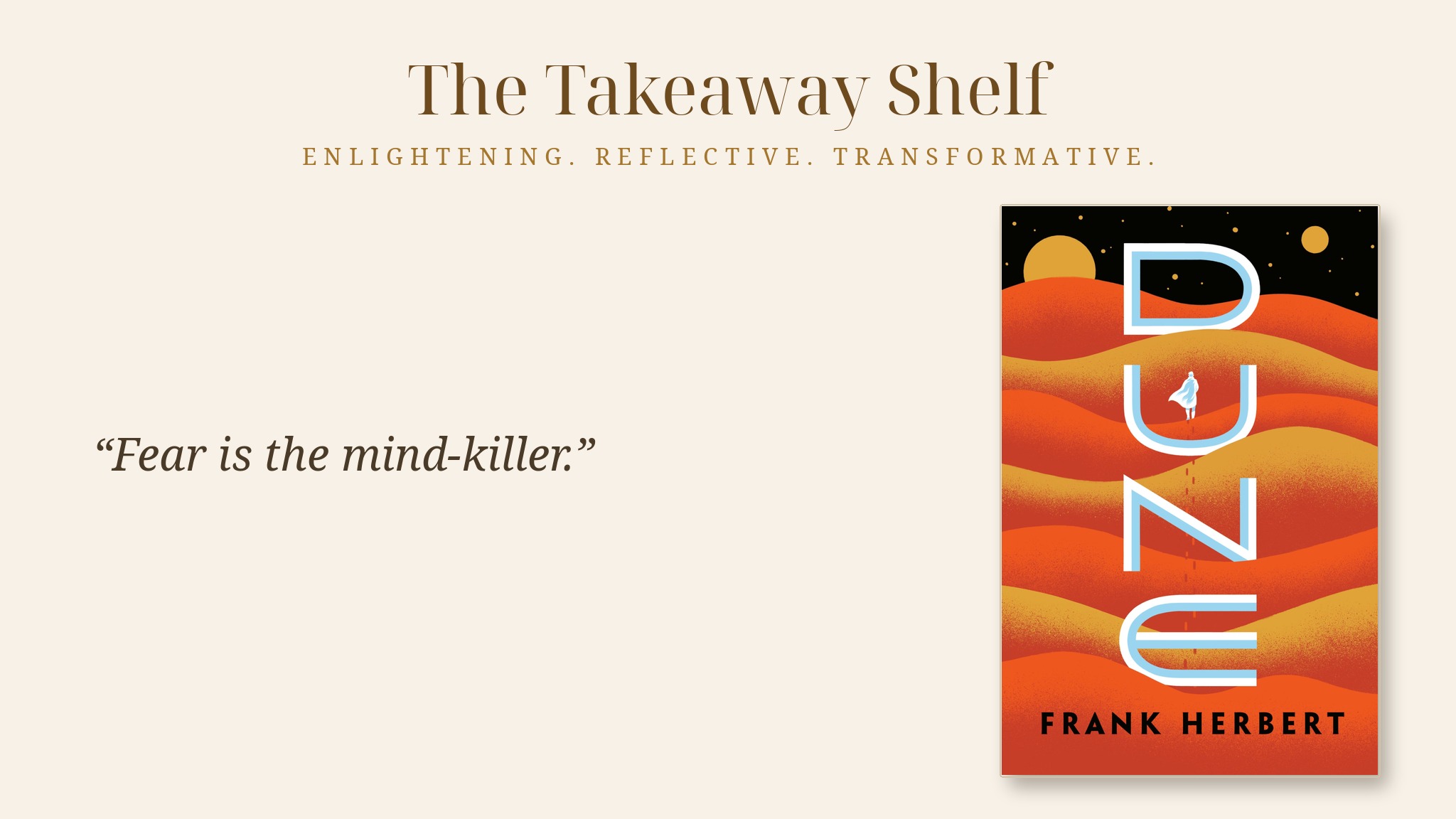
The Bene Gesserit litany against fear is the book’s most quoted passage for a reason, and Dune by Frank Herbert treats fear as a force to be faced, named, and allowed to pass through you — not obeyed and not denied. Paul’s training is, at its core, a training in meeting terror without letting it make your decisions.
2. Ecology Is Destiny
Arrakis is not a backdrop in Dune by Frank Herbert; it is the argument. Water scarcity shapes the Fremen’s religion, their customs, and their warfare, and the spice that makes interstellar travel possible grows only there. Change the ecology and you change everything built on it — a lesson Herbert drew from real desert research, and one that reads more urgent every year.
3. Power Corrupts the Hero, Too
Paul Atreides begins as a sympathetic young duke and ends as something far more troubling, and Dune by Frank Herbert refuses to let its hero off the hook for what his rise costs. Herbert wrote the book partly as a warning about charismatic leaders and messiahs: even a saviour, followed blindly, can become a tyrant, and the crowd that demands one shares the blame.
4. Religion and Politics Are Never Separate
On Arrakis, prophecy is policy and faith is a tool of empire, and Dune by Frank Herbert shows how belief systems are planted, cultivated, and harvested by those who understand them. The Bene Gesserit spent generations seeding legends among the Fremen — and then watched their own legend escape their control.
5. One Resource Can Rule an Empire
Spice — melange — extends life, expands consciousness, and makes space travel possible, which means whoever controls Arrakis controls the universe in Dune by Frank Herbert. Herbert’s point is deliberately familiar: an economy built on a single scarce resource is an empire built on a fault line, and everyone in it, emperor and desert nomad alike, is hostage to the same supply.
6. Adaptation Beats Strength
The Fremen survive where richer, better-armed houses fail, and Dune by Frank Herbert makes their secret plain: they adapted to the desert instead of fighting it. They conserve water, read the sand, and turn scarcity into discipline, while their enemies import water, waste it, and wonder why the planet resists them. Strength that ignores its environment is just expensive weakness.
7. Destiny Is a Choice You Keep Making
Paul can see possible futures, but Dune by Frank Herbert never lets foresight become an excuse: knowing what might happen only sharpens the responsibility of choosing what will. Destiny in this book is not a script handed down from above; it is the sum of the choices you refuse to avoid, made again and again, in full knowledge of their cost.
Get the Book
Dense, epic, and endlessly re-readable, Dune by Frank Herbert is the rare science fiction novel that rewards a slow read and a second one. It is available on Kindle and in print, and it is best approached one desert chapter at a time.
Walk Without Rhythm
That is the desert’s own advice, really — and the book’s. Dune by Frank Herbert will not hand you easy heroes or easy answers; it will ask you to read the sand, question the messiah, and choose your future with your eyes open. Start with one chapter, keep going through the dry stretches, and the epic will open up the way Arrakis does: slowly, then all at once. 📚