

Spicy Pork Pancit Bihon with Dashi Broth
Learn how to cook Spicy Pork Pancit Bihon with Dashi Broth using simple ingredients, real home-cooking tips, and a light, umami-rich twist.
This post may contain affiliate links. We only recommend products we personally use and love (please see our full affiliate disclosure). If you click through and make a purchase, we may earn a small commission at no extra cost to you. Your support helps keep this blog running. Thank you so much! 💕
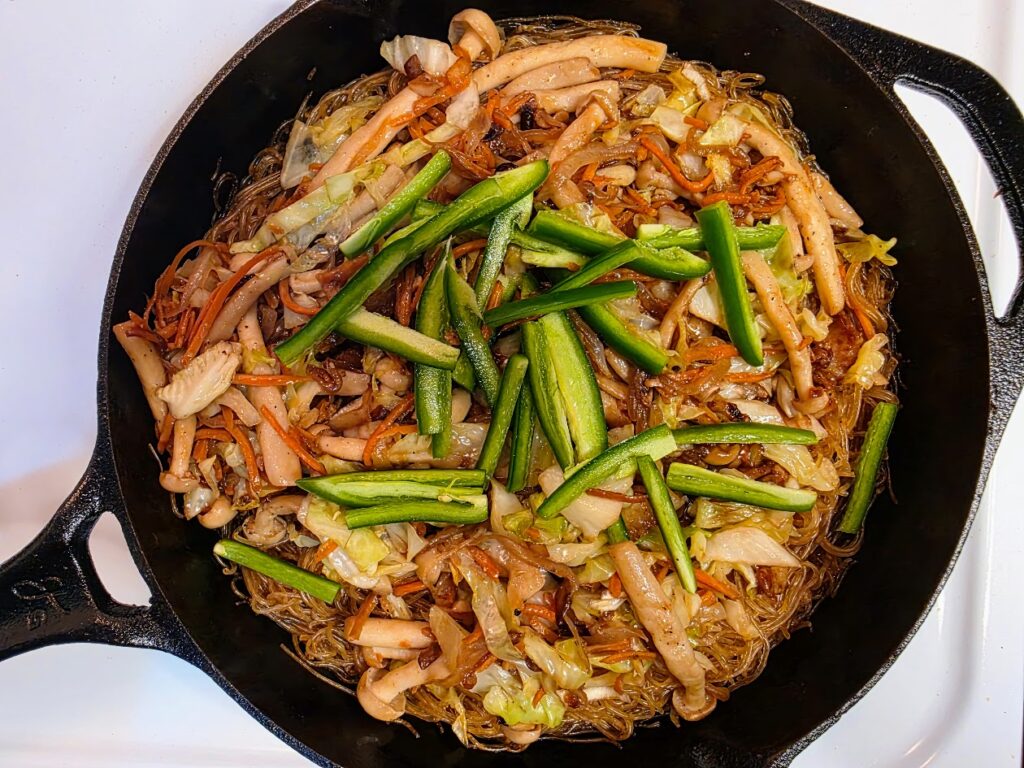
Spicy Pork Pancit Bihon with Dashi Broth came into my kitchen on one of those very real cooking days—the kind where you open the fridge, realize you’re out of chicken broth, and decide to improvise instead of ordering takeout. My husband was already happily slurping a bowl of hot and sour soup I made earlier, which meant my usual go-to broth was gone. The pancit craving, however, was very much still alive.
So I did what most home cooks do when faced with a small kitchen crisis: I looked around, spotted a lonely dashi packet, shrugged, and thought, Why not? That simple decision turned into one of those happy accidents I now want to repeat.
This Spicy Pork Pancit Bihon with Dashi Broth is not fancy. It’s practical, deeply savory, slightly spicy, and rooted in real-life cooking—where substitutions happen, measurements are flexible, and taste-testing is part of the process. It’s pancit bihon made with one piece of Q Bihon (yes, just one piece), white shimeji mushrooms, cabbage, carrots, and pork that was marinated while I chopped vegetables at a very relaxed pace.
If you like pancit that’s flavorful without being heavy, and if you enjoy cooking meals that feel personal rather than performative, this recipe is for you.
Why You’ll Love This Spicy Pork Pancit Bihon with Dashi Broth
- It uses simple, everyday ingredients you can find easily.
- The dashi broth adds light umami without overpowering the noodles.
- It’s perfectly portioned using just 1 pc of Q Bihon.
- The spice level is customizable (hello, jalapeños).
- It tastes like something you’d cook on a weekday—not a staged photoshoot meal.
Most importantly, this Spicy Pork Pancit Bihon with Dashi Broth feels comforting and familiar, but with a small twist that keeps it interesting.
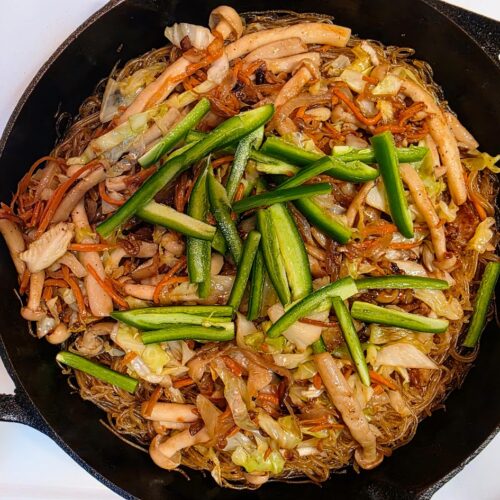
Spicy Pork Pancit Bihon with Dashi Broth
Equipment
- 1 Wok or wide sauté pan
- 1 Saucepan (for broth)
- 1 Cutting board
- 1 Chef’s knife
- 1 Mixing bowl (for marinating pork)
- 1 Measuring cup
- 1 Wooden spoon or tongs
Ingredients
Noodles and Broth
- 1 pc pc Q Bihon about 50 g, from a multi-piece pack, Tip: One piece is perfect for 1–2 servings without leftovers turning mushy.
- 400 ml water
- 1 pc dashi packet
- 1 tbsp oyster sauce
- ¼ cup soy sauce
- ¼ tsp ground black pepper
Pork Marinade
- 200 g pork thinly sliced
- 1 tbsp oyster sauce
- 1 tbsp soy sauce
- ¼ tsp salt
- ¼ tsp ground black pepper
- 1 tsp sugar
- 1 tbsp Chinese cooking wine
Tip: This quick marinade seasons the pork deeply without overpowering the noodles.
Vegetables and Aromatics
- 1 pack 100 g shimeji mushrooms, trimmed
- 1 cup cabbage shredded
- ½ cup carrots julienned
- ½ pc medium onion sliced
- 3 cloves garlic minced
Topping
- 1-2 pc jalapeños thinly sliced Because my husband believes pancit should fight back a little.
Instructions
- Marinate the Pork In a bowl, combine the sliced pork with oyster sauce, soy sauce, salt, pepper, sugar, and Chinese cooking wine. Mix well and let it sit while you prep the vegetables. This short marinating time already makes a big difference in flavor.
- Prepare the Dashi Broth Bring 400 ml of water to a boil. Add the dashi packet and simmer for about 3 minutes. Remove the packet and season the broth with oyster sauce, soy sauce, and black pepper. Set aside.
- Sauté the Aromatics Heat oil in a wide pan or wok. Add garlic and onion, then sauté until fragrant and slightly softened. This is your flavor base—don’t rush it.
- Cook the Pork Add the marinated pork and cook until no longer pink. Let it caramelize slightly for extra depth. Stir occasionally but don’t overcrowd the pan.
- Add the Vegetables Add shimeji mushrooms and stir briefly. Follow with carrots, then cabbage. Cook just until the vegetables soften but still retain some texture.
- Add the Bihon and Broth Add the soaked bihon noodles to the pan. Pour in the prepared dashi broth and gently toss everything together. Let the noodles absorb the liquid slowly.
- Finish and Serve Once the noodles are tender and evenly seasoned, turn off the heat. Top with thinly sliced jalapeños and serve immediately.
Helpful Cooking Tips and Variations
- If you prefer less salt, reduce the soy sauce slightly and taste as you go.
- You can substitute shimeji mushrooms with shiitake or oyster mushrooms.
- Add a squeeze of calamansi or lemon before serving for brightness.
- For extra spice, sauté some jalapeños with the garlic instead of adding them raw.
This Spicy Pork Pancit Bihon with Dashi Broth is flexible, forgiving, and happy to adapt to what you have on hand.
Storage and Leftover Tips
Pancit bihon is best eaten fresh, but if you have leftovers:
- Store in an airtight container in the fridge for up to 24 hours.
- Reheat gently with a splash of water to loosen the noodles.
- Avoid microwaving too long—bihon dries out fast.
Nutrition and Balance Notes
This dish offers a good balance of carbohydrates, protein, and vegetables. Using dashi instead of chicken broth keeps it lighter, while mushrooms add umami without extra fat. You can increase vegetables if you want a more fiber-rich meal.
A Book That Inspired This Kind of Cooking
This recipe reminds me of “Japanese Soul Cooking” by Tadashi Ono and Harris Salat, a book that celebrates everyday meals, pantry improvisation, and comfort food made with intention. It’s a great reminder that good cooking doesn’t require perfection—just attention.
Food Trivia: Pancit Bihon and Its Southeast Asian Cousins
Pancit bihon has deep roots that go beyond Filipino kitchens. The word “pancit” itself comes from the Hokkien phrase pian i sit, meaning “something conveniently cooked,” which explains why pancit became everyday food rather than just a celebration dish.
Bihon specifically refers to thin rice vermicelli, a noodle style introduced through Chinese trade and later adapted to Filipino tastes using local ingredients, broths, and cooking methods.
Across Southeast Asia, you’ll find similar noodles wearing different personalities:
- In Singapore and Malaysia, bee hoon is often stir-fried or served in soup with seafood and light soy-based broths.
- In Vietnam, rice vermicelli appears as bún, usually served with fresh herbs, grilled meats, and clear broths rather than heavy sauces.
- In Thailand, thin rice noodles show up in dishes like pad thai or as part of soup noodles, balancing sweet, sour, salty, and spicy flavors.
- In Indonesia, bihun goreng is a close cousin to pancit, typically seasoned with sweet soy sauce and aromatics.
What makes Filipino pancit bihon unique is its adaptability. It comfortably absorbs flavors from Chinese, Southeast Asian, and even Japanese influences—like the dashi broth used in this recipe—without losing its identity.
This flexibility is exactly why pancit bihon feels at home in so many kitchens, including mine.
Frequently Asked Questions
Can I use more than one piece of Q Bihon?
Yes, but you’ll need to increase the liquid and seasoning accordingly.
Is dashi very fishy?
No. When used lightly, it adds savoriness without tasting strongly of fish.
Can I make this vegetarian?
Yes. Skip the pork and use mushroom-based seasoning instead.
Is this dish very spicy?
Only if you want it to be. The jalapeños are optional and adjustable.
When Pancit Becomes a Little Story
Pancit is one of my husband’s all-time Filipino food favorites, so this Spicy Pork Pancit Bihon with Dashi Broth ends up on our table at least once a week. Sometimes it’s dinner, sometimes it magically turns into breakfast, and other times it becomes his late snack after arriving home from work. Pancit doesn’t really care what time it is—it just shows up when you need something satisfying.
What I love most about pancit is how versatile and forgiving it is. I can adjust it based on whatever is left in our fridge without overthinking. A handful of cabbage left from the gyoza (Japanese dumplings) I made earlier? In it goes. Shredded carrots from spring rolls? Perfect. Extra mushrooms from pasta night or a vegetable stir-fry? They always find a home here.
For the protein, I try to stay one step ahead. I usually marinate sliced pork belly or pork shoulder in advance and store them in the freezer, so I never have to stress about what to cook. I also keep peeled and deveined shrimp ready, along with marinated chicken breast cut into small cubes. That way, I can mix and match depending on my mood—or his—and he won’t complain (which I consider a small daily victory).
At the end of the day, this dish isn’t about perfection or sticking to one exact version. It’s about making sure my husband always has a warm, satisfying meal waiting for him, no matter how busy the week gets. And if that meal happens to be pancit again, well… no one’s complaining.
👉 If you try this recipe, save it, share it, or leave a comment and tell me how you make pancit work with what’s in your own fridge.
0 Comments