

Easy Tonkotsu-Style Ramen with Sauerkraut
Easy Tonkotsu-Style Ramen with Sauerkraut made with crispy pork belly, miso broth, and pantry swaps for a cozy, satisfying home-cooked bowl.
This post may contain affiliate links. We only recommend products we personally use and love (please see our full affiliate disclosure). If you click through and make a purchase, we may earn a small commission at no extra cost to you. Your support helps keep this blog running. Thank you so much! 💕
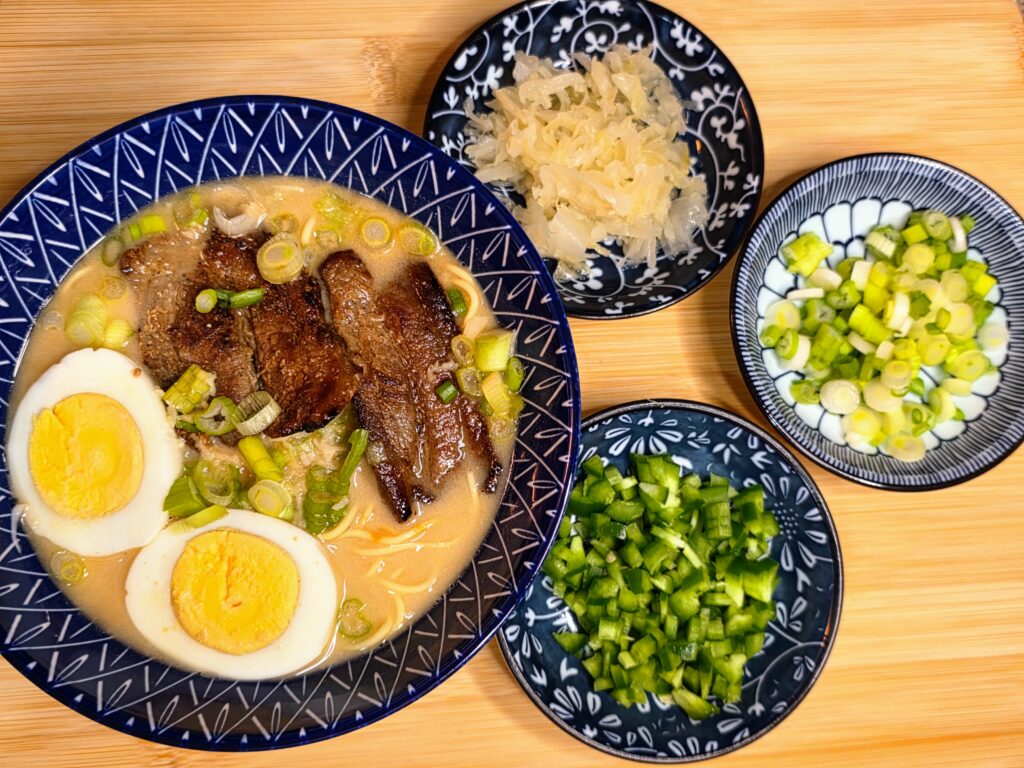
Easy Tonkotsu-Style Ramen with Sauerkraut, the Real-Life Way
Easy Tonkotsu-Style Ramen with Sauerkraut happened on one of those days when I wanted ramen comfort but didn’t want to babysit a pot of bones for half a day. I wanted something rich, savory, and deeply satisfying—without pretending I had a professional ramen shop setup in my kitchen.
This bowl is not traditional tonkotsu ramen, and it’s not trying to be. Instead, it’s a fast, home-cook interpretation inspired by the flavors we love: pork, miso, soy, ginger, garlic, and that deeply comforting broth that makes ramen feel like a warm reset button.
I used fried marinated pork belly instead of slow-braised chashu. I used Safoco egg noodles because they were already in the pantry—leftover from a Lomi recipe I made earlier. And instead of pickled red ginger, I reached for sauerkraut, which is always in our fridge because it’s one of my husband’s favorites. I put it in his grilled cheese, his sandwiches, and now, apparently, ramen.
I also added a simple boiled egg, because a ramen bowl always feels more complete with one. No complicated soy-marinated egg here—just a good, honest boiled egg that adds richness and makes the bowl feel satisfying.
That’s how this Easy Tonkotsu-Style Ramen with Sauerkraut came to life—imperfect, practical, and surprisingly good.
Why You’ll Love This Easy Tonkotsu-Style Ramen with Sauerkraut
- It delivers deep, savory flavor without a long cooking time
- Crispy pork belly adds richness and texture fast
- The miso broth is comforting without being heavy
- Sauerkraut brings brightness that cuts through the pork
- A boiled egg adds creaminess and balance
- It’s flexible and forgiving—perfect for home cooks
Most importantly, this recipe respects your time. It’s the kind of ramen you make because you want comfort, not a culinary marathon.
Easy Tonkotsu-Style Ramen with Sauerkraut
Equipment
- 1 Skillet
- 1 Sauce pot
- 1 Mixing bowl
- 1 Knife
- 1 Cutting board
Ingredients
For the Tonkatsu-Style Fried Pork Belly
- 200-300 g Pork belly Slice evenly so it cooks and crisps properly.
- 2 teaspoons sake
- 2 teaspoons mirin
- 2 teaspoons soy sauce
- 1 teaspoon sugar
For the Tonkatsu-Style Soup Base
- 200 ml water
- 1 cup chicken broth
- 1½ tablespoons miso paste
- 2 teaspoons soy sauce
- 2 teaspoons mirin
- 1 teaspoon sugar
- ½ teaspoon grated fresh ginger
- ⅓ teaspoon grated fresh garlic
For the Noodles
- Safoco egg noodles 100–150g per serving
- Any egg or wheat noodles will work here.
- Toppings
- Boiled eggs halved (soft- or medium-boiled)
- Sliced green onions
- Diced fresh jalapeños
- Sauerkraut
Instructions
Marinate the Pork Belly
In a bowl, mix the sake, mirin, soy sauce, and sugar until the sugar dissolves. Add the pork belly and coat well. Let it marinate for at least 10–20 minutes while you prepare the rest of the ingredients.This quick marinade builds flavor without overcomplicating things.Prepare the Tonkatsu-Style Soup Base
In a small pot, combine the water, chicken broth, soy sauce, mirin, sugar, ginger, and garlic. Bring to a gentle simmer over medium heat.Lower the heat and dissolve the miso paste in a ladle of hot broth before stirring it back into the pot. Keep the broth warm and avoid boiling aggressively after adding the miso.Taste and adjust seasoning if needed.Cook the Noodles
Cook the Safoco egg noodles according to package instructions. Drain well and set aside.These may not be traditional ramen noodles, but they’re springy, comforting, and perfect for this bowl.Fry the Pork Belly
Heat a skillet over medium-high heat. Add the pork belly directly to the pan.Cook until golden brown and crispy on both sides, about 4–6 minutes per side depending on thickness. For extra flavor, add a splash of the reserved marinade near the end and let it reduce slightly.Rest briefly, then slice thinly.Assemble the Ramen
Divide the cooked noodles between bowls. Ladle the hot soup over the noodles.Top with sliced pork belly, halved boiled eggs, green onions, diced jalapeños, and a generous spoonful of sauerkraut.Serve immediately while everything is hot.
Notes
Kitchen Tools
- Skillet
- Sauce pot
- Mixing bowl
- Knife and cutting board
Ingredients Used
- Pork belly
- Miso paste
- Chicken broth
- Safoco egg noodles
- Soy sauce
- Mirin
- Sake
- Ginger
- Garlic
- Boiled eggs
- Sauerkraut
- Green onions
- Jalapeños
Helpful Cooking Tips and Variations
- If pork belly feels too rich, try thin-cut pork chops or chicken thighs.
- Add a soft-boiled egg if you want extra creaminess.
- Sesame oil adds aroma with just a few drops.
- Chili oil works well if you want deeper heat.
- Leftover broth can double as a soup base for vegetables the next day.
Storage and Leftover Tips
- Store broth and noodles separately for best texture.
- Pork belly reheats best in a skillet, not the microwave.
- Sauerkraut keeps well and should be added fresh after reheating.
- Leftovers last up to 2 days refrigerated.
Nutrition and Balance Notes
This Easy Tonkatsu-Style Ramen with Sauerkraut is rich but balanced. The miso and sauerkraut offer fermented depth, while ginger and garlic add warmth. The boiled egg provides protein and creaminess, making the bowl satisfying without needing excessive portions.
Ramen-Inspired Reading: A Book That Fits the Mood
One book that pairs surprisingly well with this recipe is Japanese Soul Cooking by Tadashi Ono and Harris Salat. It explores everyday Japanese comfort foods—ramen, tonkotsu, and home-style meals—without gatekeeping perfection.
If you enjoy cooking from instinct rather than rigid rules, this book feels like a friend in the kitchen.
A Taste of Japan: The Rich History Behind Tonkotsu Ramen
1. The “Happy Accident” Origins
The signature cloudy, milky appearance of Tonkotsu broth wasn’t intentional. In 1947, a chef named Katsumi Sugino at a shop called Sankyu in Kurume accidentally left his pork bones boiling for too long while he was out. When he returned, the broth had turned white and opaque. Instead of throwing it out, he tasted it and realized it was much richer and more flavorful than his original clear soup.
2. Tonkotsu vs. Tonkatsu (The “O” vs. “A”)
It is common for people to mix these up, but they are very different:
Tonkotsu (豚骨): Literally means “pork bones.” It refers to the broth made from simmering bones for 12–18 hours.
Tonkatsu (豚カツ): Literally means “pork cutlet.” It refers to the breaded and deep-fried pork dish.
Pro-Tip: If you see “Tonkatsu Ramen” on a menu, it might be a typo for the broth—unless they are literally serving a fried cutlet on top of your noodles!
3. The “Kaedama” System
Because the noodles used in Tonkotsu (specifically Hakata-style) are very thin, they can get soggy if left in the hot broth too long. To solve this, shops use the Kaedama system: you get a smaller portion of noodles initially, and once you finish them, you can order a “refill” of fresh, firm noodles to add to your remaining soup.
4. Customizable Firmness
Because the thin noodles cook so fast (sometimes in just 20 seconds), you can often choose exactly how you want them. Common levels include:
Futsu: Regular/Standard
Barikata: Very firm (Al dente)
Harigane: “Wire-like” (extremely firm)
Kona-otoshi: Literally “dusting off the flour”—the noodles are barely dipped in water and are almost raw.
5. It Was “Fast Food” for Laborers
Before it was a global gourmet sensation, Tonkotsu ramen was developed as a cheap, filling, and quick meal for workers at the fish markets and ports in Fukuoka. The thin noodles were chosen specifically because they boiled faster, allowing workers to eat quickly and get back to work.
Frequently Asked Questions
Can I use different noodles?
Absolutely. Use whatever noodles you have—egg noodles, wheat noodles, even spaghetti in a pinch.
Is this authentic tonkotsu ramen?
No, and it’s not meant to be. It’s inspired by the flavors, adapted for home cooking.
Why sauerkraut instead of pickled ginger and nori seaweed?
Because that’s what I had. It adds acidity and crunch, which is what matters.
Can I make it spicy?
Yes. Chili oil, extra jalapeños, or chili flakes all work well.
A Bowl That Fits Real Life
This Easy Tonkotsu-Style Ramen with Sauerkraut is exactly the kind of meal I love making—built from what’s available, adjusted without guilt, and enjoyed without overthinking.
I didn’t have ramen noodles, so I used Safoco egg noodles from a previous Lomi recipe. I didn’t have pickled red ginger and nori seaweed, so I grabbed sauerkraut from the fridge—something my husband loves so much it ends up in grilled cheese and sandwiches.
The best meals don’t come from perfect recipes—they come from a curious mind and a willing heart.
If this bowl speaks to you, try it. Adjust it. Make it yours. And if you do, I’d love to hear how it turned out.
👉 Save this recipe, share it with a fellow ramen lover, or leave a comment below.
0 Comments