Delicious 30-Minute Shrimp Pancit Bihon Recipe
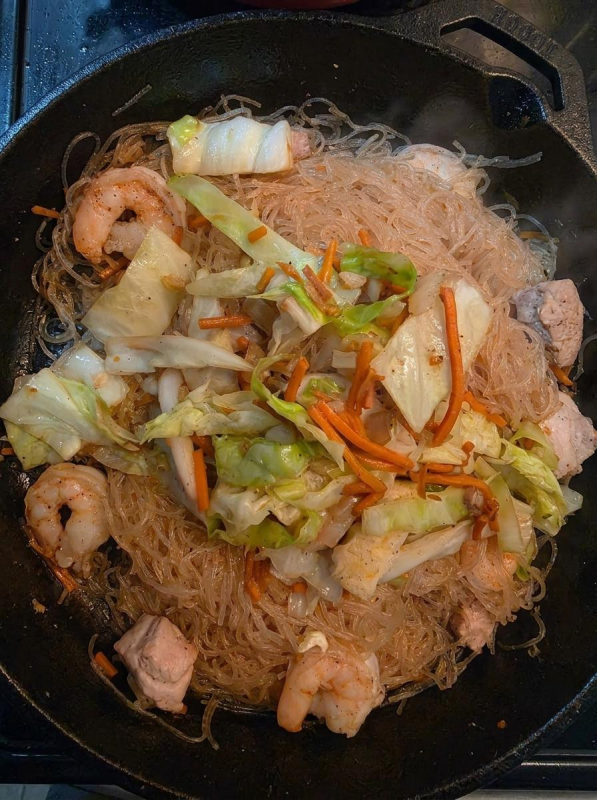
Nothing says home like a steaming skillet of shrimp pancit bihon — springy rice noodles glossed in a savory soy-oyster sauce and tossed with juicy shrimp, tender pork shoulder, and crisp cabbage and carrots. This delicious 30-minute shrimp pancit bihon recipe is my weeknight love letter to Filipino cooking: one pack of Super Q Golden Bihon, a hot cast-iron pan, and dinner for a crowd in half an hour. If you’ve never made shrimp pancit bihon at home, this easy version will make you wonder why you waited.
This post may contain affiliate links. We only recommend products we personally use and love (please see our full affiliate disclosure). If you click through and make a purchase, we may earn a small commission at no extra cost to you. Your support helps keep this blog running. Thank you so much! 💕
My First Pancit in Denver
This was my first time making pancit here in Denver, ever since I arrived — and honestly, it felt like a little homecoming in a skillet. Most days I lean on Japanese and Italian cooking now. If 2024 was my all-about-Chinese-recipes year, 2025 has been notably Japanese, and I’ll probably close out the year making even more Italian dishes as my curiosity pulls me that way.
But some cravings don’t care about the calendar. My husband loves pancit, so a big pan of it was only a matter of time — and since he loves cilantro, I scatter some over his bowl, a very untraditional but very him touch.
The pancit I grew up eating in the Philippines was loaded with green beans and kinchay — that’s Chinese celery, by the way, the name we use back home. My husband, though, is not a fan of greens, so this Denver version keeps it simple with cabbage and carrots, the way he’ll happily go back for a second helping.
I love pancit with puto cheese or just a slice of bread on the side, and I hope you’ll try this shrimp pancit bihon recipe. One note: the Chinese cooking wine is my own Asian-fusion preference — if you don’t have it, just leave it out.
Table of Contents
Why You’ll Love This Shrimp Pancit Bihon Recipe
Thirty minutes, one big skillet, and a recipe that feeds eight to ten — this shrimp pancit bihon checks every weeknight-dinner box. Super Q Golden Bihon needs no pre-soaking; the dry noodles go straight into the hot broth and drink it up, turning glossy and tender in minutes.
Everything happens in one pan: the pork browns, the shrimp turn pink, the vegetables soften, and then the noodles join the party. It’s the kind of cooking I love — a little chopping, a hot flame, and dinner practically makes itself.
And it’s flexible. The recipe card notes the other vegetables I keep in my storefronts — green beans and kinchay (Chinese celery) among them — so you can build your shrimp pancit bihon the way your household likes it. Greens lovers and greens skeptics can both be happy at the same table.
Ingredients for Shrimp Pancit Bihon
You don’t need anything fancy to make a great shrimp pancit bihon — just honest ingredients and a hot pan. The star is one 500g pack of Super Q Golden Bihon, thin rice noodles that soften beautifully without any pre-soaking.
If you’re new to Filipino noodles: pancit is the umbrella term for the Philippines’ beloved noodle dishes, and bihon refers to the thin rice vermicelli at the heart of this one.
For the full list with exact amounts, scroll to the recipe card below. Here’s the lineup: pork shoulder sliced thin, shrimp peeled and deveined, onion and garlic, julienned carrots, shredded cabbage, green onions, Chinese cooking wine (my optional fusion touch), soy sauce, oyster sauce, broth or water, salt, black pepper, and cooking oil — plus calamansi or lemon wedges for serving.
How to Make Shrimp Pancit Bihon
Making shrimp pancit bihon is wonderfully straightforward. While you slice the vegetables, let the pork hang out in a quick marinade of Chinese cooking wine, salt, and pepper — it takes no extra time and adds so much flavor.
Sauté the onion and garlic until fragrant, brown the pork, then add the shrimp just until they turn pink. Toss in the carrots and cabbage for a brief sauté, stir in the soy sauce and oyster sauce, and pour in the broth. Once it’s boiling, add the dry bihon noodles and stir gently until they’re tender and most of the liquid is absorbed. Finish with green onions, taste, adjust — and serve it hot with calamansi.
The detailed step-by-step with exact timing is waiting in the recipe card below.
Tips for the Best Shrimp Pancit Bihon
- Don’t pre-soak the noodles. Super Q Golden Bihon goes in dry — that’s the whole point, and it’s what lets the noodles absorb all that savory broth.
- Watch the shrimp. They only need a minute or two to turn pink; the carryover heat finishes the job.
- Adjust the liquid. Like your shrimp pancit bihon on the drier side or a little saucy? Add broth gradually and stop when it looks right to you.
- Taste before serving. Soy sauces vary in saltiness, so do your final seasoning at the end.
What to Serve with Shrimp Pancit Bihon
In the Philippines, we’d eat this shrimp pancit bihon with plain rice — though with noodles already in the bowl, I say the pancit is the star and the sides are the supporting cast. My favorite pairing is puto cheese, those soft steamed rice cakes that are made for scooping up noodles, or simply a slice of bread. A wedge of calamansi (or lemon) squeezed over the top brightens everything. And if your household runs on rice the way mine does — rice is life — garlic fried rice alongside is never wrong. Try my 7 Secrets to Delicious Garlic Beef Fried Rice with Spinach sometime.
A Cookbook for Your Filipino Kitchen
When a dish pulls me back to my roots the way this one did, I love having a good cookbook nearby for inspiration. The Classic Filipino Kitchen Cookbook: 150 Homestyle Recipes for Adobo, Pancit, Lumpia, Sinigang, Rice Bowls, Sweets, and Everyday Cooking is full of the homestyle Filipino recipes I grew up with — adobo, lumpia, sinigang, and plenty more pancit.
If you’re building a Filipino recipe collection, this one earns its shelf space.
Delicious 30-Minute Shrimp Pancit Bihon
Springy Super Q Golden Bihon noodles tossed with juicy shrimp, tender pork, cabbage, and carrots in a savory soy-oyster glaze. A 30-minute Filipino favorite that feeds a crowd.
Ingredients
- 1 pack (500g) Super Q Golden Bihon
- 450g pork shoulder, thinly sliced
- 450g shrimp, peeled and deveined
- 1 large onion, sliced
- 6–8 cloves garlic, minced
- 2–3 medium carrots, julienned
- 1 medium cabbage (or ½ large), shredded
- 1 bunch green onions, sliced
- 3–4 tbsp Chinese cooking wine (Shaoxing)
- ⅓–½ cup organic soy sauce
- 3 tbsp oyster sauce
- 6–8 cups broth or water
- Salt and black pepper, to taste
- Cooking oil
- Optional: calamansi or lemon wedges
How to make it
- Marinate the sliced pork shoulder in the Chinese cooking wine, salt, and pepper while you prep the vegetables.
- Sauté the onion and garlic in oil over medium-high heat until fragrant.
- Add the pork and cook until browned. Add the shrimp and cook just until pink. Season with salt and pepper.
- Add the carrots and cabbage, season lightly, and sauté briefly until just softened.
- Stir in the soy sauce and oyster sauce. Pour in the broth or water and bring to a boil.
- Add the dry Super Q Bihon noodles and stir gently until tender and most of the liquid is absorbed.
- Toss in the green onions. Taste and adjust the seasoning, then serve hot with calamansi or lemon wedges.
Notes
- Super Q Golden Bihon needs no pre-soaking — the dry noodles go straight into the hot broth.
- Adjust the broth for your preferred dryness; start with 7 cups and add more as needed.
- The Chinese cooking wine is a personal Asian-fusion touch — omit it if you don’t have it.
- Other veggies work beautifully here: green beans and kinchay (Chinese celery) are listed in the storefronts linked above.
- Her husband’s bowl gets fresh cilantro — add some to yours if you’re a cilantro lover too.
- About $25 for the whole pan (roughly $3 a serving); ~480 kcal per serving. Both are estimates.
Bringing a Taste of Home to Denver
This shrimp pancit bihon was my first in Denver, but it won’t be my last — some dishes just taste like belonging. I hope it brings a little of that warmth to your table too. If you make it, tell me how it went — and whose bowl got the extra cilantro.