

Hot and Sour Soup (Suan La Tang): My Homemade Take
Hot and Sour Soup (Suan La Tang) made from scratch—my homemade version inspired by a restaurant favorite and a meaningful New Year’s Eve meal.
This post may contain affiliate links. We only recommend products we personally use and love (please see our full affiliate disclosure). If you click through and make a purchase, we may earn a small commission at no extra cost to you. Your support helps keep this blog running. Thank you so much! 💕
Some recipes begin with a craving.
This one began with a very specific request.
It was a week before New Year’s Eve, and I was finalizing our grocery list when my husband casually asked if I could make Hot and Sour Soup (Suan La Tang). Not as a suggestion—more like a hopeful but confident ask. And honestly, it felt right. Ending the year with a bowl of something warm, familiar, and deeply comforting just made sense.
This soup is special to us because it brings back memories of the Philippines, my home country, where we were first introduced to it at Red Spice Restaurant in Okada Manila. If you’ve ever eaten there, you know it’s not a quiet kind of restaurant. The flavors are bold, confident, and memorable. Along with their hot and sour soup, we loved their crispy duck, mapo tofu, and well-executed dim sum—the kind of dishes you remember long after the meal ends.
Now that I finally have the time to slow down and truly learn how to cook—not rush, not multitask—I make it a point to recreate the foods we love from our shared memories. Not to replace restaurant experiences, but to bring those moments home. This homemade Hot and Sour Soup (Suan La Tang) is one of those recipes I come back to again and again, especially when comfort is the goal.
Why You’ll Love This Hot and Sour Soup (Suan La Tang)
This is not a watered-down, “almost there” version of the restaurant classic. It’s deeply satisfying in a quiet, confident way.
- Balanced flavors: savory, tangy, and gently spicy
- Made with simple, accessible ingredients
- Flexible, but grounded in real technique
- Comforting without being heavy
- Perfect for cold nights, reflective evenings, or meaningful dates at home
Most of all, it tastes like something cooked with intention—not rushed, not forced.
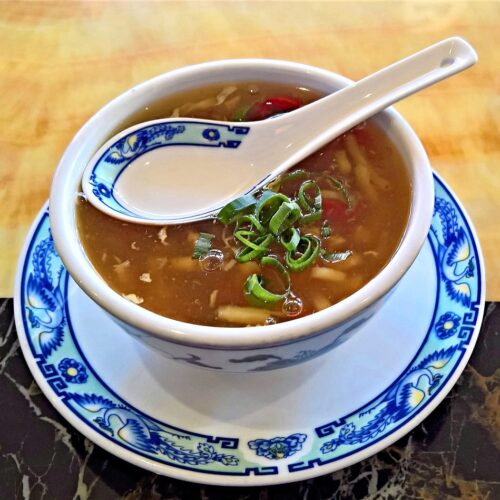
Hot and Sour Soup (Suan La Tang): My Homemade Take
Equipment
- 1 Large pot or stockpot for simmering the broth and soup
- 1 Strainer or fine mesh sieve to remove bones and ginger from the broth
- 1 Cutting board for vegetables, tofu, and mushrooms
- 1 Chef’s knife sharp and versatile for all slicing tasks
- 1 Measuring spoons for soy sauce, vinegar, sesame oil, and cornstarch
- 1 Mixing bowl to beat eggs before adding to the soup
- 1 Ladle for serving the soup
- 1 Wooden spoon or silicone spatula for stirring without scratching the pot
Ingredients
- 1.2 liters homemade chicken broth
- 150 g fresh shiitake mushrooms thinly sliced
- 200 g enoki mushrooms trimmed at base
- ½ medium bell pepper thinly sliced or julienned
- 1 pc medium tomato chopped into small chunks
- 200 g firm tofu cut into strips or cubes
- 2 pc large eggs lightly beaten
- 3 tbsp soy sauce start with 3, taste and adjust
- 3 tbsp rice vinegar adjust for tanginess
- 1 tsp white pepper start with ½ if spice-sensitive
- 1 tsp sesame oil
- 3 tbsp cornstarch
- 5 tbsp cold water for cornstarch slurry
- 2-3 stalks green onions finely chopped
- — — Optional: chili oil for extra heat
Instructions
- Step 1: Heat the Broth
- Bring the 1.2 liters of homemade chicken broth to a gentle boil in a large pot.
- Step 2: Build the Base
- Add the shiitake mushrooms, enoki mushrooms, bell pepper, and tomatoes. Let them simmer for 5–7 minutes, just until softened.
- Step 3: Add Tofu and Seasoning
- Gently stir in the tofu, soy sauce, and white pepper. Keep the heat steady and calm.
- Step 4: Thicken the Soup
- Slowly pour in the cornstarch slurry, stirring constantly. You want a silky texture—not thick, not watery.
- Step 5: Create the Egg Ribbons
- Lower the heat. Slowly drizzle in the beaten eggs while stirring in one direction. This creates those soft, signature egg strands.
- Step 6: Balance the Flavor
- Add the rice vinegar, tasting as you go. I like it noticeably tangy, but this is where personal preference matters most. Add chili oil if using.
- Step 7: Finish and Serve
- Turn off the heat and stir in sesame oil. Ladle into bowls and top with green onions.
Notes
- Large pot or stockpot – for simmering the broth and soup
- Strainer or fine mesh sieve – to remove bones and ginger from the broth
- Cutting board – for vegetables, tofu, and mushrooms
- Chef’s knife – sharp and versatile for all slicing tasks
- Measuring spoons – for soy sauce, vinegar, sesame oil, and cornstarch
- Mixing bowl – to beat eggs before adding to the soup
- Whisk or fork – for mixing eggs and cornstarch slurry
- Ladle – for serving the soup
- Wooden spoon or silicone spatula – for stirring without scratching the pot
- Homemade chicken broth – 1.2 liters (made from leftover chicken)
- Fresh shiitake mushrooms – 150g (8–10 medium), stems removed, caps thinly sliced
- Enoki mushrooms – 200g (1 large bunch), trimmed at the base
- Bell pepper – ½ medium (about 100g), thinly sliced or julienned
- Tomato – 1 medium (150–200g), chopped into small chunks
- Firm tofu – 200g, cut into thin strips or small cubes
- Eggs – 2 large, lightly beaten
- Soy sauce – 3–4 tablespoons (start with 3, taste and adjust)
- Rice vinegar – 3–4 tablespoons (adjust for tanginess)
- White pepper – 1 teaspoon (start with ½ if spice-sensitive)
- Sesame oil – 1 teaspoon
- Cornstarch slurry – 3 tablespoons cornstarch mixed with 5 tablespoons cold water
- Green onions – 2–3 stalks, finely chopped for garnish
- Optional: Chili oil for extra heat
How I Made the Broth (Using What I Had)
I didn’t start this soup with boxed broth. I used what was already there.
I added leftover chicken bones and scraps to a pot with about 1.5 liters of water, tossed in a few smashed garlic cloves, fresh ginger slices, and a small splash of soy sauce. No strict measurements. No overthinking.
I let everything simmer on low for about an hour, uncovered, until the broth turned rich, golden, and deeply aromatic. This kind of broth doesn’t overpower—it quietly supports the soup, which is exactly what you want for Hot and Sour Soup (Suan La Tang).
Once done, I strained it and measured out 1.2 liters for the soup.
Helpful Tips & Optional Variations
Ingredient Substitutions (If You’re Working With What You Have)
This recipe reflects exactly how I made my Hot and Sour Soup (Suan La Tang) that night, but cooking at home doesn’t always mean having every traditional ingredient on hand. Here are substitutions that still keep the soup balanced and satisfying:
- Chicken broth:
Vegetable or mushroom broth works well if you want a vegetarian version. Just make sure it’s flavorful, not bland. - Shiitake mushrooms:
Button or cremini mushrooms are fine, but shiitake adds deeper umami. If using dried shiitake, rehydrate them first and save the soaking liquid. - Enoki mushrooms:
You can skip them or replace with more shiitake, oyster mushrooms, or even thinly sliced napa cabbage. - Bell pepper:
Not traditional, but it adds color and mild sweetness. Carrots or bamboo shoots are good alternatives. - Tomato:
This adds subtle acidity and freshness. If you don’t have one, increase the vinegar slightly later instead. - Rice vinegar:
Black vinegar (Chinkiang) is more traditional and deeper in flavor. Apple cider vinegar works in a pinch but use a little less. - White pepper:
Black pepper can be used, but white pepper gives that unmistakable “hot and sour soup” heat that lingers rather than burns. - Tofu:
Firm tofu works best. Soft tofu can break apart, but if that’s what you have, just stir gently.
The key is balance, not perfection. This soup forgives improvisation—as long as you taste as you go.
Frequently Asked Questions About Hot and Sour Soup (Suan La Tang)
Is this soup very spicy?
Not necessarily. The heat mainly comes from white pepper, not chili. You can keep it mild or add chili oil for extra heat.
Can I make this vegetarian or vegan?
Yes. Use vegetable or mushroom broth and skip the eggs if needed. The soup will still be deeply flavorful.
Why does my soup taste flat?
It usually needs more vinegar, white pepper, or soy sauce. Hot and sour soup relies on contrast—don’t be shy, but adjust slowly.
Can I make this ahead of time?
Yes. It actually tastes better the next day. Just reheat gently and adjust seasoning afterward.
Why did my egg turn cloudy instead of ribbon-like?
The soup was likely boiling too hard. Lower the heat before adding eggs and stir gently in one direction.
Is hot and sour soup healthy?
It’s surprisingly balanced—protein-rich, warming, and satisfying without being heavy. Great when you want comfort without feeling weighed down.
Storage & Make-Ahead Notes
- Keeps well in the fridge for up to 3 days
- Reheat gently to protect the egg texture
- Flavors deepen overnight, especially the sour notes
If making ahead, adjust vinegar and pepper after reheating.
Nutrition & Balance Notes
This Hot and Sour Soup (Suan La Tang) is:
- Protein-rich
- Naturally warming
- Satisfying without being heavy
It’s comfort food that doesn’t leave you feeling weighed down.
A Cookbook That Reflects This Style of Cooking
A book that truly aligns with how I approach dishes like this is
The Woks of Life: Recipes to Know and Love from a Chinese American Family.
This book is a practical and approachable cookbook that focuses on classic Chinese and Chinese American dishes adapted for home kitchens. The book covers essential techniques, pantry staples, and foundational recipes, making it especially helpful for readers who want to understand why certain methods and ingredients are used—not just follow instructions.
Readers will find a wide range of recipes, from comforting soups and stir-fries to family-style mains, along with clear explanations that emphasize balance, flavor-building, and efficient cooking. It’s a useful resource for anyone interested in learning how traditional flavors translate into everyday, home-cooked meals without unnecessary complexity.
A Quick Bite of History (And a Fun Legend)
In Hot and Sour Soup (Suan La Tang):
- “Hot” refers to white pepper, not chili
- “Sour” traditionally comes from vinegar, not citrus
Hot and sour soup is often thought to come from Sichuan because of the spice, but the vinegar-forward version most of us love actually comes from Henan province.
It’s believed to be a variation of an older dish called hulatang, or pepper hot soup. Unlike the chili-heavy Sichuan style, this version focuses more on warmth, acidity, and balance.
There’s even a legend that it cured a Ming Dynasty official’s severe cold by making him sweat it out. Whether or not that’s true, the soup has long been considered a warming remedy, enjoyed for over 2,000 years—especially during colder months.
No wonder it still feels like comfort in a bowl.
Why I Keep Coming Back to This Soup
This soup holds memory. Of restaurant meals in Manila. Of shared experiences. Of learning how to cook not just to eat, but to connect.
Now that I have the time to really learn and recreate the food we love, I make sure I do—without pressure, without perfection, just honesty.
And every time I make this soup, it reminds me why cooking at home matters.
Before You Go
If you’ve been wanting to try Hot and Sour Soup (Suan La Tang) at home, this is your sign. It’s one of those rare dishes that manages to be both light and incredibly hearty, hitting every taste bud with its signature balance of white pepper heat and black vinegar tang.
Don’t worry about getting it “perfect” the first time. The beauty of this soup is in the customization. Cook it once. Adjust the vinegar or the spice next time. Make it yours.
If you do make it, I’d love to hear from you:
- Leave a comment: Tell me how tangy you like it! Do you go heavy on the vinegar or keep it mild?
- Save this recipe: Pin it or bookmark it for those chilly nights when you need a bowl of comfort.
- Share the love: Send this to someone who loves soup as much as you do.
Good food is meant to be remembered—and shared. Happy cooking!🍲
0 Comments